
 E-Paper



Chinese PLA’s rear defences in Ladakh’s Galwan valley face an icy challenge
Military commander said it would be tough for China to hold on to current PLA positions in Galwan, Gogra, Hot Springs and Pangong Tso.

 Prefer HTon Google


China’s People’s Liberation Army, which had amassed a large number of troops 5 km from the standoff points in Galwan, may need to shift around its soldiers after its rear positions on the Galwan bank have been flooded due to a sharp rise in water levels, people familiar with the developments told Hindustan Times.
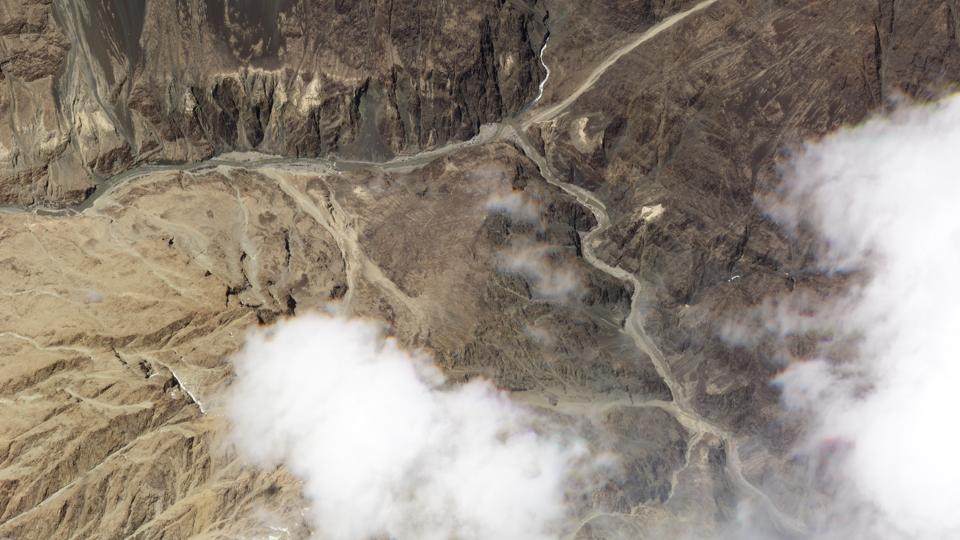
A senior military commander said the water level of the icy-cold, snow-fed Galwan river that originates from the Aksai Chin region had risen sharply due to an increase in temperature. “With snow melting at a rapid pace, any position on the river bank is dangerous,” the senior army officer said, pointing that satellite and drone imagery had indicated flooding of Chinese tents located on the river bank at rear positions.
Top generals of the Indian and Chinese armies have held three rounds of talks to work out a plan to disengage, de-escalate and eventually move back to their positions before the standoff between rival patrols near Pangong Tso started 60 days ago on the night of May 5. There were also broad agreements on initiating such an exercise. But there has been little forward movement to show for on the ground - the June 15 violent scrap took place 10 days after the first agreement to disengage - leading both sides to prepare for a long haul.
But the military commander said it would be tough for China to hold on to current PLA positions in Galwan, Gogra, Hot Springs and Pangong Tso. These, he said, are untenable in the long run, he said, a reference to the view that the standoff could continue well into the winter months if Beijing does not restore status quo ante along the Line of Actual Control.
Also read: India increases tech surveillance on Ladakh LAC with Israeli Heron drones
India, as Prime Minister Narendra Modi declared during his visit to Ladakh this week, seeks peace but will stand up to defend its territorial integrity under all circumstances and the choice of how the standoff ends simply rests with Beijing.
For now, despite the occasional public posturing in Beijing, there is no evidence on ground that China is looking at de-escalating any time soon. To the contrary, there are reports that the People’s Liberation Army was laying fibre optic cables at its locations in the Galwan valley. There is also a report with the army that the PLA is seeking to build a tunnel in the finger area of Pangong lake.
These inputs confirm the Indian assessment in the early days of the standoff that the situation could go on for a long time, much longer than the 2017 Doklam standoff that lasted 73 days.
This is an eventuality that the military has been prepping for. “We are rather prepared for all eventualities,” said a senior army officer.
Apart from moving in weapons such as the Indian army’s M-777 ultra-light howitzers, T-90 missile firing tanks and the top-of-the-line shoulder fired anti-tank missile systems, the military has also been deploying the air force’s C-17 heavy-lifters, Apache attack helicopters and C-130J special operations aircraft as well as the India’s Navy’s P-8I surveillance aircraft. For Pangong lake, the navy is also flying in steel boats with gun mounts to match PLA’s heavy patrol boats used by China to dominate the fingers on the north bank of the salt water lake.


