
 E-Paper



Coal mining underway in Assam elephant reserve before wildlife board clearance: RTI query
The National Board of Wild Life allowed Coal India Limited (CIL) to conduct opencast coal mining in 98.59 hectares of the reserve forest. CIL had been carrying out mining in 57 hectares of the reserve forest and the fresh recommendation allowed it to do mining in another 41 hectares, which was unbroken.


Last month, the National Board of Wild Life (NBWL) recommended coal mining to be allowed in a portion of the Dehing Patkai Elephant Reserve in Assam. But a right to information (RTI) query has revealed mining in the area was already underway even before the approval came.
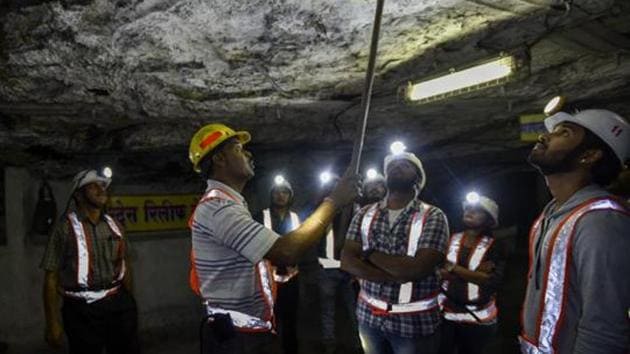
NBWL allowed Coal India Limited (CIL) to conduct opencast coal mining in 98.59 hectares of the reserve forest. CIL had been carrying out mining in 57 hectares of the reserve forest and the fresh recommendation allowed it to do mining in another 41 hectares, which was unbroken.
But reply to a RTI query by environment activist Rohit Choudhury has revealed mining related work has already begun in 17 hectares (or nearly 39% area) of the 41 hectares claimed by CIL to be unbroken.
“It was confirmed that about a 9 hectare area out of 41.39 hectares has already been broken up and operated and another approximately 7 hectare area has been cleared,” mentions a November, 2019 site inspection report by Shillong office of union ministry for environment, forest and climate change (MoEFCC).
North Eastern Coalfields, a subsidiary of CIL had got lease for coal mining over an area of 4 sq miles in the Saleki area of Dehing Patkai for a period of 30 years from 1973.
Though the said lease expired in 2003, CIL applied for lease/diversion of forest land only in 2012 seeking permission for coal extraction in 98.59 hectares.
CIL mentioned that 12.93 hectares of the total area had been broken up till 2003, 44.27 hectares broken between 2003 and 2012 and 41.39 hectares to be broken for coal mining after seeking approval.
Prior to site visit by MoEFCC team in October 2019, CIL admitted it was already conducting mining in 57.20 hectares (12.93 till 2003 and another 44.27 till 2012) of the total area without obtaining mandatory approval from the Centre and in violation of both state and central laws.
Site inspection revealed that besides illegal coal mining by CIL, local residents were also illegally extracting coal in the area through rat-hole mines. According to CIL figures, nearly 12500 tonnes of coal was being extracted from the area on an average every month during 2019-20.
The inspection report by WI Yatbon, deputy inspector general of forests, Shillong office of MoEFCC concluded that the North Eastern Coalfields of CIL had done illegal mining in the areas, which had been broken, for years and also in areas it claimed to be unbroken.
The decision to allow mining taken by NBWL’s standing committee, chaired by union environment minister Prakash Javadekar, on April 17 through video conference (because of the lockdown) has irked activists and environmentalists.
“The clearance was given hurriedly via video conference without proper discussion. The Assam government should have objected to the move, but it seems they are adamant on destroying the environment and forests of the state,” said Rohit Choudhury, a RTI and environment activist.
An online campaign opposing NBWL’s decision and proposed coal mining is underway now with hashtags #SAVEDEHINGPATKAI and #IAMDEHINGPATKAI trending on Facebook and Twitter.
In view of the campaign and the opposition to the mining move, Chief Minister Sarbananda Sonowal directed forest minister Parimal Suklabaidya on May 20 to visit the area and take stock of the ground situation.
“The Assam government is committed to protect the environment and biodiversity of the state and will not compromise on its stand in the name of development initiatives,” the CM said in a statement.
Fresh coal mining is expected to have a negative effect on flora and fauna in Dehing Patkai elephant reserve, which is part of Dehing Patkai wildlife sanctuary spread across 111 sq km in Dibrugarh and Tinsukia districts. It is said to be the largest tropical lowland rainforest in India.
Besides elephants, leopards, hoolock gibbons, pangolins and bears, Dehing Patkai is also home to over 200 species of birds, various replies and many species of butterflies and orchids. The habitats of these species as well as foraging routes of elephants are expected to be affected by the coal mining.


