
 E-Paper



Corneal transplants, donations hit hard in Odisha over Covid concerns
Though Odisha sees around 1800-2000 corneal donations a year, the Covid-19 pandemic has brought down the numbers to less than 25 per cent as hospitals either completely stopped corneal retrieval and transplantation or reduced the number of such procedures over fears of infection.

 Prefer HTon Google


Corneal transplants in Odisha have been adversely affected by Covid-19 with several hospitals stopping all such procedures while others reducing such operations over fears of infection.
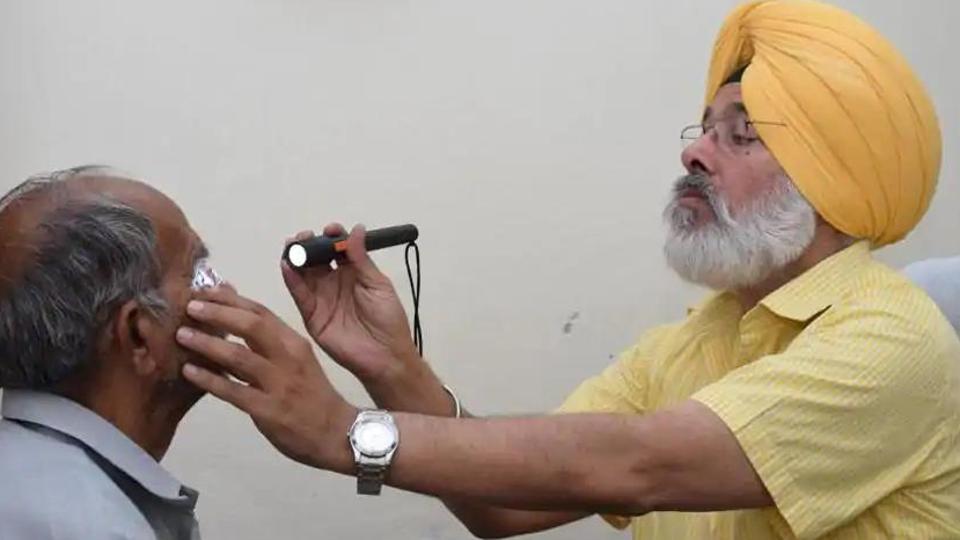
Cornea is the clear, dome-shaped surface covering iris that helps protect the eyes from dust, germs, and foreign particles. A corneal transplant, or keratoplasty, is a surgical procedure that replaces a damaged or diseased cornea with healthy tissue from a donor. After cataract, corneal blindness is the most common form of blindness in the country.
Though Odisha sees around 1800-2000 corneal donations a year, the Covid-19 pandemic has brought down the numbers to less than 25 per cent as hospitals either completely stopped corneal retrieval and transplantation or reduced the number of such procedures over fears of infection.
“Since there is a risk of transmission of SARS-CoV-2 through conjunctiva of the eye, most hospitals have stopped doing corneal transplants. As it is not possible to do RT-PCR test on a dead body and get the result within six hours of death, the transplantation procedures have been devastatingly affected. As with most solid-organ transplants, the risk of transmitting infectious diseases and viruses is an important aspect of corneal transplantation that can affect recipients or those handling donor tissue,” said Dr Sujata Das, medical director of Drushti Daan Eye Bank in Bhubaneswar which does a bulk of the corneal transplantation in Odisha.
“From 100-150 corneal donations at Drusti Daan Eye Bank every month, the numbers are now down to 18-20 a month. As we can’t do RT-PCR test, we are screening out several possible donors to avoid infections. We are mostly taking cornea of those who died in accidents or those who committed suicide. The harvested cornea is also being kept for two days before it is grafted,” said Das.
In Cuttack’s SCB Medical College and Hospital and JPM Eye Hospital and Berhampur’s MKCG Medical College and Hospital, the corneal transplants have totally stopped after the pandemic started. Dr Santosh Mohapatra of JPM Eye Hospital said unless the hospital is sure about Covid status of the dead, there would be no harvesting of the cornea. “In our hospital, we were doing 60-70 corneal retrievals and a similar number of transplants, but the number is now zero since the last 5-6 months. If the pandemic continues like this, we have to see how to screen out patients who could be possibly infected by Covid as there might be a subclinical infection or undiagnosed cases of fever and pneumonia,” said Mohapatra.
Similarly, in Cuttack’s SCB Medical College and Hospital, the corneal retrieval and transplantation have totally stopped after pandemic. “We can’t harvest cornea from anyone dying of encephalitis, jaundice or rabies. As Covid is a fairly new disease and not much is known about it, we can’t take a risk of harvesting cornea,” said Prof Prashant K Nanda, head of the department of ophthalmology of SCB Medical College.
In MKCG Medical College and Hospital, before the outbreak of Covid-19 pandemic, the ophthalmology department used to conduct an average of seven cornea transplants every month. However, the operations have stopped since March following the outbreak of the Covid-19, said Suchitra Dash, head of the department.
“Around 150 patients were in queue for the transplantation till the end of March, the number has now gone up to over 250 by now. The eye bank of the medical college which harvest on an average of 10 corneas every month is not harvesting anything for the last few months. We can’t take the risk of collecting cornea of the deceased without knowing their Covid status,” said Dash.
Pravas Acharya, who runs an organ donation NGO called Body and Organ Donation Initiative, said many of the patients who were in queue to get cornea transplanted have little option but to wait till the pandemic curve flattens. “Family members of several deceased persons have wished to donate the eyes of the dead persons, but it could not be harvested, as the hospitals are discouraging it. The pandemic has not only affected corneal donation, but also harvesting of other organs,” said Acharya.


