
 E-Paper



Cyclone Arnab makes landfall in Andhra Pradesh; trees uprooted, power supply disrupted
Gusty winds with speeds of 125-135 kmph have been reported in Kakinada, Konaseema and West Godavari districts and will continue over the next three hours

 Prefer HTon Google


Severe cyclone Arnab made landfall on the Andhra Pradesh coast between Kakinada and Yanam of Puducherry early Wednesday affecting the entire coastal Andhra with destructive winds and torrential rains, disrupting normal life, authorities said.
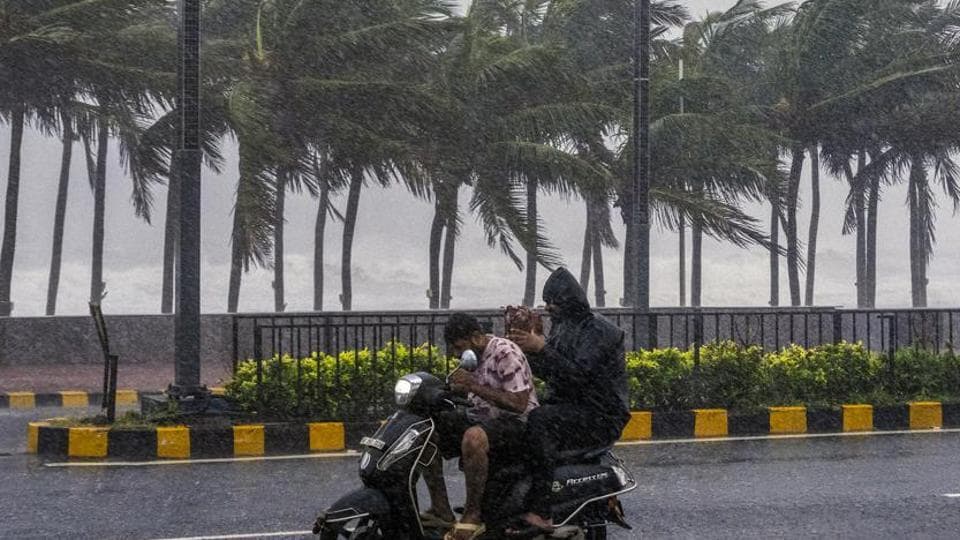
According to the India Meteorological Department (IMD), the process of the extremely severe cyclone making landfall began on Tuesday night in Konaseema district and Narsapuram areas in West Godavari district.
A bulletin released by AP State Disaster Management Authority chairman Prakhar Jain at 6am on Wednesday said the landfall process of the very severe cyclone Arnab was continuing, with its “eye” located approximately 30km from Narsapur, 55km from Yanam, 70km from Kakinada and 90km from Machilipatnam.
“Gusty winds with speeds of 125-135 kmph have been reported in Kakinada, Konaseema and West Godavari districts and will continue over the next three hours,” Jain said.
According to reports being received in the control room at the state secretariat, uprooted trees, fallen electricity poles, damaged roads, inundated low-lying areas and widespread power outages were reported from Srikakulam in the north to Bapatla in the south.
Visakhapatnam district recorded the highest rainfall, with 200.20mm reported by midnight on Tuesday. Kothavalasa in Vizianagaram district received 162.75mm.
Sea waves in the Kakinada and Yanam regions reported to have risen to the heights of 1.5 to 2.5 metres, while reports from affected coastal stretches indicated waves surging much higher in some locations.
Road, rail transport hit
As many as 63 trains were cancelled and 15 others rescheduled in view of the deteriorating weather conditions. The Andhra Pradesh State Road Transport Corporation (APSRTC) cancelled 160 services in Visakhapatnam district.
The government has imposed restrictions on night-time travel in Visakhapatnam and several other districts from Tuesday night as a precautionary measure.
Road connectivity was disrupted at multiple locations, including stretches of National Highway 16 between Kathipudi and Ongole, where traffic movement came to a standstill, according to reports from the affected areas.
Visakhapatnam affected by heavy rain and winds
Visakhapatnam bore the brunt of heavy rain and powerful winds, with seawater advancing significantly towards the city. Uprooted trees blocked roads and damaged vehicles. Electricity supply was disrupted across the city.
Extremely heavy rainfall was reported in Visakhapatnam, Vizianagaram, Srikakulam, Parvathipuram Manyam, Anakapalli, Alluri Sitarama Raju, Kakinada and East Godavari districts.
The situation remained tense in coastal settlements as residents faced the combined threat of heavy rain, strong winds and rising sea levels.
Coastal damage reported in Kakinada and Konaseema
The coastal areas of Kakinada and Dr BR Ambedkar Konaseema districts were among the worst-affected regions as Cyclone Arnab intensified on Tuesday night.
What began as light rain in the morning developed into torrential downpours accompanied by powerful winds by nightfall, bringing normal life to a standstill. Waves surged along the coast, with reports from affected stretches indicating heights of five to eight metres.
At Kothapatnam near Uppada, a protective wall constructed with boulders was severely damaged by the force of the waves. Several motorcyclists travelling along coastal roads lost their balance amid the powerful winds and spray from the sea. Six people sustained minor injuries.
Uppada–Kakinada Beach Road damaged
Large stones placed as part of coastal erosion-control measures were broken apart or dislodged and scattered across the road, further obstructing movement.
Hundreds of electricity poles collapsed in Kakinada and Konaseema districts, while numerous hoardings were brought down by the winds. Several mobile towers were also tilted or damaged. With power supply to many towers interrupted, mobile communication signals failed in several areas.
At Allavaram, seawater reached the compound wall of an ONGC plant. Several tin-roofed sheds were blown away in villages, while poultry farms suffered extensive damage.
Yanam also witnessed the collapse of trees and electricity poles at several locations. A rehabilitation centre set up for evacuated residents was inundated, with water entering the entire ground floor. Officials shifted the occupants to the first floor to protect them from the rising water.
Residents moved to relief centres
Authorities had moved people from low-lying areas in several mandals of Kakinada and Konaseema districts to relief and rehabilitation centres as the cyclone’s impact intensified.
Also Read:Cyclone ‘Arnab’ to form? IMD warns of deep depression, shares landfall update; Odisha schools shut
In West Godavari district, several trees were uprooted in Narsapuram, while power supply disruptions plunged the town and neighbouring villages into darkness.
Around 3,000 people from Chinna Lanka, PM Lanka, East Thallu and Vemuladeevi villages were shifted to rehabilitation centres as a precaution against the cyclone and possible coastal inundation.
Coastal districts remain on high alert
With Cyclone Arnab’s landfall process expected to continue until the early hours of Wednesday, coastal districts remained on high alert. The combination of destructive winds, torrential rainfall, high waves and seawater intrusion had already caused extensive damage to transport infrastructure, electricity networks, roads, homes and agricultural fields.
Evacuation operations were under way in vulnerable coastal and low-lying settlements, while electricity department personnel were engaged in restoration work.
Frequently Asked Questions


