E-Paper



Cyclone Arnab nears Andhra coast as 1.5 lakh people evacuated
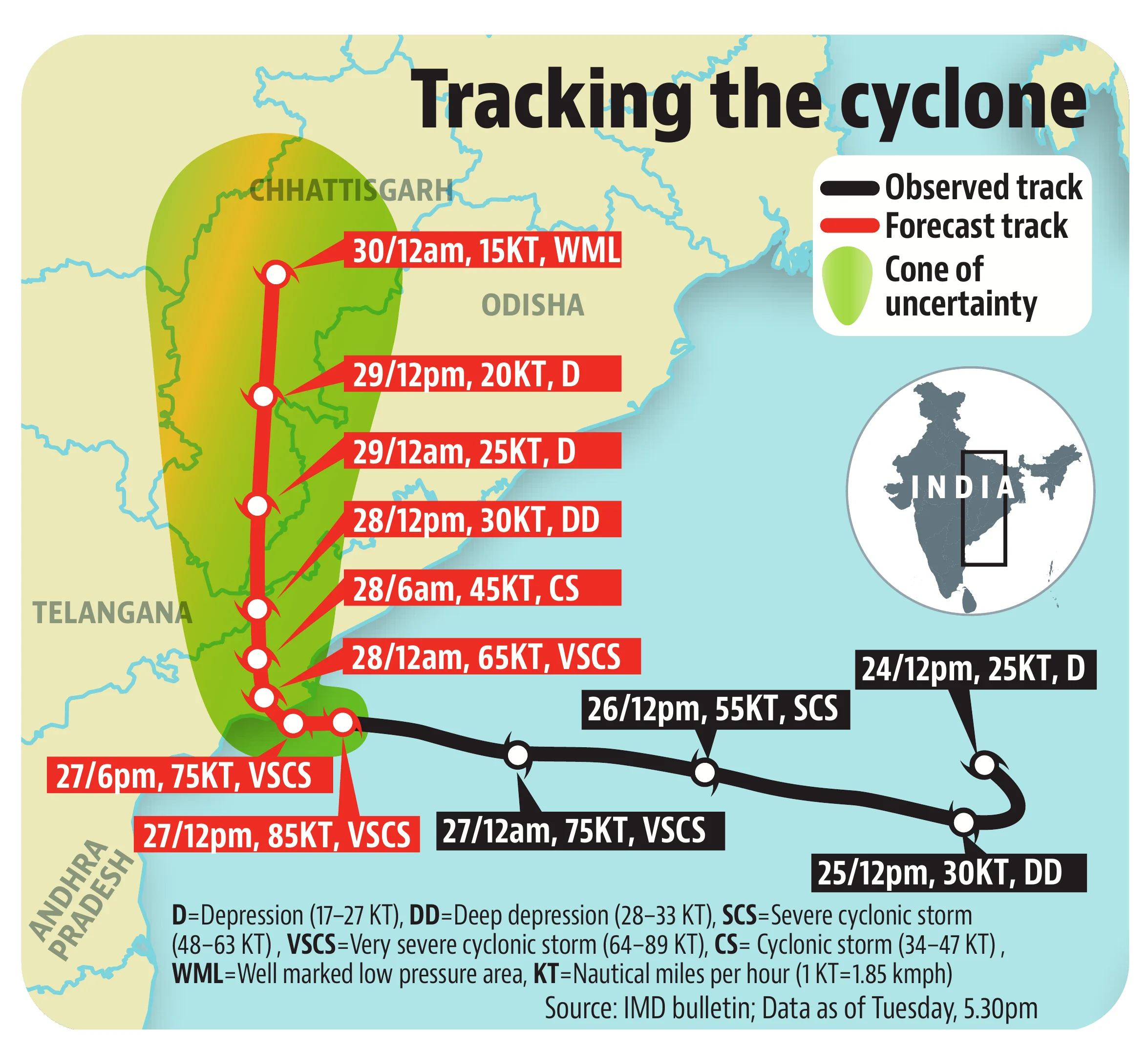
The storm is forecast to make landfall between Bapatla and Visakhapatnam early Wednesday, with wind speeds reaching 125 kmph and gusts up to 140 kmph.

 Prefer HTon Google


Cyclone Arnab intensified over west-central Bay of Bengal and picked up speed late on Tuesday, barrelling towards the coast of Andhra Pradesh, even as nearly 150,000 people were moved to shelters and rescue teams were deployed as part of efforts to mitigate the destruction caused by the weather system.
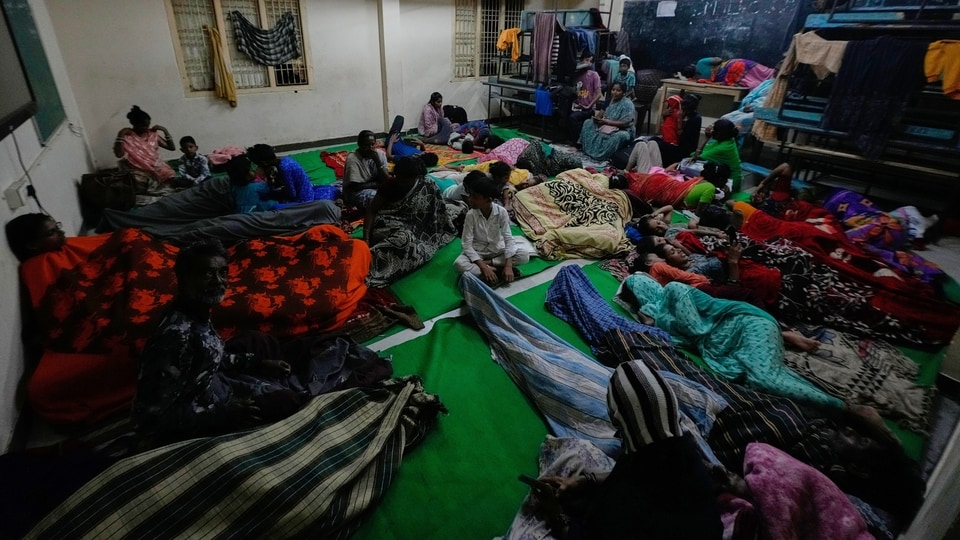
The very severe cyclonic storm was forecast “to cross Andhra Pradesh and Yanam coasts between Bapatla and Visakhapatnam between 2am and 4 am on Wednesday”, a weather department update said on Tuesday evening.
The department had earlier forecast the cyclone to cross the Andhra Pradesh coast on Wednesday forenoon.
Deep Dive

Andhra Pradesh, Odisha, Telangana, Chhattisgarh, Uttar Pradesh and Bihar were placed on alert for heavy rain and strong winds.
Nearly 1.5 lakh people moved to safety
According to statements by state governments, Andhra Pradesh moved 90,000 people till Tuesday evening and Odisha about 48,000. Further evacuation in vulnerable areas is expected during the night and Wednesday morning, officials said.
“Our idea is only one; not even losing a single life. Saving all lives is our priority. There is no need for people to panic but they have to take precautions,” Andhra Pradesh chief minister N Chandrababu Naidu said.
In Andhra Pradesh, the cyclone impact began early Tuesday, with gusty winds reported from coastal districts. Heavy rainfall accompanied by strong winds was expected to intensify in north coastal Andhra Pradesh. State disaster management authority managing director Prakhar Jain said the cyclone moved at a speed of 25 kmph for six hours.
The cyclone was expected to continue west-northwestward before turning northwestward, with winds along the coast reaching speeds of 90–100 kmph. The wind speeds during landfall may increase to 115–125 kmph, with gusts reaching up to 140 kmph. Widespread rainfall was forecast across Andhra Pradesh on Wednesday. Extremely heavy rainfall was likely in some districts, according to the weather department. The combination of heavy rain and strong winds was likely to damage trees, electricity infrastructure, temporary structures and buildings in vulnerable areas.
Jain appealed to people to remain alert, avoid unnecessary travel and stay indoors in safe locations. He warned people against standing near trees, large hoardings and dilapidated buildings, which could collapse or be uprooted in strong winds.
Also read: Cyclonic storm Arnab LIVE: Cyclone Arnab's landfall process continues; brings strong rains, winds
IMD lists districts likely to face extremely heavy rainfall
On Wednesday, extremely heavy rainfall is forecast in Visakhapatnam, Anakapalli, Alluri Sitarama Raju, Polavaram, Kakinada, Konaseema, East Godavari, West Godavari, Eluru, NTR and Krishna districts.
Authorities cautioned that rainfall intensity and the geographical spread of the impact will depend on the cyclone’s movement and the conditions prevailing during landfall.
Eight state and seven nations teams and seven national disaster response force teams have been deployed in Andhra Pradesh. An additional three SDRF teams and five NDRF teams are available for deployment, if required. The Andhra Pradesh government on Monday night released ₹ 27 crore for cyclone-related preparedness and relief operations, and officials briefed chief minister N Chandrababu Naidu on the precautionary measures and the overall preparedness to manage the cyclone.
Residents in vulnerable coastal and low-lying areas have been urged to take precautionary measures and remain in safe locations.
Officials said people can seek a faster response to cyclone-related problems through the Mana Mitra WhatsApp number: 9552300009.
The cyclone is expected to have a significant impact across 16 districts, covering 2,460 revenue villages and 92 urban areas in Andhra Pradesh.
Also read: Cyclone Arnab: Origin of the name and the system behind naming tropical cyclones
Andhra identifies shelters and control rooms across affected areas
Authorities have identified 1,763 cyclone shelters and established 2,907 control rooms at district and mandal levels. A total of 3,185 nodal officers have been appointed to coordinate relief and emergency response.
Beaches have been closed to the public, while movement on coastal roads has been suspended. Cabinet Secretary T V Somanathan, who chaired the NCMC meeting on Monday to review preparedness for the cyclone, directed central agencies and state governments to prioritise saving lives, minimise damage to property and infrastructure, and ensure the swift restoration of essential services in the event of disruptions.
The India Meteorological Department (IMD) has also warned of possible impacts in Telangana, south and central Chhattisgarh, eastern Uttar Pradesh and Bihar.
The Army, Navy, Air Force and Indian Coast Guard have kept rescue and relief teams, ships and aircraft ready for deployment. The Coast Guard has escorted vessels and boats to jetties or shore and alerted others to return, officials said. The National Disaster Management Authority and the IMD were monitoring the situation and coordinating with states and central agencies.
Also read: UP on alert as raging Cyclone Arnab likely to bring unseasonal rain to Lucknow
Odisha prepares for cyclone
In Odisha, which lies to the northeast of Andhra Pradesh, bounded by it along its southern border, orange alert has been sounded, indicating disruptions, heavy to very heavy rainfall and potential hazards, in Puri, Ganjam, Gajapati, Rayagada, Koraput and Malkangiri districts. Personnel from the National Disaster Response Force (NDRF), Odisha Disaster Rapid Action Force (ODRAF) and fire services have also been put on alert.
Also read: Cyclone Arnab: Heavy Rain Causes Waterlogging In Puri, Devotees Affected | HT India
In Ganjam, public access to all beaches, including tourist destinations, has been prohibited while 135 cyclone shelters and 1,600 temporary accommodation centres have been readied for evacuations. The Odisha government ordered closure of schools in Rayagada, Koraput, Nabarangpur, Ganjam and Puri from Tuesday. The Odisha Public Service Commission rescheduled the civil services examination to October 31 and November 5.