
 E-Paper



Toxic foam in Yamuna, dense smog: Delhi battles severe air quality | Visuals
Severe-plus’ category AQI, necessitated the need for the activation of the Stage 4 GRAP curbs in Delhi from Monday morning.

 Prefer HTon Google


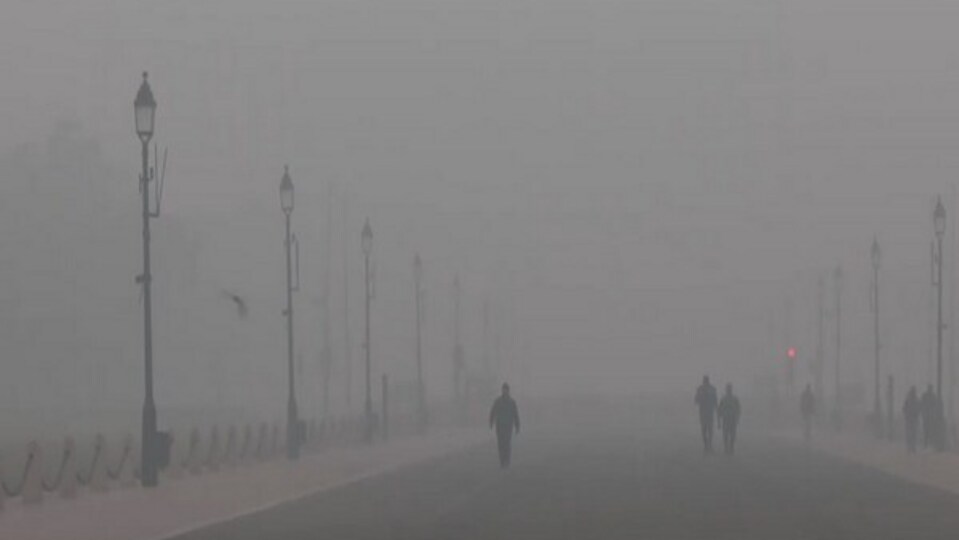
Delhi and its adjoining areas of Gurugram, Noida and Ghaziabad were covered in a thick blanket of smog, a day after the air quality in the national capital worsened to ‘severe-plus’ category, necessitating the need for the activation of the Stage 4 of the anti-pollution Graded Response Action Plan (GRAP) from Monday morning and triggering possibility of the odd-even rule for cars of coming into effect.
Delhi's daily average Air Quality Index (AQI) rose sharply to 457 by 7 pm on Sunday, and further escalated to 485 by 9 am on Monday morning, according to data from the Central Pollution Control Board (CPCB). This severe spike prompted an emergency meeting of the GRAP Sub-Committee.
Track Delhi Air Pollution LIVE Updates
The Graded Response Action Plan (GRAP) for the National Capital Region (NCR) is classified under four different stages of adverse air quality in Delhi: Stage I -- 'poor' (AQI 201-300); Stage II -- 'very poor' (AQI 301-400); Stage III -- 'severe' (AQI 401-450); and Stage IV -- 'severe plus' (AQI >450).
Visuals from Delhi-NCR showed vehicles moving amid dense smog, with close to zero visibility in some areas.
Toxic foam was seen floating on the Yamuna River in Delhi's Kalindi Kunj, as pollution level in the river continues to remained high. "...I have been living here for 20 years...This [air pollution] causes burning in the eyes, breathing difficulties, cough and cold. Pollution is very high here. Water is polluted too... We are habituated now. But someone new won't be able to stay here, they would fall ill immediately...," said Ramashish Paswan, a local.
In Uttar Pradesh's Agra, which is a little over 200 kms from Delhi, foggy conditions engulfed the Taj Mahal, making it barely visible from a distance.
The low visibility due to dense smog in Delhi prompted the Indira Gandhi International Airport (IGI) to issue an advisory asking passengers to contact the airline concerned for updated flight information.
“Low visibility procedures are in progress at Delhi Airport. All flight operations are presently normal. Passengers are requested to contact the airline concerned for updated flight information,” Delhi International Airport Limited (DIAL) said in its advisory.
The overall Air Quality Index (AQI) in Delhi at around 8:30 am on Monday morning stood at 484, the ‘severe’-plus' category, according to readings in the Sameer app, which provides hourly update of the National Air Quality Index published by Central Pollution Control Board (CPCB).
GRAP 4 in Delhi
Delhi on Monday came under the Stage Four of the GRAP curbs which were announced on Sunday in response to worsening air quality.
The Stage-IV response encompasses an 8-point action plan designed to mitigate the pollution crisis. Key measures include banning the entry of non-essential truck traffic into Delhi, except for trucks carrying essential commodities or providing essential services.
LNG/CNG/electric and BS-VI diesel trucks will still be permitted. Light commercial vehicles (LCVs) registered outside Delhi will also be restricted from entering, except those powered by electric, CNG, or BS-VI diesel engines. Delhi-registered BS-IV and below diesel-operated medium and heavy goods vehicles will be prohibited from operating, except for those carrying essential services.
The Sub-Committee has also extended the ban on construction and demolition activities to include public infrastructure projects like highways, roads, flyovers, and power transmission lines.
State governments and the Government of Delhi (GNCTD) have been advised to consider shifting physical classes for students in grades VI-IX and XI to online mode and to limit office attendance to 50%, with the rest working from home. A similar work-from-home arrangement may be considered for central government employees.
Additionally, state governments have been asked to consider emergency measures such as closing colleges and non-essential commercial activities and implementing an odd-even vehicle policy to reduce pollution. The Commission For Air Quality Management (CAQM) has called on citizens to cooperate with these measures and stay indoors as much as possible, especially vulnerable groups such as children, the elderly, and those with respiratory or cardiovascular conditions.
The CAQM said that it is closely monitoring the air quality and will review the situation regularly to assess further action.


