
 E-Paper



Delhi University strategic plan found plagiarised, withdrawn
A statement from the Vice-Chancellor’s office stated that the V-C will take the considerations flagged by the members.

 Prefer HTon Google


On Wednesday, Delhi University’s academic council convened to discuss the university’s strategic plan for the next 25 years. This 52-page document, however, was peppered with instances of plagiarism from similar documents of other universities across the world, prompting vehement opposition from council members and forcing the blueprint to be sent back to a committee to revise it.
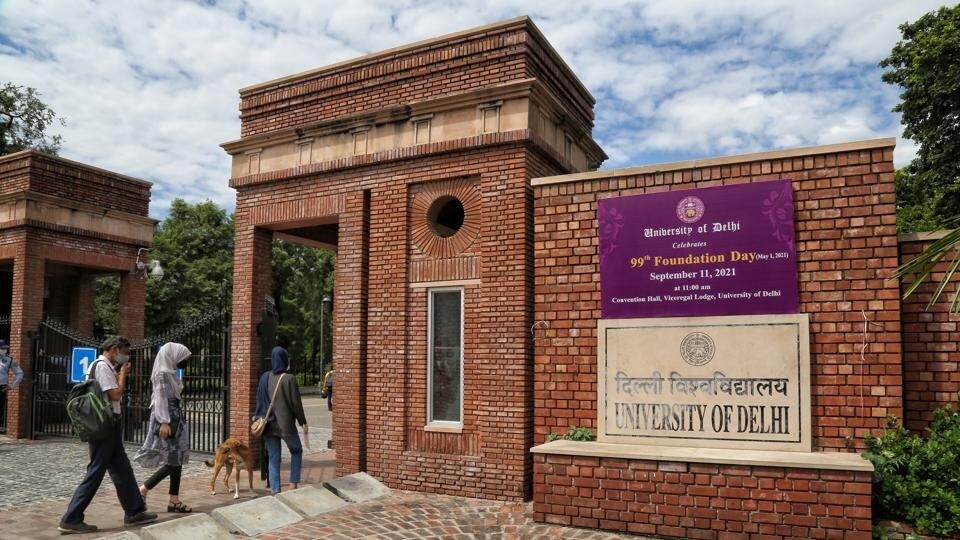
The university’s registrar, Vikas Gupta, confirmed the document had been withdrawn to be reworked by the committee that drafted it and added that plagiarism was limited to 8% of the document.
“According to the committee’s members, only 8 percent of the document was plagiarised. However, we will send the document back to the committee and they will revise it,” Gupta said.
A statement from the Vice-Chancellor’s office stated that the V-C will take the considerations flagged by the members. “The Vice-Chancellor said that linguists and editors will also be included in the committee to look into the linguistic nuances of the draft,” said the statement.
The committee’s chairperson did not respond to requests for a comment.
The allegations of plagiarism are not the first time the Strategic Plan for Delhi University (2022-2047) has been criticised. It was presented before the executive council in June for approval but was sent back for revisions after some academics slammed it as a “clear blueprint for privatisation and contractualisation”.
Academic council members argued that the plan needs to be rewritten with Indian contexts included. Vikas Gupta, an AC member, highlighted that the draft does not mention concepts of secularism, reservation, or the term minorities. “The term Dalit figures only once and that too in connection with indigenous knowledge. The term caste has been used only once, while this continues to be the most important social phenomenon of our personal and public life to reckon with,” he added.
Mithuraaj Dhusiya, another member of DU’s academic council, said: “It began with a discussion on the plagiarism because if we cannot write our own document, what does that say about the university? However, since we were there, we went ahead to discuss the document and highlighted the fact that there are no mentions of funding.”
Some of the texts flagged and shared by some members of the academic council showed the purportedly plagiarised paragraphs were lifted from documents of Ohio State University and University of Sheffield.
For instance, the vision and strategic plan page on University of Sheffield’s website reads, “Our motto “Rerum Cognoscere Causas” (to discover the causes of things), is as relevant today as when we were founded in 1905. However, the world is now a very different place. As the world has evolved, so have we. As we have grown, so have our ambitions. Now we don’t just want to understand the world, we want to change it. We believe in bold action and are unified in the knowledge that we can transform the world we live in for the better.” This same paragraph figures verbatim on DU’s strategic plan, with only the motto changed to “Nistha Dhriti Satyam” instead of “Rerum Cognoscere Causas”.
A list of such lifted paragraphs was drawn up by the Democratic Teachers’ Front, who claimed that paragraphs were also lifted from documents by Piedmont Technical College, Friends College Kaimosi, Kenya, University of Science & Technology, Meghalaya, IGNOU course material and a paragraph from a blog on the UNESCO website.
A second purported example they cited was copied from a plan by Friends College Kaimosi, Kenya, which read: “The University needs to continue with Research and Development Programmes in order to improve the current status through innovations, collect and act on feedback from interested parties and to explore new frontiers of Science, Technology & Innovation. Research is a necessity in acquiring new knowledge which must be disseminated to relevant persons for it to be useful.”
A dissent note signed by six AC members said: “Plucked out of local needs and realities, the proposed strategic plan fails to actually keep up the University’s prevailing problems challenges, long-standing issues, and advantages at the centre of the agenda setting for the next 25 years.”


