
 E-Paper



Delhi’s rural villages face an urbanisation challenge
Residents of these villages say that the inordinate delay in planning and execution of these policies for rural areas has led to unregulated development

 Prefer HTon Google


In 2013, the union government notified the land pooling policy for planned development in Delhi’s rural areas, looking to meet a growing housing requirement.
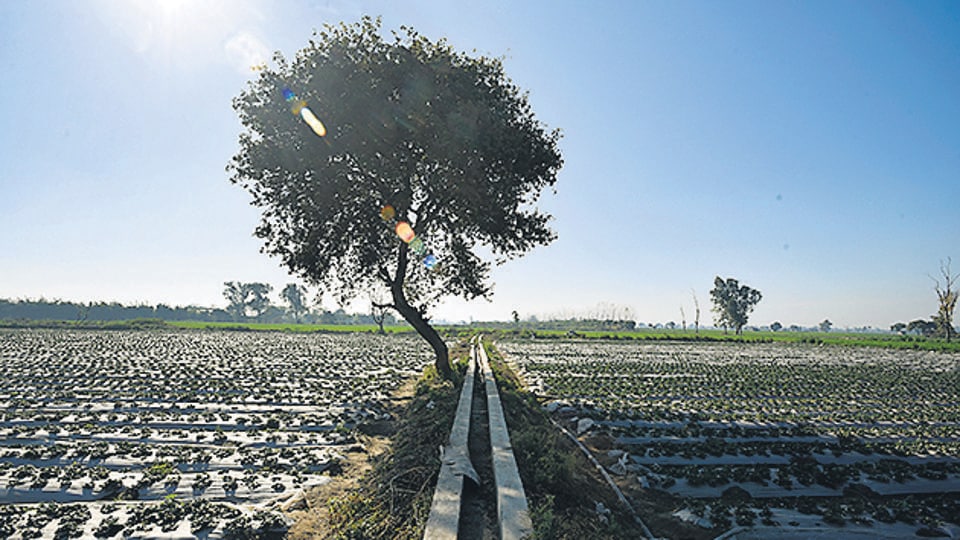
Earlier this year, the Delhi Development Authority (DDA) announced another policy called the Green Development Area (GDA) in the draft Master Plan of Delhi-2041, allowing for regulated development in 49 peripheral villages located in the capital’s greenbelt.
Currently, construction activity is not allowed in these villages, with some concerns being raised on the long term environmental costs that may be associated with these policies as well.
With income from agriculture no longer sufficient to support their families, farmers and land-owners in these villages are banking on these two policies for their livelihood but they have yet to be implemented.
While the status of 110 rural villages has changed from rural to urban in government records, the land pooling policy, notified again in 2018, is yet to be operationalised, while the GDA policy is yet to be notified.
Residents of these villages say that the inordinate delay in planning and execution of these policies for rural areas has led to unregulated development. Bhupinder Bazad, a resident of north Delhi’s Hiranki village near Narela, said, “The status of the village is urban so we don’t get any benefit from the government for agricultural activity, as it is no longer allowed. But we can’t construct even a small house as the policy is yet to be operationalised.”
The policies
Over the years, agricultural activity has declined in Delhi. As per the Economic Survey of Delhi 2020-21, “The percentage contribution of the agriculture sector to Gross State Value Added (GSVA) of Delhi at current prices reduced from 0.94 per cent in 2011-12 to 0.38 per cent in 2020- 21.”
The land pooling policy, Bazad said, provided an avenue for landowners to explore other modes of income. Under the policy, the developer (landowners) will get 60% of the total pooled land of which 53% will be residential; 5% commercial and 2% for public and semi-public facilities. The remaining 40% will be earmarked for social and civic infrastructure.
So far, 6,936 hectares of land has been pooled by 6,649 landowners, the Ministry of housing and urban affairs recently told the Parliament.
The GDA policy, which was put up for public scrutiny in February this year, will make way for the development of institutions, hospitals, big parks, non-populating commercial activities and low-density housing to come up in greenbelt villages.
Currently, no new construction, either residential or commercial, is allowed in the 47 rural villages located on the city’s periphery such as Dhansa, Mitraon, Palla, Tajpur Kalan etc, and 23 villages with a large number of farmhouses such parts of Rajokri, Bijwasan, and so on.
Challenges in the implementation of land pooling
The land pooling policy, once implemented, will allow for the construction of 1.7 million dwelling units to meet the city’s future housing needs. One problem however has been that land-owners have to form a consortium and 70% of contiguous pooled land is needed in a sector, around 100 acres in size.
The other problem is the clause related to contiguous land. A senior DDA official aware of the development said, “There are issues related to land parcels that have not been pooled-in in sectors where we have reached the percentage of land required to implement the policy. Currently, there is no provision to get these land parcels. If this issue is not addressed, development in land pooling sectors can’t happen.”
Sabyasachi Das, former planning commissioner in-charge with DDA, said, “The present Delhi Development Act doesn’t provide any legal backing for land pooling. Therefore, suitable changes are required in the Act as land pooling is one of the key development models for planned development. How will work be carried out if the owner of one land parcel refuses to participate in the process? It is difficult for government agencies to acquire land now. A solution has to be found to address this issue.”
The Delhi Dehat Vikas Manch, an association of Delhi landowners in rural villages, has planned a meeting on December 21 to discuss the issue of delay in the implementation of the policy. Bazard, president of the master plan committee of the Delhi Dehat Vikas Manch said, “Delay in the implementation of the policy will only result in more unauthorised development.”
Challenges in the implementation of GDA
The GDA policy has been met by a lack of unanimity, with some farmers believing that it will result in rampant commercialization, while others argue that regulated development is needed to provide essential services such as hospitals, schools and new sources of income.
Harvinder Singh, a resident of southwest Delhi’s Daurala village, was one of those that said he wanted the GDA policy to be implemented at the earliest. “The size of our family has grown over the years, but we don’t have permission to construct a new house even if we have land available. The villages have been ignored for a long time. It is not possible to earn our livelihood from farming,” said Singh, an advocate, who has close to five acres of agricultural land.
Paras Tyagi, a resident of Budhela village who runs the Centre for Youth Culture and Law and Environment, a voluntary group working in the rural belt of Delhi, however, said the policy will only result in chaos in these villages.
“We have seen what mixed land use has done to the planned areas of Delhi. This policy will only result in farmers selling their land. If GDA is notified, it will result in a similar mess in the greenbelt. There is a need to make a village development plan so that the essential problems of lack of infrastructure, space for housing etc are met. Moreover, the greenbelt, which basically has one peripheral village, is required, especially now that pollution is such a big problem in the city,” said Tyagi.
Urban planners and environmentalists also are against this policy as they say that it will result in rampant commercialisation. AK Jain, former planning commission at DDA, said, “Construction activity in greenbelt villages was banned for a reason. The greenbelt is a buffer zone and efforts should be made to protect it. This policy will only result in rampant commercialisation and congestion in the border villages.”
Diwan Singh, a Delhi-based environmentalist, said, “The government should give incentive to farmers to continue with agricultural activity. This way the greenbelt will be protected.”
No planning for urbanised villages
In Delhi today, there are 49 rural villages and 317 urbanised villages. These urbanised villages lie in a state of neglect with no proper civic and social infrastructure. Jitender, a resident of Jhuljhuli in Najafgarh, said that the government should prepare a proper village development plan so that villages don’t end up as unauthorised colonies.
“The gram sabha land should be used for the village’s needs even after the village is declared urban. The government should provide space to villages, who give their land for development, where they can construct commercial and residential units,” said Jitender.
While DDA officials say that social infrastructure will be provided for villages in the sector-wise plan under the land pooling policy, villagers demand village-specific plans.
Ever since the land pooling policy was notified, Tyagi has been trying to bring together villagers to raise such a demand. “Development of villages should be an integral part of land pooling. The DDA should prepare a detailed village development plan for each village in consultation with residents,” said Tyagi.


