
 E-Paper



Does Delhi feel a bit cold already? India may see early winter, thanks to La Nina | Explained
Meteorologists attribute the current weather activity and the upcoming seasonal trends to evolving La Niña conditions.

 Prefer HTon Google


India is expected to see the winter season earlier than usual this year, with snowfall already blanketing the higher reaches of Himachal Pradesh and Jammu and Kashmir. Delhi and parts of the northern plains have also seen a sharp dip in temperature in recent days.
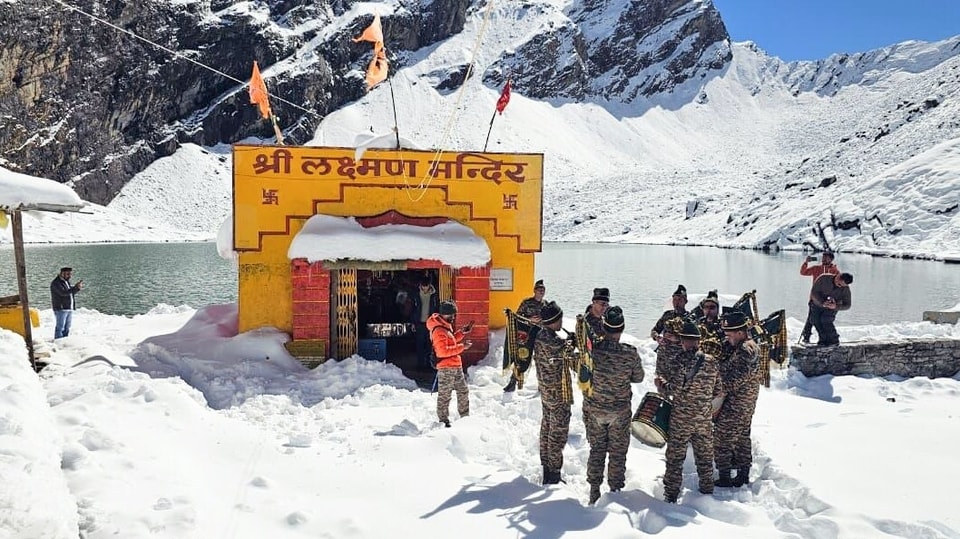
Srinagar saw snowfall last week, much ahead of schedule, while the plains in Jammu and Kashmir also witnessed moderate to heavy rainfall, contributing to the chill in the air.
Snowfall continued throughout the week in higher-altitude Himachal Pradesh, and rain lashed the lower parts of the state. As a result, temperatures in both Himachal and Punjab saw a noticeable dip.
Meteorologists attribute the current weather activity and the upcoming seasonal trends to evolving La Nina conditions, marked by the cooling of ocean surface temperatures in the central and eastern Pacific.
La Nina: Phenomenon that may bring early winters to India
La Nina is a phase of the wider El Nino Southern Oscillation (ENSO), a climate phenomenon. It is about changes in sea temperatures along the central and eastern tropical Pacific Ocean, accompanied by fluctuations in the atmosphere. The ENSO phenomenon influences global atmospheric circulation too, which, in turn, influences the day's or season's weather.
There are three phases of ENSO – warm (El Niño), cool (La Niña), and neutral — that occur in irregular cycles of two to seven years.
Winds in the La Nina phase become stronger than usual, and push larger quantities of water to the western Pacific, making it warmer. Consequently, the eastern side of the world, where India is, becomes colder. This means increased rainfall and, hence, lower temperatures.
According to the experts at the India Meteorological Department (IMD), La Nina may lead to a colder winter in several parts of India, especially the north. That means cold waves and increased snowfall in hilly regions.
The IMD has forecast above-normal rainfall for most parts of the country in October, with the month expected to receive around 115 per cent of the average of 75.4 mm.
The northeast monsoon season (October–December) is also expected to be wetter than usual, especially over Tamil Nadu, Kerala, coastal Andhra Pradesh, and adjoining regions, where rainfall could exceed 112 per cent of the average.
Delhi weather
Delhi is witnessing a gradual rise in air pollution levels amid a drop in temperatures. The national capital's air quality was recorded in the "moderate" category.
According to the IMD, the city's low was 19.6 degrees Celsius, 1.4 degrees below normal.
The national capital recorded a minimum temperature of 19.4 degrees Celsius on Saturday, and on Friday, it recorded its first temperature drop below the 20-degree Celsius mark for the 2025-26 winter season, with a minimum temperature of 18.8 degrees.
At 9 AM, Delhi's AQI was 162, which was in the "moderate" category. This was a slight improvement from the 24-hour air quality index of 199 recorded on Saturday.
The IMD has forecast mainly clear skies during the day, with the maximum temperature likely to hover around 31 degrees Celsius. The relative humidity at 8:30 AM stood at 79 per cent.
As per the CPCB, an AQI between zero and 50 is considered "good", 51 to 100 "satisfactory", 101 to 200 "moderate", 201 to 300 "poor", 301 to 400 "very poor" and 401 to 500 "severe".


