E-Paper



Experts debate conservation approach under Sultan Ghari revival plan
Sultan Garhi, a historic mausoleum from 1231, is experiencing renewed controversy due to a proposed park by the DDA.

 Prefer HTon Google


New Delhi : Tucked into the rocky outcrops of south Delhi’s Vasant Kunj, the Sultan Garhi complex sits without fanfare, its weathered stone walls bearing witness to eight centuries of history, neglect, rediscovery, and now, renewed controversy.
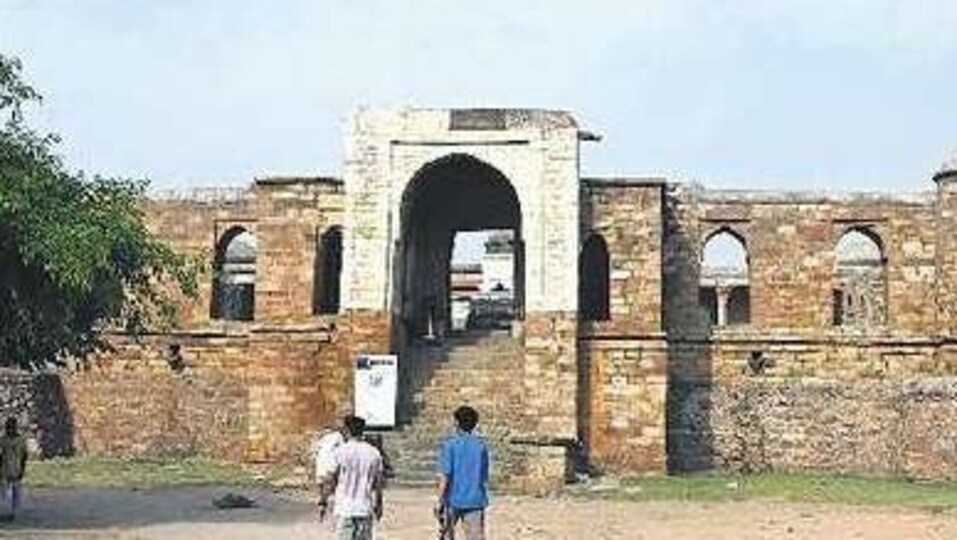
Built in 1231 by Sultan Shamsuddin Iltutmish of the Delhi Sultanate for his eldest son, Nasiruddin Mahmud, Sultan Garhi is regarded by many historians as India’s first Islamic mausoleum. Long before the grandeur of Humayun’s Tomb — which came more than 300 years later — defined Delhi’s architectural identity, this fortified, almost secretive structure marked the beginning of a funerary tradition that would shape the subcontinent’s architecture.
Unlike later Mughal tombs that sought visibility and magnificence, Sultan Garhi is recessed. Its central crypt sinks below ground level, enclosed within high, rugged walls that resemble a fortress more than a tomb. According to experts, the structure blends early Indo-Islamic architectural elements with local craftsmanship, incorporating reused temple fragments, intricate stone carvings, and a courtyard that has, over centuries, doubled as a site of local reverence.
Yet, for all its historical primacy, Sultan Garhi — located adjacent to Vasant Kunj D-Sector — has slipped into obscurity. Hemmed in by urban sprawl, the monument remained largely ignored in mainstream narratives of Delhi’s past.
“It is ironic that what is arguably the first of its kind in India is also among the least understood. Sultan Garhi represents a transitional moment where Islamic funerary practices began to adapt to Indian materials, aesthetics, and labour. Its importance is foundational, not ornamental,” said historian Swapna Liddle.
The monument’s isolation was both its curse and its protection. Encroaching vegetation, minimal footfall, and limited conservation ensured that while it avoided the pressures of mass tourism, it also suffered from neglect.
A park proposal, and controversy
In 2017, the Delhi Development Authority (DDA) sought to change that. It proposed the development of a 25-hectare heritage park around Sultan Garhi, envisioning landscaped zones, improved access, and water harvesting systems aimed at conservation as well as public engagement.
But the proposal languished for years, caught in bureaucratic inertia. Now, nearly nine years later, work has finally begun, only to be halted again amid allegations that have sparked fresh debate about how heritage sites should be restored.
According to DDA officials familiar with the project, initial groundwork involved clearing large patches of vegetation to make way for pathways and infrastructure.
However, this reportedly included the felling of 4-5 trees without proper forest clearances, according to activists, prompting intervention by the forest department. A senior DDA official, speaking on condition of anonymity, defended the project’s intent but acknowledged procedural lapses.
“The objective has always been to preserve and enhance the site’s visibility. Some preliminary work may have outpaced approvals, but corrective steps are being taken,” the official said.
Conservationists and historians, however, argue that the issue runs deeper than administrative oversight. “The approach appears cosmetic rather than scientific. You cannot treat a 13th-century monument like a public park project. Restoration must be informed by archaeological research, material analysis, and historical context. Otherwise, you risk erasing the very authenticity you claim to protect,” Liddle said.
Experts said that Sultan Garhi’s uniqueness lies not just in its age, but in its layered construction – its use of spolia (reused building fragments), its hybrid stylistic vocabulary, and its integration with the surrounding terrain. Any intervention, they argue, must be sensitive to these elements.
Environmental concerns have further complicated the project. “The Aravalli ridge ecosystem around it is as significant as the monument itself. Tree cutting in this area disrupts biodiversity, affects groundwater recharge, and alters the microclimate. Heritage conservation cannot come at the cost of ecological damage,” said Gunjan Uppal, an activist who lives in the area.
Over the centuries, the tomb has also functioned as a dargah, attracting devotees who regard Nasiruddin Mahmud as a saintly figure. This tradition adds another layer of complexity to conservation efforts, requiring a balance between preservation and community use.
With DDA having paused the work to look into the allegations, For now, the project remains in limbo, its future uncertain, its past once again overshadowed by present-day disputes. What remains undeniable, however, is Sultan Garhi’s place in the story of Delhi.
“This is where it all began. Before the grand narratives, before the imperial statements, there was this quiet, experimental structure. If we fail to preserve it properly, we are not just losing a monument; we will be losing the origin of a tradition,” Liddle added