
 E-Paper



Eye on China, govt to bar universities from pacts with India’s neighbours
While the ministry of external affairs was initially hesitant in mandating approvals for such partnerships with institutions from friendly countries like Bangladesh, Bhutan and Nepal that share land borders with India, HT learns that South Block now has no objections to the education ministry’s plan.

 Prefer HTon Google


The education ministry, after consultation with the Ministry of External Affairs, is considering making it mandatory for Indian universities to obtain prior permission from the government before signing any memorandum of understanding (MoUs) with educational institutions of countries that share land borders with India.
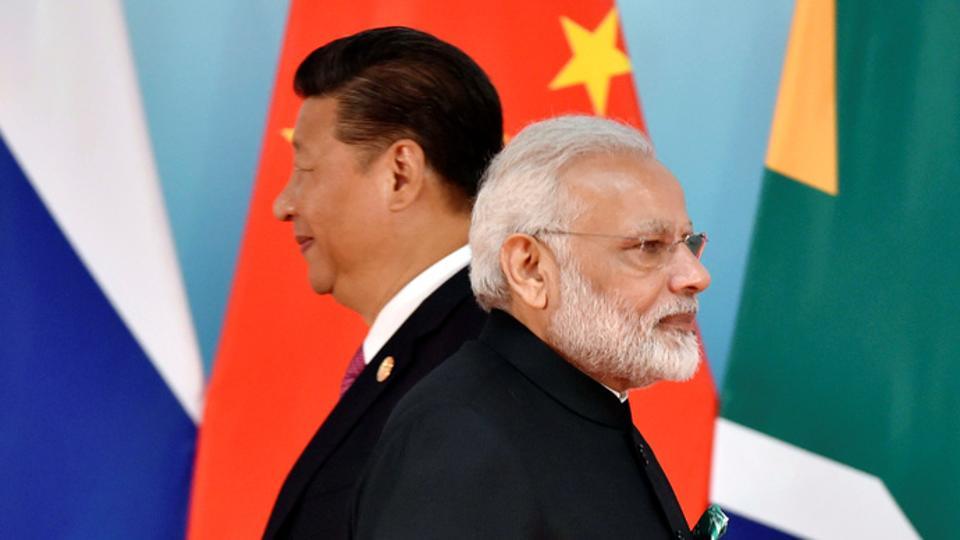
The proposal was mooted by the education ministry after an August 9 review of China-funded Confucius Centres attached to universities here and also MoUs signed between Indian and Chinese universities. The Confucius program is financed by the Office of Chinese Language Council International which has been linked to China’s United Front Work Department (UFWD) now headed by President Xi Jinping. Ostensibly meant to teach Chinese language and culture, the Confucius program has been accused of promoting China’s viewpoint and act as a vehicle for propaganda. Several countries including Australia and the US have previously had issues with the institutes.
The Confucius Institute had tied up with seven universities in India: Delhi’s Jawaharlal Nehru University has an MoU; and the centres attached to the University of Mumbai and the School of Chinese Language, Ballygunge, Kolkatta are already active. As of April 1, 54 MoUs have been signed between Indian and Chinese educational institutions including for the exchange of students and faculty.
While the ministry of external affairs was initially hesitant in mandating approvals for such partnerships with institutions from friendly countries like Bangladesh, Bhutan and Nepal that share land borders with India, HT learns that South Block now has no objections to the education ministry’s plan. “ We have discussed the matter with the education ministry. They will now have to implement this through an order,” said a senior South Block official who asked not to be named.
This is a change from the past where universities signed MoUs with institutions in foreign countries without informing either the education or foreign ministries . The education ministry has also asked both the Mumbai University and Kolkata School of Chinese Languages to submit documentation pertaining to their partnership and details of their exchange activities with Confucius Headquarters in China for review.
JNU has signed 12 MoUs with Chinese universities but there has been no activity on eight of the agreements. IIT Kharagpur has signed four MoUs, IIT Bombay has two, IIT Madras has four, IIT Delhi has four, IIT Guwahati has five, IIT Gandhinagar has one, IIT Roorkee has two and IIT Bhubaneswar has three MoUs.


