
 E-Paper





Follow the latest breaking news, major developments and agenda-setting stories from India and around the world with the newsdesk at Hindustan Times. Operating round the clock, the desk brings together experienced editors, reporters and correspondents to deliver fast, accurate and contextual reporting across subjects that influence public policy, governance, business, society and international affairs. The HT News Desk covers politics, elections, government policies, the economy, business and markets, science and technology, the environment, law and order, infrastructure, education, climate issues and geopolitics, while closely tracking developments across states, institutions and global capitals. The team also leads coverage of major breaking news events, policy announcements, court proceedings, natural disasters, public emergencies and significant international developments. Reports published by the newsdesk are based on information gathered from reporters on the ground, official statements, government agencies, court records, regulatory filings, recognised institutions and other authoritative sources. Stories undergo editorial scrutiny and verification processes to ensure accuracy, fairness and relevance, and are updated as events evolve and additional information becomes available. Whether covering a key political decision in New Delhi, an economic policy shift affecting millions, a landmark court ruling or a major global event, the HT News Desk aims to provide readers with reliable, fact-based journalism that delivers not only the latest developments but also the context and analysis needed to understand their wider implications.
Farmers’ Delhi protest: Agriculture minister Radha Mohan Singh defends govt’s steps for farm sector
Farmers’ Delhi protest: Agriculture minister Radha Mohan Singh on Friday attacked the Congress for not implementing the Swaminathan Commission report, which recommended higher minimum support prices (MSPs) for farmers.


Agriculture minister Radha Mohan Singh on Friday attacked the Congress for not implementing the Swaminathan Commission report, which recommended higher minimum support prices (MSPs) for farmers.
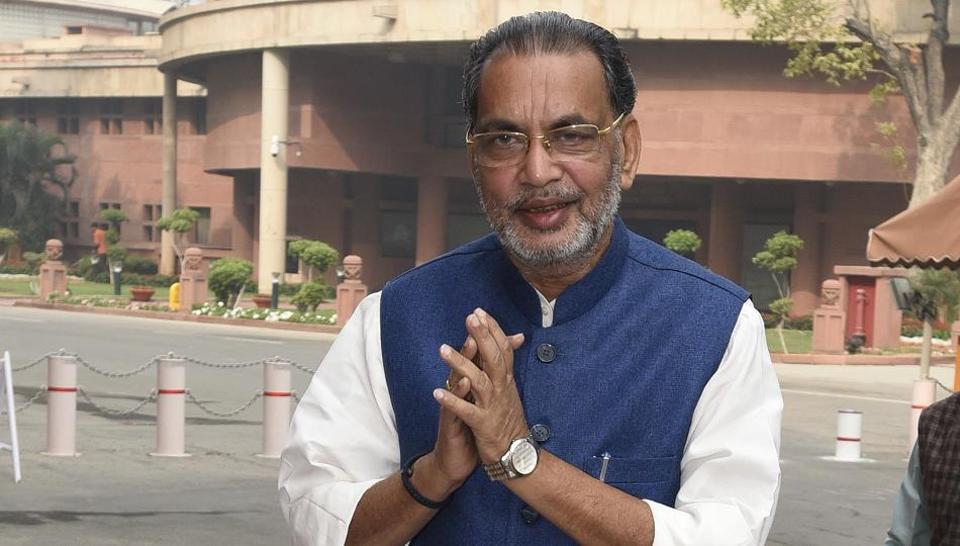
Talking to reporters, the minister defended the track record of the Modi government and measures taken by it in the farm sector, even as thousands of farmers marched through the capital’s streets to protest poor returns.
“Our government has undertaken three critical reforms,” he said, listing a national project to electronically link agricultural markets so that farmers can discover better prices, a thoroughly reformed agricultural insurance programme, and a Rs 2,000 crore programme to establish 22,000 rural markets for farmers to double farmers’ income.
Food processing minister Harsimrat Kaur Badal, while addressing an event organised by the Confederation of Indian Industry said the government planned to set up a non-banking financial company with an initial corpus of Rs 2,000 crore to fund food processing industries as part of its effort to boost this sector and double farmers’ income.
The minister asked the industry to help farmers set up co-operatives and Farmer Producer Organisations (FPOs) so that they can access the benefits and subsidy programmes run by the government.
“The central government can only provide increased MSP and money, but it is for the state governments to ensure that there is lifting of grain and implementation,” Badal said, referring to the Centre’s decision to fix MSP at 1.5 times the cost of production.
It is “extremely unfortunate” that farmers are not receiving the benefits of various schemes announced by the Centre, including crop insurance at a very low premium, higher MSP and a Rs 6,000-crore Sampada Yojana for food processing, she added.
Badal said the food processing sector, crucial for farm incomes, had got around Rs 7,000 crore worth of foreign direct investment. However, Badal did not specify for which period.
“There has been 350% increase in food processing capacity and 720% increase in cold chain capacity. We have created 5 lakh jobs and capacity to process Rs 1 lakh crore worth agriculture produce,” she said. She said that her focus had been on implementing all the schemes on the ground. On mega food parks, she said 35 out of 42 parks would be operational by the end of next fiscal year.


