
 E-Paper



‘Final stages before inking': Piyush Goyal's big praise, little detail on India-US deal amid unanswered questions
“I wanted to speak in Parliament about the deal, but could not do so because of ugly scenes created by the Congress, led by Rahul Gandhi,” Piyush Goyal said.

 Prefer HTon Google


India's commerce minister Piyush Goyal appeared on TV on Tuesday evening, purportedly to share some details and clear the air around the India-US trade deal, but mainly heaped praises on the agreement. And then he said the final bits are still being worked out. The deal will be formally inked thereafter.
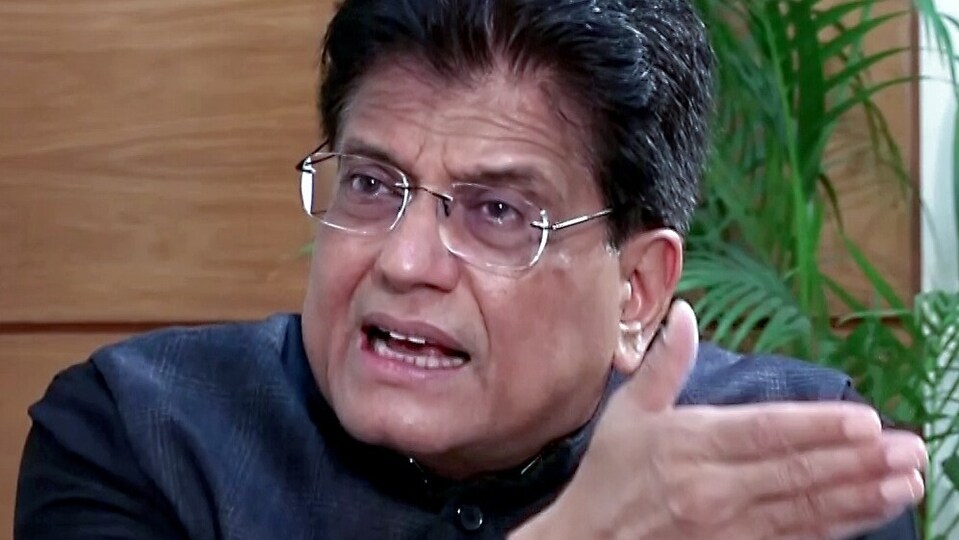
“Today, 140 crore Indians are celebrating a trade deal which is under final stages of detailing between the negotiating teams of both countries,” Goyal said, hailing the “friendship” between PM Narendra Modi and US President Donald Trump.
“We will be shortly issuing a joint statement by both countries along with the details, which we will be shortly inking between the United States of America and India. And as soon as the final understanding of the deal is inked, and the joint statement is finalised, technical processes are completed, full details will be shared” he added.
“But I can assure every Indian that the details of this deal will make every Indian proud,” he further said. He did not share a timeline but news agency ANI cited government sources to say the joint statement is expected within this week.
From the Trump administration, US trade representative Jamieson Greer said in an interview later on Tuesday, “We'll finish papering it, but we know the specifics, we know the details.. He added that India is "maintaining some protection" around agricultural goods. Here, too, many key questions remained unaddressed.
Also read | After Trump claims India will stop buying Russian oil, Kremlin responds
Goyal's 20-minute address was heavy on general, wide-net praise for the deal, and focused also on criticising the Opposition, primarily Rahul Gandhi.
“[The deal] will protect the interest of every Indian and provide huge opportunities for all the people of India, and will protect the sensitive sectors, the interests of our agriculture and our dairy sectors in full respect,” he said.
He went on to promise “huge opportunities for our labour-intensive sectors, export sectors and textiles, plastics, apparel, home decor, leather and footwear, gems and jewellery, organic chemicals, rubber goods, machineries, so many products, aircraft components — this is truly a deal that every Indian can be proud of.”
Bashing Rahul Gandhi-led Opposition
In a large part of his speech, Goyal blamed Leader of Opposition and Congress MP Rahul Gandhi for “not letting” the government share details about the deal in Parliament.
“I wanted to speak in Parliament about the deal, but could not do so because of ugly scenes created by the Congress, led by Rahul Gandhi,” Piyush Goyal said while addressing media on the US-India trade agreement on Tuesday.
“I strongly condemn Rahul Gandhi,” he added.
BJP-led NDA leaders have hailed PM Modi as a "generational leader" who has “made history”, but the Opposition has been scathing, with Rahul Gandhi even claiming Modi has “sold the country”.
Goyal said, “He is a negative person… Rahul Gandhi ko kya mirchi lagti hai [why does he feel the burn?]… He will have to answer what he wants to achieve with this negative mentality."
He further spoke about the manner of announcement, “The Opposition has been questioning why Trump tweeted (posted on Truth Social) about the deal first. The tariffs were from their side, so obviously they will only announce (the cut).”
The minister described the Opposition as a “failed group of disparate, disgruntled and rejected leaders of Congress and their friends”.
Questions that remain amid Trump's claims
Amid this lack of details, policymakers and analysts are grappling with conflicting claims.
For instance, President Donald Trump announced that India will take "zero" tariffs on US products, and will buy $500 billion worth of American goods.
While the deal was confirmed by PM Modi after Trump's post, lack of specifics led to a political firestorm.
What's surely known for now is that the US administration lowered reciprocal tariffs on Indian goods from 25% to 18%, effective immediately. And the other 25% levied as penalty for India buying Russian oil has been removed. Trump said Modi promised to him India won't buy Russian oil anymore. This move essentially rolls back a 50% tariff rate that has been in place since August 2025.
However, controversy stays alive over Trump’s unilateral declaration that India will "move forward to reduce their Tariffs and Non Tariff Barriers against the United States, to ZERO".
Opposition leaders have questioned whether this creates an uneven playing field where India pays 18% while the US pays nothing.
Economic experts noted that while the 18% rate is higher than pre-Trump levels, it is still more favourable than the 19% and 20% tariffs currently faced by regional peers like Indonesia and Bangladesh.
Goyal underlined this on Tuesday, calling the deal “the best in the region, among out neighbours”.
Also read | Does India get upper hand over China, Pakistan, Bangladesh with US deal?
Trump, however, has asserted that PM Modi committed to a "BUY AMERICAN" initiative totaling over $500 billion in US energy, technology, agriculture, and coal. There was no word from Goyal on this.
Congress MP Shashi Tharoor had highlighted the discrepancy, noting that India's entire global import bill is approximately $700 billion. "So, do we stop buying from every other country?" Tharoor asked, seeking clarity.
Trump also claimed that Modi has “agreed to stop buying Russian Oil” and will instead increase purchases from the US and US-controlled Venezuela.
Russia has since stated there is "no word" on India stopping these purchases. An official word from India on this is still not in.
There are also reports that India has already exited the Chabahar port project in Iran due to US sanctions.
Trump, who claims to be overseeing interim leadership in Venezuela, intends to grant the US and its partners access to the nation's vast oil reserves.
Agricultural ‘red lines’ no more?
The most sensitive aspect of the deal involves the agricultural sector, which supports nearly half of India's population and contributes 18% to the national GDP.
Goyal declared that PM Modi has ensured in the deal “safety” of the farm sector. Details could be in the yet-to-be-made joint statement, it appears.
While the Indian government has for long insisted that agriculture was a “red line”, US agriculture secretary Brooke Rollins declared the deal a victory that will liberalise agricultural imports to India.
Congress MP Jairam Ramesh called for the text of the deal to be debated in Parliament. As of Tuesday afternoon, the Indian government was yet to release the tenets of the deal, and Goyal made only a video address, taking no questions.


