E-Paper



Fixing Bangladesh ties will be in focus for foreign secretary Shringla
Shringla, who will take over on January 29 after incumbent Vijay Gokhale retires, is well-placed to restore bilateral ties to an even keel in view of his stint as India’s high commissioner to Bangladesh during 2016-19 and his excellent relations with Bangladesh’s political leadership, the people cited above said.


One of the first tasks that next foreign secretary Harsh Shringla is expected to focus on when he assumes office next month is repairing India-Bangladesh relations that have been hit by issues related to the Citizenship Amendment Act and the National Register of Citizens, people familiar with developments said.
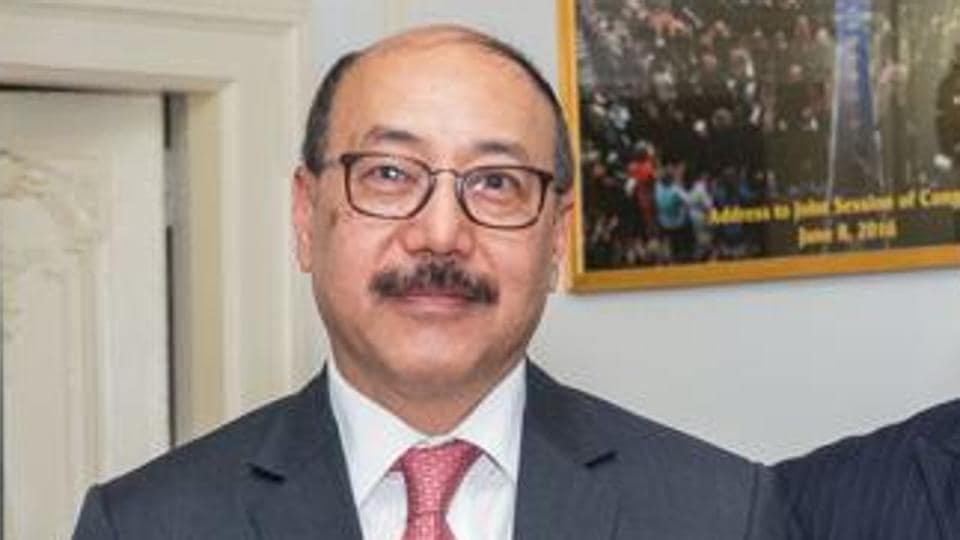
Shringla, who will take over on January 29 after incumbent Vijay Gokhale retires, is well-placed to restore bilateral relations to an even keel in view of his stint as India’s high commissioner to Bangladesh during 2016-19 and his excellent relations with Bangladesh’s political leadership, the people cited above said.
Prime Minister Narendra Modi is also expected to visit Bangladesh in March as a special guest at events marking the launch of year-long celebrations commemorating the birth centenary of Sheikh Mujibur Rahman, the leader of the country’s liberation movement and father of current Prime Minister Sheikh Hasina.
During a meeting with Bangladesh’s outgoing high commissioner Syed Muazzem Ali in New Delhi on December 16, Modi conveyed his appreciation for the invitation extended to him to join the celebrations.
“I look forward to attending the ceremony,” Modi was quoted as saying in a statement issued by the Bangladesh high commission.
The people said Modi’s trip is expected to be preceded by a visit by Shringla, who will focus on projects being jointly worked on by the two countries for the centenary celebrations, including director Shyam Benegal’s film on the life of Mujibur Rahman.
Bangladesh’s top leadership has been irked by repeated references to the country by a section of BJP leaders in connection with the controversial Citizenship (Amendment) Act and National Register of Citizens, including comments that illegal migrants detected through these processes will be deported.
Hours after the passage of the citizenship law by Parliament, Bangladesh foreign minister AK Abdul Momen and home minister Asaduzzaman Khan called off visits to India on December 12.
A week later, Dhaka called off a meeting of the bilateral Joint Rivers Commission. These developments were seen as expressions of Bangladesh’s disquiet over the NRC and CAA, the people said.
“Shringla has very good relations with Bangladesh’s political leaders and diplomats and can do a lot to address concerns in Dhaka. He is also seen as a friend of Bangladesh because of his successful stint in Dhaka,” said a person who declined to be named.
Both Modi and Hasina have referred to the current phase of India-Bangladesh relations as a ‘shonali odhyay’ (golden chapter), but Bangladeshi officials privately acknowledge that the NRC and CAA issues have impacted ties, especially in the past few months.
“Bangladesh is India’s best friend in the neighbourhood and remarks about pushing back infiltrators and lumping Bangladesh in the same league as Pakistan have generated a lot of worry among the public,” said a senior Bangladeshi official who spoke on condition of anonymity, referring to the CAA, which fast tracks the process for granting citizenship to persecuted non-Muslim minorities from Afghanistan, Bangladesh and Pakistan.
These concerns have remained despite India’s repeated assurances to Bangladesh that the NRC in Assam is an “internal issue” and home minister Amit Shah’s clarification in Parliament that the governments of late Mujibur Rahman and Prime Minister Sheikh Hasina have safeguarded rights of Hindus and other minorities. New Delhi has also clarified that there is no nationwide NRC being planned.
Since she came to power in 2009, Hasina has worked closely with India on development and security issues.
The successful resolution of the land and maritime border issues boosted bilateral ties despite lack of progress on the sharing of waters of the Teesta river, a strategic issue for Dhaka.