E-Paper



Gujarat bars outsiders from govt schools without principal’s nod; Congress alleges cover-up
Gujarat Cong spokesperson Manish Doshi the restrictions would not address teacher shortages, the condition of classrooms or the lack of facilities in schools.

 Prefer HTon Google


The Gujarat government has barred outsiders from entering government school premises without prior written permission from the institution’s head and made the principal’s written approval mandatory for any photography or videography involving students or teachers.
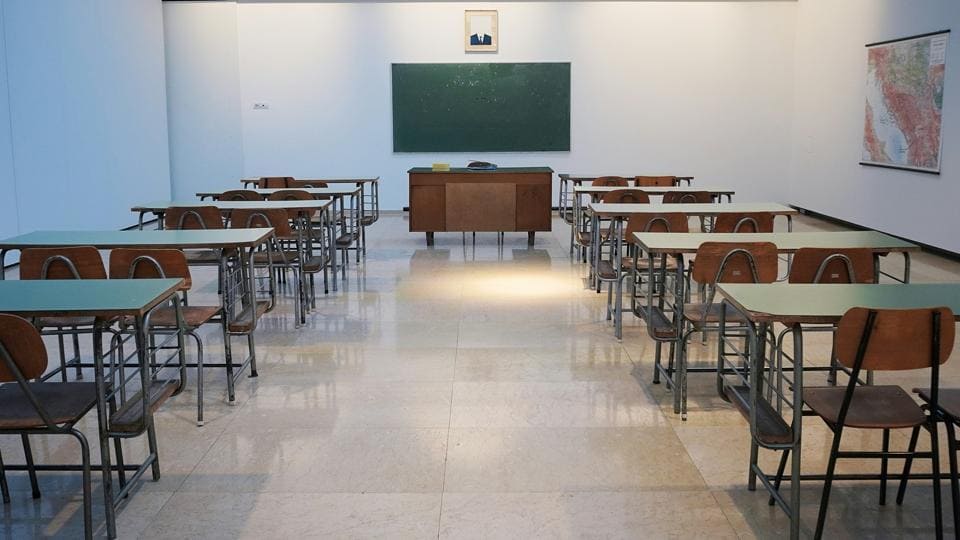
According to the state education department circular dated October 21, all visitors must log their details in an entry register. Access to classrooms, laboratories, libraries, playgrounds, and toilets where students are present would require prior written permission. Also, they must be accompanied by school officials at all times during the visit.
The department has cited the government’s responsibility to protect children under the principle of in loco parentis, under which the state assumes responsibilities similar to those of a parent. The circular also cites safety guidelines issued by the National Commission for Protection of Child Rights and a Supreme Court verdict recognising privacy as a fundamental right.
“Photography, videography, interviews, audio recording or live-streaming of students, teachers or school activities shall not be carried out without the prior written permission of the Principal. Such activities may be permitted only for lawful purposes,” the circular said.
Unauthorised entry, refusal to leave, unauthorised recording or obstruction of school activities must be reported to the local police and the relevant education authorities. The circular refers to applicable laws, including the Bharatiya Nyaya Sanhita, the Protection of Children from Sexual Offences (Pocso) Act and the Information Technology Act for possible legal action.
“Any external person shall obtain prior written permission from the principal or head of the Institution to enter the school premises. Only government officials who are duly authorised.... to perform their official duties shall be exempted,” the circular said.
To be sure, the Rajasthan government and several districts in Uttar Pradesh have issued similar orders over the past three months prohibiting outsiders from entering government schools. Rajasthan issued the restriction ahead of much-publicised visits by Cockroach Janta Party (CJP) leaders to government schools in the state under its “School Theek Karo” (fix schools) campaign.
The Gujarat directive triggered sharp political reactions, with the opposition Congress accusing the state of using child safety as a shield to block public scrutiny of decaying school infrastructure.
Gujarat Congress spokesperson Manish Doshi said the government had no right to hide administrative failures in the name of child safety, adding that restrictions on cameras would not address teacher shortages, the condition of classrooms or the lack of facilities in schools.
Doshi claimed that around 40,000 teacher posts in the state were vacant and about 42,000 classrooms were dilapidated. He also claimed that around 3,000 schools operated with a single teacher, serving more than 80,000 students, while around 14,500 schools had students from multiple grades studying together.
On the government citing the need to protect the privacy of students, Doshi asked if the same considerations would apply when students attend government programmes or their photographs were used for publicity.