
 E-Paper



Home ministry okays NSG deployment in Kashmir for counter-terror operations
Home ministry officials said deployment of NSG in the Valley would provide an opportunity for the force to keep its skills sharp and reduce casualties for state security forces that may not be equipped to handle all situations.

 Prefer HTon Google


The Union Home Ministry has approved the deployment of elite counter-terror force National Security Guards (NSG) in Kashmir as part of the counter-insurgency (CI) grid, officials in the ministry said on condition of anonymity, adding that this would provide an opportunity for the special force to keep its skills sharp even as it reduces casualties in security forces in the state that may not be equipped to handle all situations.
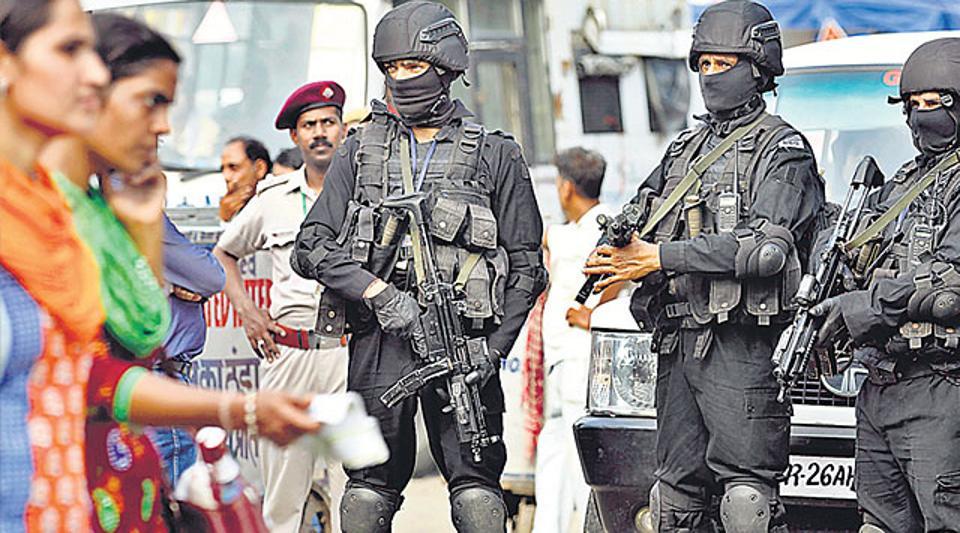
The NSG has also been asked to train both the Jammu and Kashmir (J&K) State Police and the CRPF in counter-terror operations in densely populated areas. That this was being considered was first reported by the Hindustan Times on April 4.
Home secretary Rajiv Guaba on May 4 issued written directions to national security agencies to the effect that Black Cat commandos will be part of the CI grid in Srinagar city as a first step and will also train the two forces within city jurisdiction.
The instructions have been communicated to both DG NSG Sudeep Laktakia and DG, Jammu and Kashmir Police, SP Vaid.
In this context, DG NSG is sending a senior officer team to meet DGP Vaid to assess the requirement of personnel and the kind of counter-insurgency training needed.
The NSG is India’s elite counter-terror force with around 10,000 men, directly recruited and on deputation from Army, at its command.
According to the Home Ministry officials, the NSG will undertake high-risk house intervention operations, which are aimed at flushing out terrorists and suicide attackers holed up in dense localities in Srinagar and other strife torn towns.
While CRPF does conduct house intervention operations, this has a high human cost particularly when the adversary is all ready to die.
The army avoids this high-risk operations due to the human costs involved and tries to neutralize the holed up terrorists by bringing down the building itself.
The NSG will use state-of-the-art weapons including “through the wall” radars, sniper rifles and corner shot assault weapons, and demolition experts trained for such interventions.


