E-Paper



India slams China for blocking UNSC listing of Sajid Mir as ‘global terrorist’
On Tuesday, China stymied a joint proposal by India and the US for listing Mir under the 1267 al-Qaeda Sanctions Committee so that he would be subjected to an assets freeze, travel ban and arms embargo

 Prefer HTon Google


India has criticised China’s blocking of a move to designate Pakistan-based Lashkar-e-Taiba (LeT) operative Sajid Mir at the UN Security Council, saying the action reflects double standards and a “self-defeating justification” of terrorism.
On Tuesday, China stymied a joint proposal by India and the US for listing Mir under the 1267 al-Qaeda Sanctions Committee so that he would be subjected to an assets freeze, travel ban and arms embargo, people familiar with the matter said.
Mir is wanted in India and the US in connection with the 2008 Mumbai attacks, during which he directed the 10-member LeT team that killed 166 people.
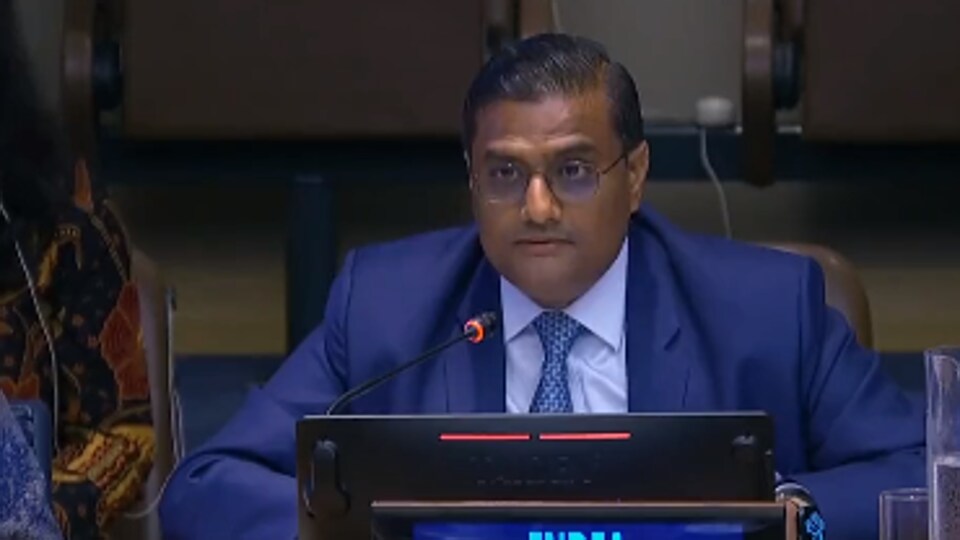
India’s response to the development came in the form of a statement read out by joint secretary Prakash Gupta at a high-level conference on counter-terrorism at the UN General Assembly on Tuesday.
Without naming China, Gupta said India has “righteous reasons to believe that something is genuinely wrong with the global counter-terrorism architecture” when the proposal for listing Mir did not get through the global listings of the UN Security Council sanctions regime despite several member states co-sponsoring it.
As part of his statement, Gupta played a brief recording of an intercepted conversation during which Mir was heard speaking in Urdu and directing some of the terrorists involved in the Mumbai attacks. “Please listen to this sound file recorded even as the terror attacks were unfolding. This is Sajid Mir – directing the terrorists – on the phone – to hunt down foreigners at the Taj Hotel and kill them indiscriminately,” he said.
Noting that the masterminds of the Mumbai attacks have not been brought to justice 15 years after the carnage, Gupta said, “Some of them continue to roam scott free – with full state hospitality. So the first and the most critical gap we feel [needs] addressing is avoiding double standards and this self-defeating justification of good terrorists vs bad terrorists.”
He added, “If we cannot get established terrorists who have been banned across global landscapes proscribed by the United Nations – for petty geopolitical interests – then we do not have the genuine political will to sincerely fight this challenge of terrorism.”
India’s external affairs ministry has in the past questioned China’s use of the so-called “technical hold” to block the listing of several Pakistan-based terrorists at the UN Security Council. China had also blocked a move to designate Mir last year. Other terrorists whose listings at the Security Council have been held up by China include Shahid Mahmood and Talha Saeed of LeT and Abdul Rauf Asghar of Jaish-e-Mohammed (JeM).
Gupta listed several gaps that need to be plugged into to make the UN sanctions regime more effective, including improving its working methods to secure the successful listing of “genuine and evidence-based objective listing proposals”.
“In this day and age of accountability and transparency, can we have genuine listing proposals blocked without giving any reason for the same,” he said in an apparent reference to China blocking proposals for designating several terrorists.
“Another area which we need to address in the working methods is whether can we allow for the submission of proposals under the garb of anonymity. Should we not be owning up for serious proposals that are being moved for the consideration of the entire UN Security Council membership?” he added.
While speaking at a session whose theme was “Strengthening Capacity Building Programs: Making them fit for purpose to meet resilience gaps”, Gupta said India had faced the “brunt of terrorism from beyond our borders” for more than three decades, including the Mumbai attacks, the 2016 Pathankot airbase attack and the 2019 Pulwama terror attacks.
Also Read: ‘Modi’s US visit to enhance bilateral ties, not about China, Russia’: White House
India has lost several thousands of innocent civilians and armed forces personnel in the collective battle against terrorism, he said. “So when we talk about plugging loopholes, capacity building and meeting the resilience gaps, India’s perspectives are coming from hardcore experiences from frontlines of the innumerable battles we have fought against terrorists in real-time and on a daily basis,” he added.
The Mumbai attacks were carried out by 10 fully armed assailants “from across our borders, well trained in conducting urban warfare”. These terrorists wreaked havoc over three days, resulting in the death of 166 people, including 26 foreign nationalities, Gupta said.
Mir has already been designated a terrorist under the laws of India and the US. The US treasury department designated Mir a specially designated global terrorist in 2012 and a reward of $5 million was offered for him under the US Rewards for Justice programme.
Last year, Western countries backed India’s call to the Financial Action Task Force (FATF) for the investigation and prosecution of 30 key terrorist leaders, including LeT founder Hafiz Saeed and Mir, who directed the terrorist team involved in the Mumbai attacks.
In the face of intense pressure from Western countries at the FATF to act against Mir, Pakistani authorities informed Western interlocutors that the top LeT operative had been arrested and given an eight-year prison term in 2022. The development marked a turnaround from the Pakistani establishment’s earlier claim that Mir, alias Sajid Majid, had “died” some time ago.