
 E-Paper



India-US trade deal: Which Indian sectors are likely to feel relief?
Commerce minister Piyush Goyal on Tuesday emphasised that India has fully safeguarded its sensitive dairy and agriculture sectors in the trade pact with the US.

 Prefer HTon Google


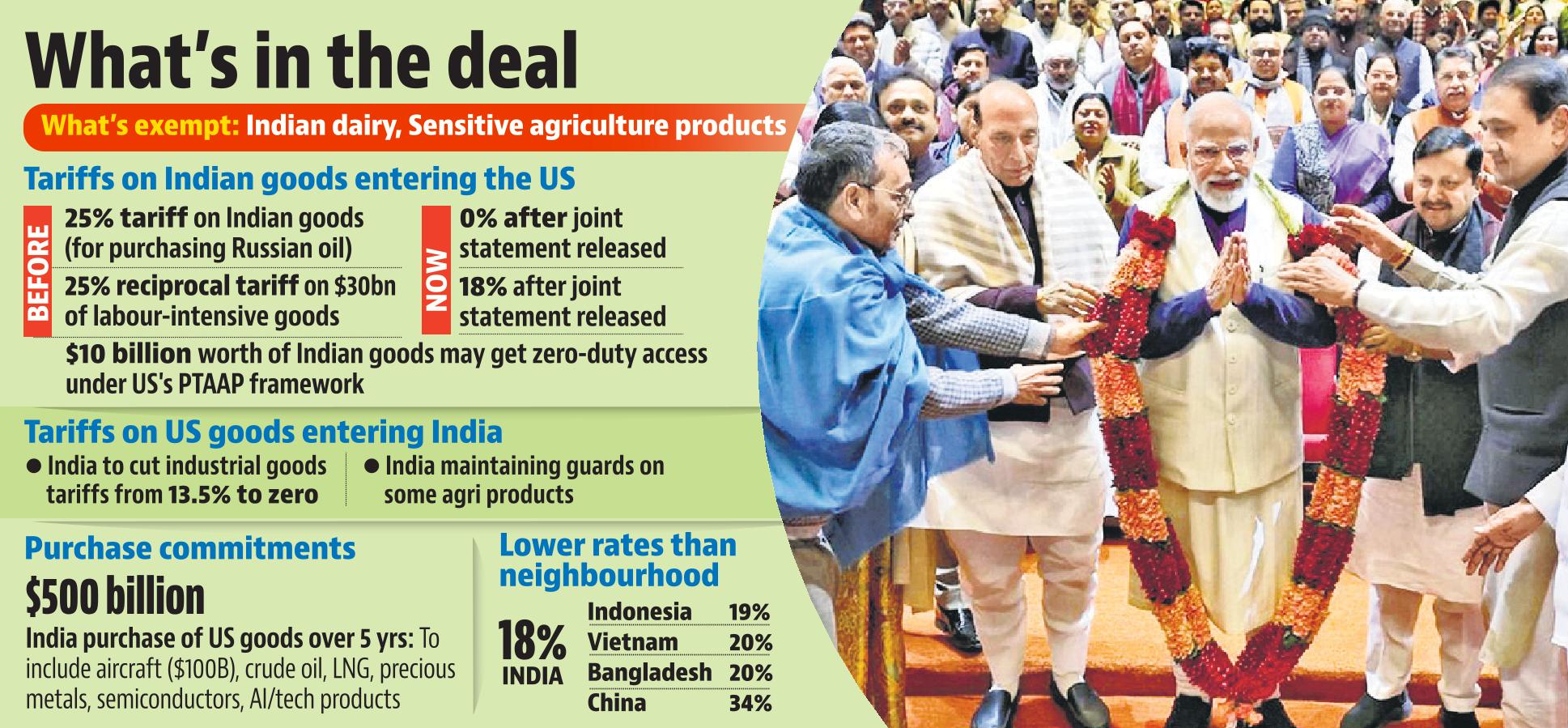
The newly announced trade deal between India and the United States is expected to deliver a major boost to several export-oriented and labour-intensive sectors, after Washington agreed to slash tariffs on Indian goods from 50 per cent to 18 per cent and extend zero-duty access to a large basket of products.
According to details emerging from officials and industry bodies, the agreement removes punitive and reciprocal tariffs on billions of dollars worth of Indian exports, while safeguarding sensitive Indian agriculture and dairy segments. The immediate winners are likely to be sectors that were hit hardest by the earlier tariff spike and are heavily dependent on the US market.
Here's a sector-wise look at who could benefit the most:
Agriculture and Dairy: Sensitive sectors which have been protected
Commerce minister Piyush Goyal on Tuesday emphasised that India has fully safeguarded its sensitive dairy and agriculture sectors in the trade pact with the United States, even as it opened wider opportunities for labour-intensive and export-oriented industries.
Goyal said the agreement was structured to ensure that core farm segments, including dairy and key staple crops, remain protected from disruptive import competition, describing the outcome as one that respects the interests of Indian farmers while still expanding trade.
Goyal underlined that items such as dairy products and several major agricultural commodities have been kept out of the tariff-cut framework, in line with India’s long-standing approach in free trade agreements.
Textiles and apparel: Expected to be the biggest winner
The textiles and clothing sector is likely to be among the largest beneficiaries of the deal, with US tariffs dropping on most shipments.
The US is India’s single largest textiles and apparel market, accounting for roughly $11 billion in exports and nearly 29 per cent of India's total T&C outbound shipments. Industry bodies say the earlier 50 per cent tariff shock had triggered order cuts, production declines of 30–70 per cent in some clusters such as Tirupur and Coimbatore, and job losses.
With duties now aligned or slightly better than competing countries such as Vietnam, Bangladesh, Cambodia and Thailand (mostly in the 19–20% range), Indian exporters regain price competitiveness. Exporters expect:
- Return of US buyer orders
- Recovery in utilisation levels
- Improved margins and hiring
- Stronger medium-term export growth
Also read: 500 billion dollar deal, no Russian oil, 18% tariffs - Inside India-US trade deal
Leather and footwear: Duty relief restores competitiveness
Leather goods and footwear exporters were also badly hit by the earlier tariffs imposed by Trump and are expected to see a sharp revival in orders.
The tariff reduction to 18 per cent puts Indian leather and footwear products closer to or slightly better than Asian competitors in the US market. These are labour-intensive segments with strong MSME participation, meaning gains could translate into wider employment support.
Key likely gains include:
- Better pricing against Southeast Asian suppliers
- Revival of small and mid-sized export units
- Improved order visibility from US retailers
Carpets, home decor and handicrafts
Home decor, carpets and handicraft exports - many of them cottage and cluster-based industries - are expected to benefit significantly from the tariff reset.
Carpet exporters alone ship about $2 billion worth of goods annually to the US. Industry estimates suggest the tariff cut could directly support millions of artisans and weavers linked to the value chain.
Products likely to gain:
- Handmade carpets and rugs
- Home decor items
- Handicrafts and furnishings
These categories are highly price-sensitive in the US retail market, making tariff reduction especially impactful.
Marine products and processed food
Marine products, especially shrimp, along with processed agricultural goods are also expected to gain from lower US duties.
Export bodies say seafood and processed food shipments had been hurt by elevated tariffs despite steady demand. With duties lowered and some items moving toward zero-duty treatment under US preferential tariff frameworks, exporters expect:
- Higher shrimp and seafood shipments
- Growth in processed and packaged food exports
- Better margins for value-added agri products
At the same time, India has kept sensitive agriculture and dairy items outside the deal, protecting domestic farmers from import pressure.
Chemicals, plastics and rubber goods
Tariff reductions also apply to a broad set of industrial and intermediate goods, including:
- Organic chemicals
- Plastics
- Rubber products
These segments form a significant part of India’s merchandise exports to the US and compete directly with East and Southeast Asian suppliers. Lower duties improve landed-price competitiveness and could help Indian firms expand their US client base.
Gems and jewellery: Relief after tariff shock
Gems and jewellery exporters, especially diamond and studded jewellery units, are also expected to gain from the lower tariff band.
Key export hubs such as Surat and Mumbai had faced order uncertainty after the tariff spike. With rates now cut, exporters expect US demand to stabilise and grow, particularly for value-added jewellery products.
Machinery and aircraft components
Piyush Goyal also indicated that machinery and aircraft component exports are among the categories that will see improved access under the new tariff structure.
While smaller in employment terms than textiles or leather, these are higher-value segments and could benefit from:
- Lower entry barriers into US supply chains
- Integration with aviation and industrial buyers
- Linkages with India’s growing manufacturing base
Pharmaceuticals and mobile phones
Pharmaceuticals and mobile phones were already largely exempt from US tariffs and will continue to enjoy that status.
While the deal may not create a new advantage here, it could preserve duty-free access and ensure policy certainty for two of India’s largest export categories.


