
 E-Paper





Follow the latest breaking news, major developments and agenda-setting stories from India and around the world with the newsdesk at Hindustan Times. Operating round the clock, the desk brings together experienced editors, reporters and correspondents to deliver fast, accurate and contextual reporting across subjects that influence public policy, governance, business, society and international affairs. The HT News Desk covers politics, elections, government policies, the economy, business and markets, science and technology, the environment, law and order, infrastructure, education, climate issues and geopolitics, while closely tracking developments across states, institutions and global capitals. The team also leads coverage of major breaking news events, policy announcements, court proceedings, natural disasters, public emergencies and significant international developments. Reports published by the newsdesk are based on information gathered from reporters on the ground, official statements, government agencies, court records, regulatory filings, recognised institutions and other authoritative sources. Stories undergo editorial scrutiny and verification processes to ensure accuracy, fairness and relevance, and are updated as events evolve and additional information becomes available. Whether covering a key political decision in New Delhi, an economic policy shift affecting millions, a landmark court ruling or a major global event, the HT News Desk aims to provide readers with reliable, fact-based journalism that delivers not only the latest developments but also the context and analysis needed to understand their wider implications.
Indo-Pak tension hits border economies
As things stand today, Amritsar district is losing ~30 crore it earned each month through the Attari-Wagah border trade.


The USD 2.6 billion bilateral trade between India and Pakistan has not ever been a significant contributor to the larger economies of the estranged neighbours. But trade suspensions and restrictive customs regimes in the wake of escalated tensions have had a deleterious impact on the economies of border areas in both countries.
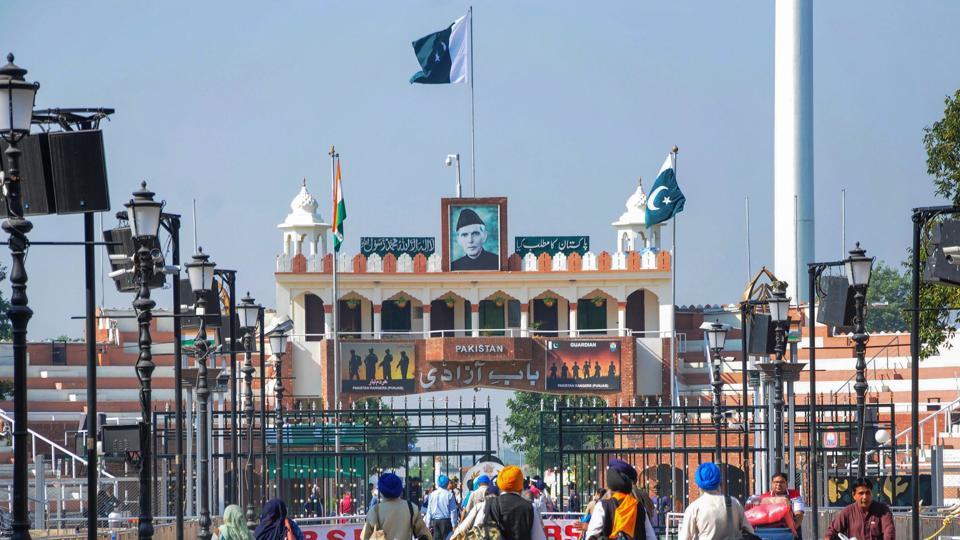
As things stand today, Amritsar district is losing ₹30 crore it earned each month through the Attari-Wagah border trade. That works out to ₹75 lakh loss per day, directly affecting 9,354 families, including those of traders (1,724) and others dependent for livelihood on trucks (4,050), customs house agents (126), labour (2,507), dhabas and vendors (176), fuel stations (32), tyre repair and mechanic shops (51), weigh bridges (8), vehicle parking (80) and other ancillary activities (600).
These findings are part of a study by the Bureau of Research on Industry and Economic Fundamentals (BRIEF).
Its authors, Afaq Hussain and Nikita Singla, travelled to border areas of India and Pakistan, taking guidance from trade experts and diplomats to put together the findings.
After the Pulwama terror attack in Kashmir in February that prompted India to carry out airstrikes on a terror camp in Pakistan’s Balakot, New Delhi withdrew the Most Favoured Nation (MFN) status to Islamabad. It subsequently raised customs duty to 200% on all goods received from across the border, making unviable businesses dependent on Pakistani imports.
The BRIEF report also dwells on the state of border economies in Jammu and Kashmir in the wake of the post-Balakot ban on cross-Line of Control (LoC) trade because of security and other reasons.
The cross-LoC trade was more of a Confidence Building Measure. Between 2008-19, ~7,500 crore trade, mostly on barter terms, was recorded across the LoC, generating 1.7 lakh job days and freight revenue of ~66.4 crore for transporters.
A segment-wise break-up of monetary loses from the ban shows that traders lost Rs15 crore worth of profit and transporters 5.5 crore besides wage losses to the tune of 2.4 crore.
If one takes the big picture, this is mere collateral damage. But the report contains moving accounts by people who lost businesses and their only sources of livelihood.
Marriages were called off and student drop-out rates spiked as families have no money for paying the school fee, said Kulvinder Sandhu, who leads the Truck Operators’ Union at Attari in Punjab. When trade was open, around 800 families invested ₹300 crore on the purchase of 1,700 trucks. “They have nowhere to go now…”
The story does not end with human sufferings.
A concomitant rise in the crime rate has made life less safe in Amritsar. Besides, the high customs duty on imports from Pakistan (USD 500 million out of a total of USD 2.6 billion bilateral trade) has rendered four imported commodities dearer: dry dates, rock salt and cement and gypsum.
The 200% duty on imported dry dates actually translates into 1,600% increase for a 24-tonne vehicle, the BRIEF report says. The price of this poor man’s dry fruit has increased by 250-300% as Pakistan’s share of its imports stood at 99%.
Catalogued accounts of traders, and truckers show that trade disruptions have directly or indirectly impacted 52,000 members of the suffering families.
Their demand for a rehabilitation package has not yet received an attentive ear either from the Centre or the state government.
(vinodsharma@hindustantimes.com)


