
 E-Paper


Follow the latest breaking news, major developments and agenda-setting stories from India and around the world with the newsdesk at Hindustan Times. Operating round the clock, the desk brings together experienced editors, reporters and correspondents to deliver fast, accurate and contextual reporting across subjects that influence public policy, governance, business, society and international affairs. The HT News Desk covers politics, elections, government policies, the economy, business and markets, science and technology, the environment, law and order, infrastructure, education, climate issues and geopolitics, while closely tracking developments across states, institutions and global capitals. The team also leads coverage of major breaking news events, policy announcements, court proceedings, natural disasters, public emergencies and significant international developments. Reports published by the newsdesk are based on information gathered from reporters on the ground, official statements, government agencies, court records, regulatory filings, recognised institutions and other authoritative sources. Stories undergo editorial scrutiny and verification processes to ensure accuracy, fairness and relevance, and are updated as events evolve and additional information becomes available. Whether covering a key political decision in New Delhi, an economic policy shift affecting millions, a landmark court ruling or a major global event, the HT News Desk aims to provide readers with reliable, fact-based journalism that delivers not only the latest developments but also the context and analysis needed to understand their wider implications.
‘Inspired’ by Jaish, Hizbul Mujahideen tried copycat attack on CRPF convoy in J-K
The two officials, neither of whom wanted to be identified, added that the terror group thought the attack would “give international recognition” to it.


The National Investigation Agency (NIA) , which is looking into the March 30 failed car bombing attack on a Central Reserve Police Force (CRPF) convoy in Banihal, Jammu & Kashmir, has revealed that terror group Hizbul Mujahideen (HM) was behind it, and that it was inspired by another terror group, Jaish-e-Mohammed’s February 14 Pulwama bombing, according to two officials aware of developments in the investigation.
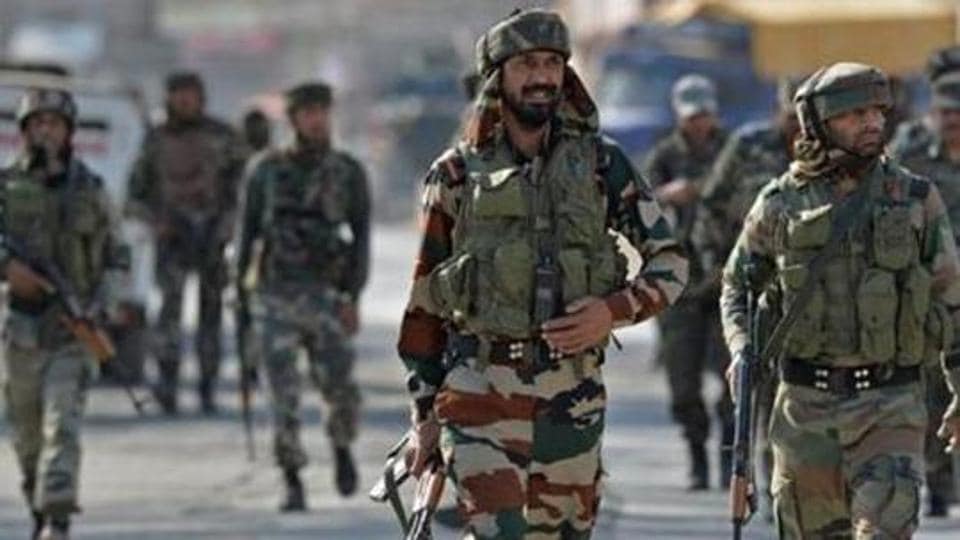
The two officials, neither of whom wanted to be identified, added that the terror group thought the attack would “give international recognition” to it.
The agency learnt about the conspiracy during the questioning of the HM terrorists, including Hilal Ahmad Mantoo, Owais Amin (who drove the car into the CRPF convoy), Umar Shafi, Aqib Shah, Shahid Wani and Wasim Ahmed Dar. They were arrested by the Jammu and Kashmir police after the attack.
An NIA officer said that Mantoo, a PhD student from Central University of Punjab who is believed to be close to the HM commander in South Kashmir, Dr Saifullah, was also confronted last week with overground workers (OGWs) of the outfit, identified as Mushtaq Ahmad Malik, Zakir Hussain Mir, Rafiq Ahmad Magray and Alam Bhat.
“Most of them have claimed they received orders from the top brass of HM that the outfit needs to do something like Jaish did in Pulwama. They locally assembled a bomb using gelatin sticks, urea, ammonium nitrate, LPG cylinders and few other chemicals but it was not a perfect bomb. They say they wanted to gain international headlines so that Pakistan-based leader of HM Syed Salahuddin is praised in that country,” said the NIA officer.
The incident happened on March 30, one-and-a-half months after the Pulwama attack, in which 40 CRPF personnel were killed by a Jaish bomber. India responded 12 days later with an air strike on a Jaish facility in Balakot, Pakistan. At several points in those weeks, India and Pakistan were close to war. In the HM attack, a Santro car laden with explosives hit a CRPF bus around 10 am when the convoy was moving from Srinagar to Jammu. Nobody was injured in the incident.
“The Hizbul has not been able to carry out any major attack in Kashmir valley in the last three years since a concerted crackdown by the security forces. Their space has been occupied by JeM, which has mostly Pakistan-based cadres, so HM members were desperate to revive the group by doing something on the same lines. They could not carry it off,” a second NIA officer said.
The central anti-terror probe agency is trying to find out if any JeM members were involved in the Banihal attack.


