
 E-Paper



Jaishankar responds to 9 barbs from Rahul Gandhi on Twitter, then hurls his dart
Foreign Minister’s comeback to Rahul Gandhi also spotlighted the strategic missteps vis-a-vis Pakistan by the Congress-led UPA government during talks in Sharm-el-Sheikh and Havana


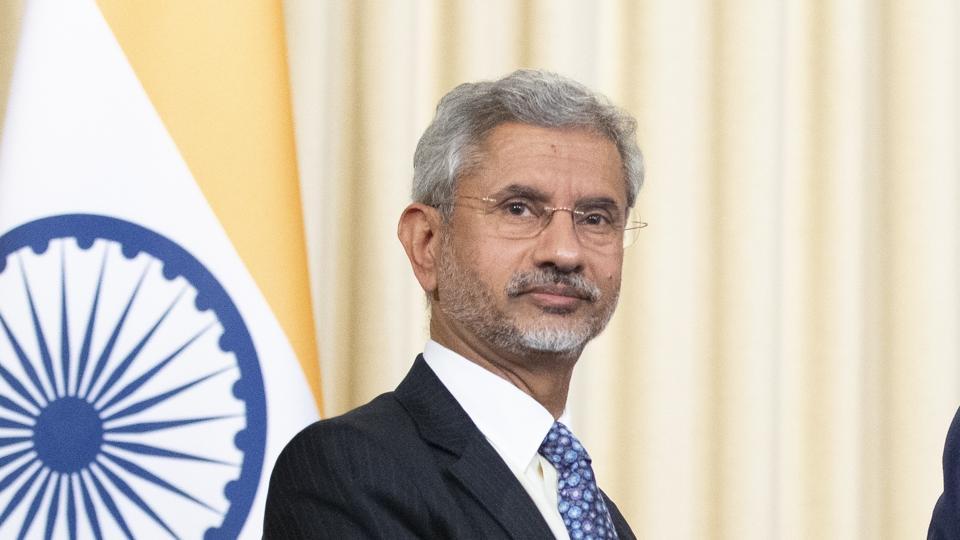
Foreign Minister S Jaishankar on Friday delivered a sharp comeback to Rahul Gandhi after the Congress leader accused Prime Minister Narendra Modi of “blunders” that he said “had weakened India”. Jaishankar responded to the barbs, one by one, in 9 tweets. The minister’s 10th tweet was his counteroffensive.
In the 10th tweet, Jaishankar reminded Rahul Gandhi that he appeared to have glossed over Pakistan in his video message.
“And #Pakistan (that you skipped) surely notes the difference between Balakot & Uri on the one hand, and Sharm-el-Sheikh, Havana & 26/11 on the other. Ask yourself,” Jaishankar said, his counterpunch to the Congress leader.
The reference to Balakot and Uri are a reference to the 2019 airstrikes at a terror camp in Pakistan’s Balakot after the Pulwama bombing and the surgical strike at terror camps across the line of control after a terror attack on soldiers in Uri in 2016.
Jaishankar’s tweet compared these two instances of cross-border action against terrorists to the 26/11 Mumbai terror attacks - that went unpunished due to the lack of political will by the UPA-1 leadership - and the two agreements signed by the Congress-led UPA government with Pakistan in 2006 and 2009 which, many strategic experts had contended, weakened India’s position.
It was in the 2006 Havana joint statement that India, for the first time, recognised Pakistan not just as a perpetrator of terrorism but also a victim. In a newspaper article back in 2006, Ajit Doval, now the National Security Adviser, had then described the joint statement as India’s “first strategic setback in the fight against terrorism”.
At another meeting three years later, PM Manmohan Singh agreed to let Pakistan slip in a reference to terrorism in Balochistan in the joint statement issued after his 2009 meeting with Pakistan Prime Minister Yousaf Raza Gillani in the Red Sea Resort of Sharm El-Sheikh.
“Both leaders agreed that the two countries will share real time credible and actionable information on any future terrorist threats… Prime Minister Gilani mentioned that Pakistan has some information on threats in Balochistan and other areas,” the joint statement said. From Pakistan’s perspective, it was seen to imply that India had a role in violence in Balochistan.
Jaishankar, responding to Rahul Gandhi’s attempt to fault the government’s foreign policy, said India’s major partnerships are stronger and international standing higher than before. This is why India has regular summits and informal meetings with the US, Russia, Europe and Japan. “India engages #China on more equal terms politically,” Jaishankar said, adding that he could check with the analysts for more.
On Rahul Gandhi’s criticism over China, Jaishankar - who was a career diplomat before joining the government - said the government speaks its mind more openly now than it did in the past, alluding to the China-Pakistan Economic Corridor, Belt and Road Initiative, South China Sea and on UN-sanctioned terrorists.
The government, Jaishankar continued, was also addressing the border infrastructure imbalance legacy, pointing that the budget on border infrastructure had gone up by 280% between 2014-20 and 2008-14, road building by 32%, bridges by 99% and tunnels by 6 times.
On Rahul Gandhi expressing concern over Sri Lanka giving a port to the Chinese, Jaishankar reminded him that the Hambantota Port agreement between #SriLanka and China was concluded in 2008.
“Ask those who dealt with it,” Jaishankar said in his riposte.
India had transformed ties with Maldives that had been in a difficult phase because India had watched President Nasheed being toppled in 2012 when the UPA was in power.
“A settled land boundary (2015) with #Bangladesh; opens path to more development and transit. And terrorists no longer find safe haven there. Ask our security,” he said. On Nepal, Jaishankar kept the focus on improving people to people ties. “Nepal after 17 years is getting Prime Ministerial visits. And a swathe of developmental projects: power, fuel, housing, hospital, roads, etc. Ask their citizens,” he said, before going to refer to better relations with Bhutan and Afghanistan.


