
 E-Paper



Kerala's Travancore, Malabar Devaswom Boards ban use of Arali flowers in temples
The decision has been taken to avoid possibility of Arali flowers reaching the hands of devotees directly from temple.


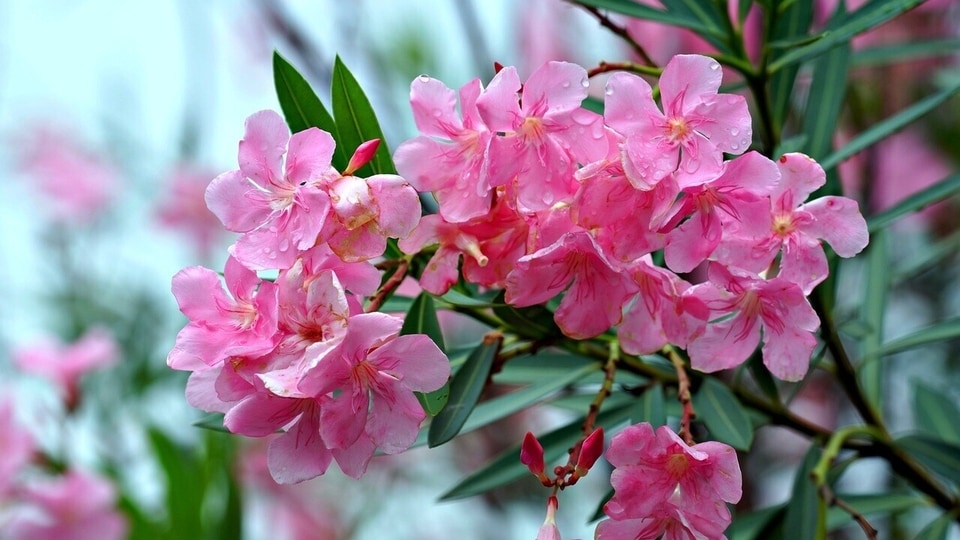
In a major decision, Kerala's two major temple boards, Travancore Devaswom Board (TDB) and Malabar Devaswom Board (MDB), which manage the majority of temples in the state, banned the use of oleander (Arali) flowers in their sacred rituals considering the toxic contents in the flowers.
Also read: Kerala guv Arif Mohammad Khan visits Ayodhya's Ram Temple, bows down before deity
The president of the TDB, P S Prasanth, announced the decision regarding the news regulations for offerings in the temples under its jurisdiction after a meeting was held after concerns arose about the toxic nature of these flowers, which could harm humans and animals.
He said that oleander can be used for puja, but devotees should offer Tulsi, Thechi and Rosa flowers for prasad offerings in the temples. The decision has been taken to avoid the possibility of Arali flowers reaching the hands of devotees directly from the temple.
"It has been decided to completely avoid using Arali flowers in the naivedya and prasad offerings in temples under the TDB. Instead, other flowers like tulsi, thechi (Ixora), jasmine, jamanti (hibiscus), and rose will be used," news agency PTI quoted Prasanth as saying.
Also read: West Nile virus spreads in Kerala
Further, MDP president M R Murali has said the use of Arali flowers for rituals has been restricted in wake of their toxic content. "Although the Arali flower is not widely used in rituals in temples, its use is banned considering the safety of devotees. Studies have found that the flower contains toxic substances," he told PTI.
The TDB is entrusted with the task of administering 1,248 temples in Travancore, while MDB administers over 1,400 temples under its jurisdiction.
The decision came after a woman in Alappuzha died recently after allegedly consuming Arali flowers and leaves from her neighbourhood. There were also tragic reports of a cow and calf dying in Pathanamthitta two days ago after eating oleander leaves.
Also read: Flash strike by truck drivers affects LPG supply in Kerala
According to some studies, oleander, a tough and pretty shrub, grows well in tropical and subtropical areas. The studies suggest that inside their leaves and flowers, oleanders have cardenolides, which can affect the heart of animals and humans, making it beat stronger.
(With inputs from agencies)


