
 E-Paper



Madhya Pradesh govt writes to Centre against reduction of its wheat allocation
On May 14, MP was one of 10 states whose wheat allocation was revised downward, from 2.01 lakh tonne to 1 lakh tonne, with a corresponding increase in the allocation of rice. The move was prompted by a reduction in wheat stocks in the so-called central pool.


Madhya Pradesh is not happy with a reduction in its wheat allocation under the National food Security Act and the Pradhan Mantri Garib Kalyan Anna Yojana, and its substitution with rice, and wants the Union government to restore its original quota because wheat is an important part of the state’s staple diet, officials of the food and civil supplies department said.
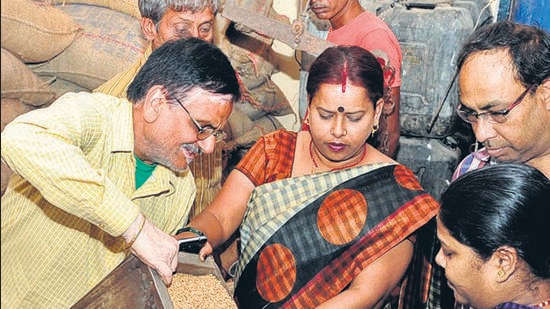
On May 14, MP was one of 10 states whose wheat allocation was revised downward, from 2.01 lakh tonne to 1 lakh tonne, with a corresponding increase in the allocation of rice. The move was prompted by a reduction in wheat stocks in the so-called central pool. The union government did not alter the allocation to Punjab, Haryana, and Rajasthan, on the grounds that these were predominantly wheat-eating states.
On June 16, the food and civil supplies department wrote a letter to Ministry of Consumer Affairs, Food and Public Distribution and requested them to revise the decision. A senior official, who didn’t want to be identified said, “In the letter, we have said that Madhya Pradesh has an additional stock of 80 lakh MT (metric tonnes) of wheat and we can easily distribute the 20 lakh tonne annually as per old system. Wheat is a part of staple diet in MP and people will find it difficult to replace it with rice.”
Also Read | India’s wheat supplies for food schemes will be tight, data show
A team of officials also met their counterparts of the union food and civil supplies ministry. Chief minister Shivraj Singh Chouhan also met union minister of consumer affairs, food and public distribution to request a revision.
“As per the new allocation, we have revised the allocation of wheat to BPL (below poverty line) families from the PDS shop. Efforts are being made to get it revised,” said Faiz Ahmed Kidwai, principal secretary, food and civil supplies department.
Under the new system, a family of four will get between 20 kg and 30 kg of wheat less, and 20 kg more of rice, per month, but people aren’t happy with the change.
“How can we change our food habits overnight and start learning to consume rice in a day?” asked Ramdayal Gond, 60, a daily wage labourer from Aafchand village of Sagar district.
“Madhya Pradesh is one of the top procurers as well as producers of wheat. In 40 districts of MP, wheat is a part of a staple diet. 356.69 lakh tonnes of wheat are produced in the state and about 46.02 lakh tonnes have been procured in MP but still, we don’t get even 20 lakh tonnes as required as per the old system. It is nothing failure of policy and weak representation of the state in front of the Centre,” said Sachin Jain, an expert on Right to Food.
Analysts said the could have political implications. “The decision of curtailing wheat was taken by the central government as the elections are far away in MP. In one of the highest wheat-producing state, if BPL card holders are forced to eat rice, it will become a main political issue. The state government seems to have realised it ,” said Deepak Tiwari, a political analyst.
(with inputs from Anupam Pateriya from Sagar)



