E-Paper



West Asia crisis likely to delay Delhi's 70 new road sweepers from Europe ahead of pollution season
The civic body currently operates 66 mechanical road sweepers, which are deployed across around 1,400 km of arterial roads with a width of more than 60 feet

 Prefer HTon Google


The ongoing crisis in West Asia is delaying the deployment of 70 mechanical road sweeping machines (MRSMs) that were expected to nearly double Delhi’s mechanised road-sweeping fleet ahead of the winter pollution season, said officials aware of the matter. As a contingency plan, the Municipal Corporation of Delhi (MCD) has initiated the process of hiring 40 additional mechanical road sweepers for four months to augment the existing fleet.
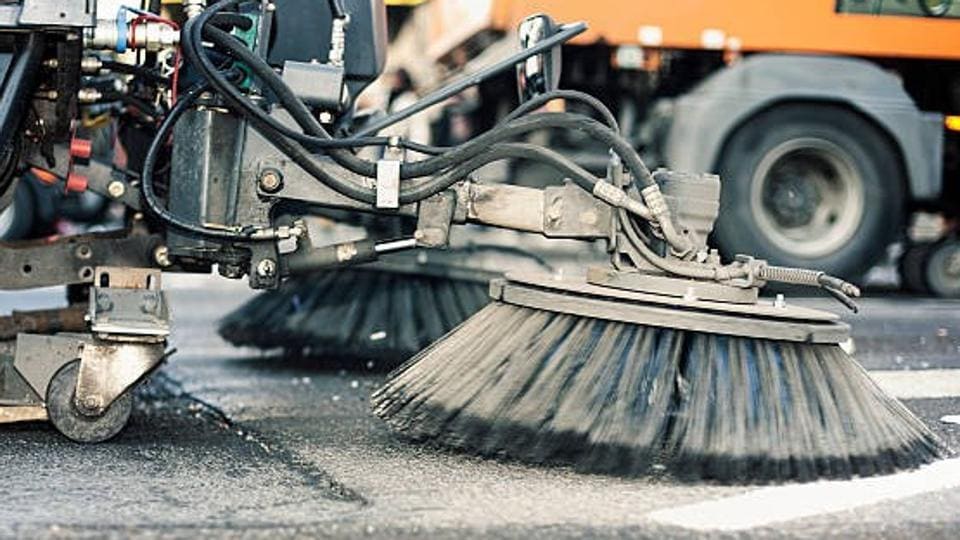
Road dust remains a significant contributor to Delhi’s air pollution. The civic body currently operates 66 mechanical road sweepers, which are deployed across around 1,400 km of arterial roads with a width of more than 60 feet.
The civic body claims around 190 (TPD) tonnes of dust is lifted by the existing fleet every day; however, the operations and efficacy of these mechanical road sweepers have been repeatedly questioned by councilors as well as citizen groups.
Also Read | Delhi sees most polluted start to October since 2020, AQI deteriorates for 5th consecutive day
According to an MCD official, the work for procuring and engaging 70 MRSMs under a service outsourcing model has already been awarded. However, the ongoing Middle East crisis has created difficulties in manufacturing and transporting the machines from Europe to India.
“The work for 70 MRSMs has already been awarded and a trial run was carried out last week; however, due to the prevailing crisis in the Middle East, the sole feasible transportation route has been affected. Machines have so far been airlifted for demonstration purposes only. All efforts are being made to start deployment of these machines from mid-November 2026,” the official said.
As an interim backup, the MCD has also floated a pan-India tender for hiring 40 MRSMs on September 29. The additional machines are proposed to be hired for four months to ensure that mechanised road sweeping capacity is available during the crucial winter pollution period if the 70 awarded machines are not delivered on time.
A trial of one of the airlifted models was conducted outside the Civic Centre on October 1. The machines were brought to Delhi for field trials as part of the larger project to deploy 70 MRSMs, with funding support from the Department of Environment. Of the 70 machines planned under the project, 55 will be electric-vehicle-based and 15 will run on compressed natural gas (CNG).
Also Read | West Asia crisis redraws India's aviation map as Asia-Pacific traffic rises, India-US' slips
The self-propelled machines are being imported from Europe and have sweeping capacities of two cubic metres and four cubic metres. They are also equipped with an additional third front brush, which is intended to improve sweeping efficiency and facilitate more effective removal of dust and road debris.
The MCD official said the airlifting of the machines was undertaken as part of efforts to strengthen its mechanised sanitation infrastructure on an expedited basis and improve preparedness for the upcoming air pollution season.
At present, the corporation’s mechanical sweeping fleet is primarily deployed on Delhi’s major arterial roads. Road dust is considered one of the major sources of particulate pollution in the capital and contributes significantly to elevated PM10 levels.
Also Read | Airlines seek fuel, tax relief as West Asia conflict raises operating costs
A 2018 source-apportionment study by The Energy and Resources Institute (TERI) estimated that dust could account for up to 25% of Delhi’s air pollution. The study identified potholes, unpaved roads and broken footpaths as major contributors to road dust. PM10 particles are relatively heavier and generally do not travel as far as finer particulate matter, but prolonged exposure to particulate pollution can affect respiratory health.
With the winter pollution season approaching, the MCD’s contingency tender for 40 additional sweepers is intended to ensure that any delay in the arrival of the 70 machines does not leave a gap in the city’s mechanised road-cleaning capacity, official said.