
 E-Paper



There’s a message in Javadekar’s promotion, Vasava’s dismissal
The elevation of environment minister Prakash Javadekar to Cabinet rank and the dismissal of junior tribal affairs minister has a clear message from Prime Minister Narendra Modi -- there is no place for dissent in his governance plan.

 Prefer HTon Google


The elevation of environment minister Prakash Javadekar to the high-profile HRD ministry and the dismissal of junior tribal affairs minister has a clear message from Prime Minister Narendra Modi -- there is no place for perceived obstructionists in his governance plan.
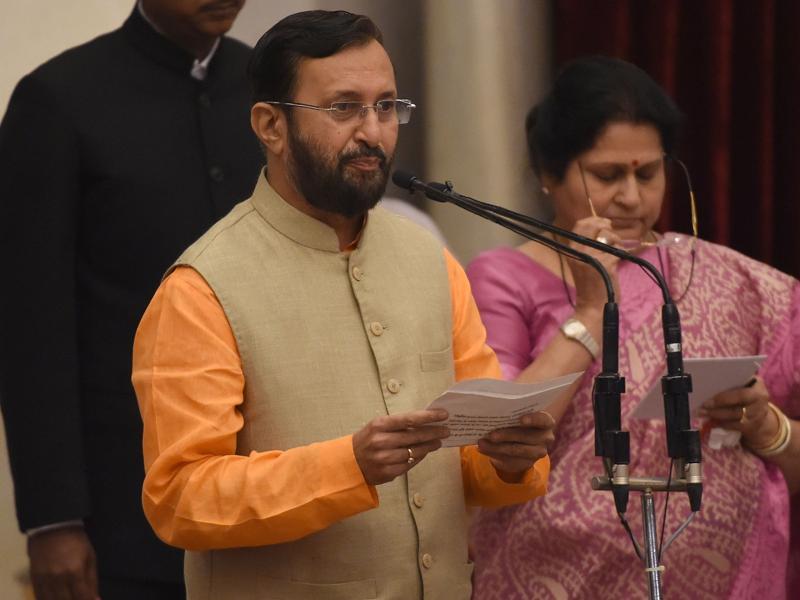
Javadekar, 65, a former banker, is the only minister of state to be given Cabinet rank in-charge of education during Tuesday’s reshuffle while other “performers” such as power minister Piyush Goyal and petroleum minister Dharmendra Pradhan were not so lucky.
In contrast, M S Vasava, a Lok Sabha member from Modi’s home state Gujarat, was given the boot apparently for resisting Javadekar’s move to dilute the watershed Forest Rights Act, considered by many in the government as a hurdle in environmental clearances.
The law enacted by the UPA government had restored the traditional rights of tribals, taken away by the British in 1927. The law gave back the tribals the power to say no to a project coming up in forest land.
Read: Cabinet expansion: Modi promotes Javadekar, inducts 19 ministers, drops 5
The law stood in the way of the Modi government’s efforts to fast-track big-ticket projects and boost industrialisation.
Many projects including India’s biggest forest investment by South Korean major Posco’s in Odisha were struck and the government wanted to dilute a vital “consent clause” for project approval.
Vasava’s removal is sort of a morale boosting victory for Javadekar who lost two portfolios --- information and broadcasting and parliamentary affairs --- in the first reshuffle by Modi.
But green activists were not impressed.
Read: Poll concerns: How Modi went from ‘minimum govt’ to jumbo cabinet
“His (Javadekar’s) two years have been the worst for environment governance,” said Himanshu Thakkar, associated with the Delhi-based advocacy group South Asia Network on Dams, Rivers and People.
“He has taken pride in giving clearances and has nothing to report on measures taken to protect the environment”.
Javadekar obliged Modi and party president Amit Shah with almost 100% project approval -- a record no previous environment minister can match. His ministry did not spare even finest tiger reserves such as Pench in Maharashtra and allowed infrastructure projects in and around protected areas.
It was not a difficult task for him as his ministry changed rules more than 50 times in two years, diluting green regulations and packing project evaluating bodies with people from within the government rather than having independent voices.
Read: With cabinet expansion, Modi performs a balancing act in poll-bound UP
Former Environment Minister Jairam Ramesh, who described Javadekar as “rubber stamp” minister accused him of withdrawing a Rs 200 crore penalty on Adani Ports for alleged ecological degradation in Gujarat.
If that was not enough, a new trend of first approving a project and then conducting site inspection was implemented in India’s first river-linking project Ken-Betwa in Uttar Pradesh and Madhya Pradesh.
Javadekar also proved his political worth, allowing the cruel but popular bull taming sport Jallikattu in poll-bound Tamil Nadu this year and bull race in Maharashtra in 2014.
Read: Top opposition leaders skip swearing-in of new ministers
He invoked an obscure rule under the Wildlife Protection Act, 1972, to accept a popular demand of some states to cull animals perceived to be ravaging crops to project the government as ‘pro-farmer’.
For this, he earned the ire of his cabinet colleague Maneka Gandhi who was aghast at his ministry’s “lust for killing animals”. The Supreme Court stayed his order on allowing Jallikattu.
“Prime Minister Modi has awarded Javadekar for being a minister for environment approval and not environment protection,” Ramesh said.


