E-Paper



No woman journalist at Taliban minister Muttaqi’s media interaction in Delhi
The Taliban administration has largely dismantled rights for women and girls that were put in place by elected governments in recent decade.

 Prefer HTon Google


NEW DELHI: Women journalists were conspicuous by their absence at a news conference by Taliban foreign minister Amir Khan Muttaqi at the Afghan embassy on Friday, with participation limited to a group of less than 20 reporters.
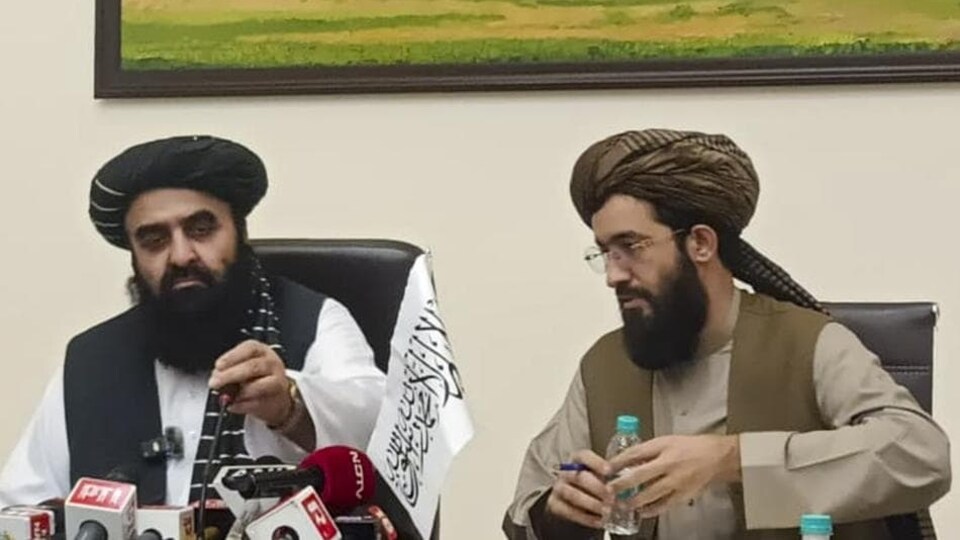
The final call on participation in the event was taken by Taliban officials accompanying Muttaqi, people familiar with the matter said on condition of anonymity. Indian authorities had indicated that participation should be broad-based and include women journalists, they said.
It is rare for women journalists to be excluded from official events and media interactions organised in New Delhi by other countries and it could not immediately be ascertained whether the Taliban side had formally informed Indian authorities that it would not accept women journalists at Muttaqi’s interaction.
The Taliban administration has largely dismantled rights for women and girls that were put in place by elected governments in recent decades, with the UN saying that Afghan women are being denied opportunities to join the workforce and are unable to access a range of services without a male relative, even as girls are deprived of the right to education.
Muttaqi, the first senior Taliban functionary to officially visit India, appeared relaxed and answered all the questions in Urdu, while seated in a conference room below a painting depicting the 6th century Buddha statues at Bamiyan that were destroyed on the orders of former Taliban chief Mullah Omar.
He responded to a question about the suppression of women’s rights in Afghanistan by pointing out that before the Taliban assumed power in Kabul on August 15, 2021, some 200 to 400 people died in Afghanistan every day.
“In these four years, there have been no such losses. Laws are in force and every one has their rights. Those who are engaging in propaganda are making a mistake. Every country has its own customs, laws and principles, and works according to those. It is not correct that people are not given their rights. If people were not happy with the system and the laws, why has peace returned?” he said.
Muttaqi noted that no one, not even the Americans, could enforce anything in the past, but now there is “peace [and a] united government” in Afghanistan. “There is not a single bad incident in Afghanistan, no quarrels. It means the people are happy with the system. This happens when people get their rights from the administration,” he said.
The arrangements for the news conference, including the absence of any national flags in the backdrop, reflected the sensitivities associated with India’s current engagement with the Taliban. Just as Muttaqi took his seat, an aide placed a small Taliban flag in front of him. However, there were no flags in the backdrop or on the table when Muttaqi met external affairs minister S Jaishankar at Hyderabad House hours before the news conference.