
 E-Paper



Nuke triad proven, India to build conventional missile deterrent
Given vulnerability on Siliguri corridor and ceremonial military force of Bhutan, India has decided to secure North-East with Pralay and Nirbhay missiles

 Prefer HTon Google


After securing a “minimum credible nuclear deterrent” with a proven nuclear triad, the Narendra Modi government is moving towards a robust conventional warhead missile deterrent to ward off Communist Party of China (CPC) military expansionist plans against India.
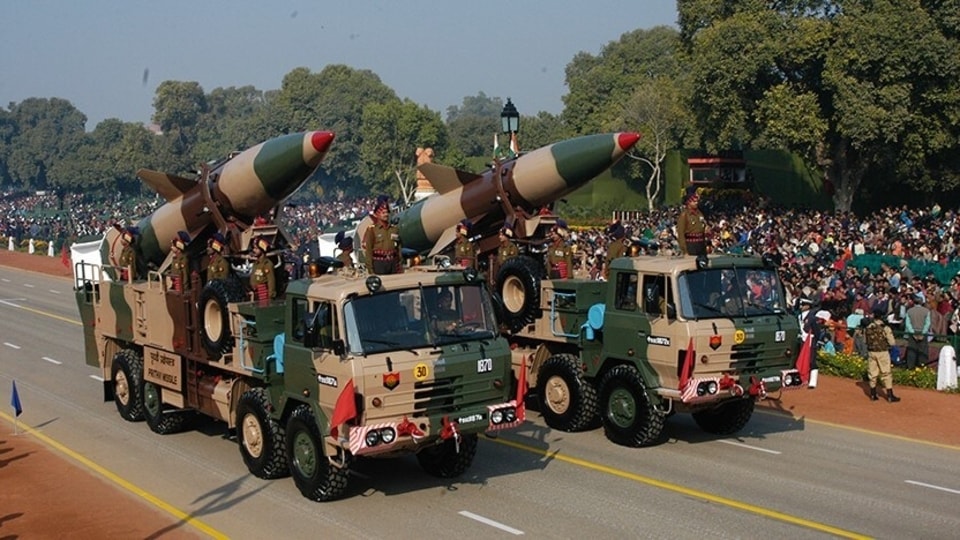
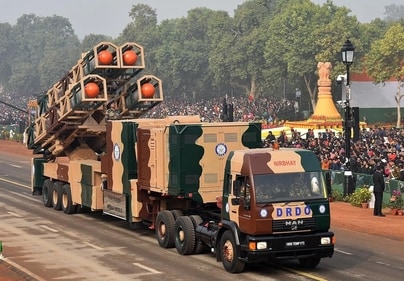
Given India’s vulnerability on the Siliguri corridor and the largely ceremonial military force of Bhutan, the Indian national security planners have decided to secure North-East states with conventionally armed short-range ballistic missiles like Pralay with a max range of 500 kilometres and conventionally armed subsonic cruise missile Nirbhay with a max range of 1500 kilometres. India also has other conventionally armed delivery platforms.
The development trials of both Pralay and Nirbhay have been completed to the satisfaction of missile developer DRDO and user trials are expected soon with the Defence Ministry already placing orders on the Pralay missile. The conventional deterrent is backed by the nuclear arsenal of India with the proven capability of a second strike and survival of the deterrent in wake of the first strike. India has a no-first-use policy on nuclear weapons with the Agni series of nuclear missiles, air delivery platforms and submarine-launched nuclear ballistic missiles.
Given the deployment of PLA’s rocket regiments along the 3488 km Line of Actual Control (LAC), India will have to ward off Chinese aggression on the Siliguri corridor and Arunachal Pradesh with counter-weapons. The PLA has already deployed 70 km range HQ-16 surface-to-air missiles in the Yatong area across the Siliguri corridor to threaten Indian airspace in the worst-case scenario. It is in this context that Indian national security planners have countered the Chinese deployment in both the Siliguri corridor and the Northeast states with missile deployment and hardened shelters for IAF’s fighters and ammunition depots.
The fact is that China today is overtly deploying its nuclear deterrent with new missile silos in Hami in Hotan province, Yumen in Gansu province and Hanggin Banner in Inner Mongolia to ward off any US military aggression towards the Middle Kingdom. According to national security planners, the Hami nuclear missiles in the Taklamakan desert in East Turkestan has no less than 230 missile silos in the open to tell the world about robust Chinese nuclear missile capability. Its nuclear arsenal is fronted by conventionally armed ballistic and cruise missiles to take on the adversary. While the PLA develops new sites, the Chinese aggression towards Taiwan is real and also a call for submission to ASEAN countries including client states of Cambodia and Laos. At present, only the Philippines has decided to stand up to the CPC with most ASEAN countries leaning towards China due to mounting BRI debt.
To further complicate matters for India, China is supplying 039 class diesel attack submarines and armed drones to client state Pakistan with the objective of making India’s western front vulnerable. It is for this reason that the Indian Navy is expected to give the contract of three more Scorpene class submarines to Mazagon Dockyards Limited (MDL) and strengthen conventionally armed rocket and missile forces on the western border.


