E-Paper



Number Theory: India’s political economy story of the last decade – 2
This is the second of a two-part series on India’s political economy story in the last decade. The 1st part looked at the trend in blue-collar wages in India
Published on: Sep 8, 2023, 12:28:27 IST

 Prefer HTon Google
Share via


Copy link


India’s political economy story of the last decade – 2
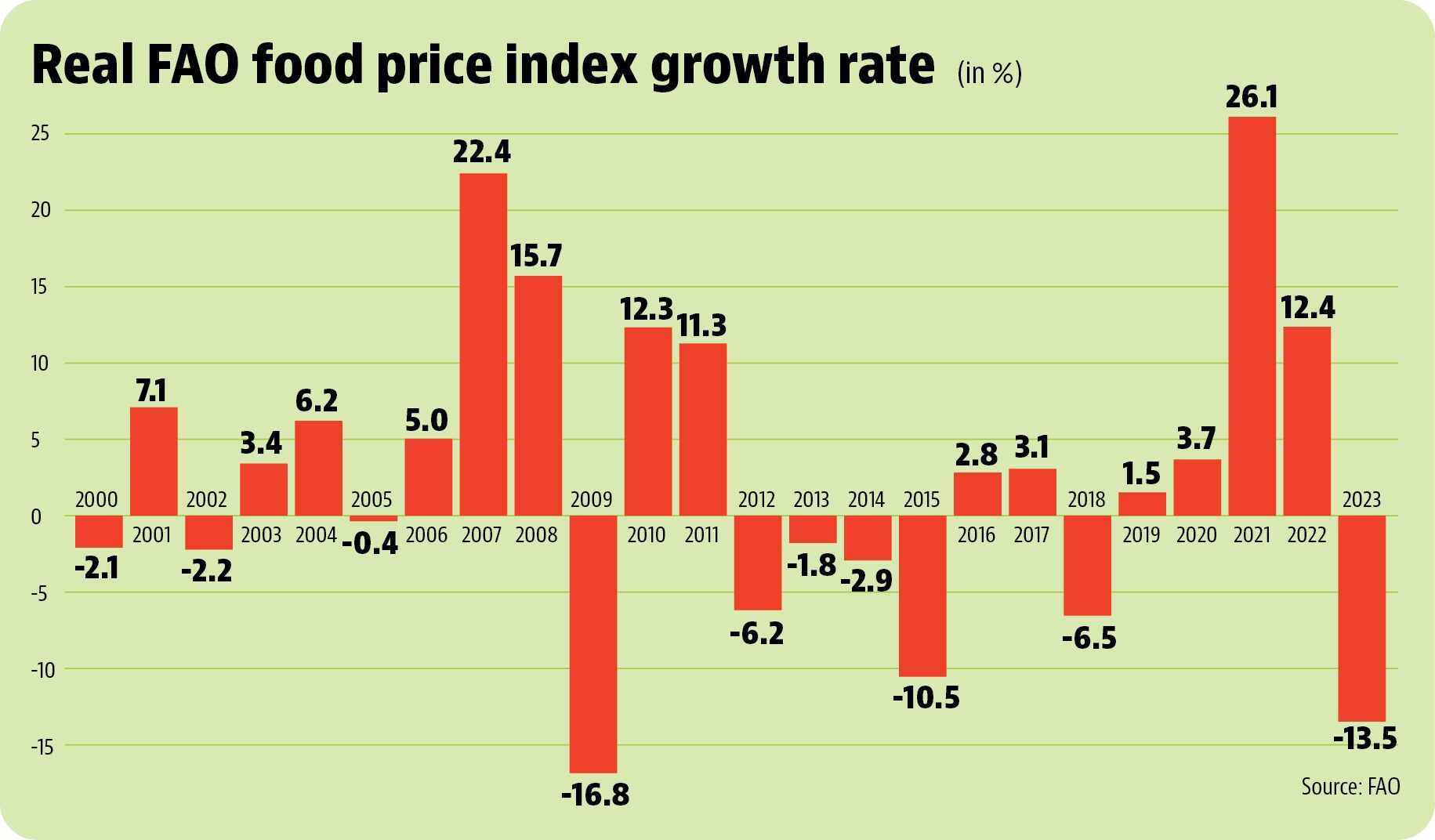
 What really happened in 2010?Global food prices saw a sharp jump in the aftermath of the global financial crisis of 2008. This had a reflection on domestic food prices in India as well. Food being the biggest component of the consumption basket of the poor, this would have created a big inflationary squeeze on the budgets of poor (blue-collar worker) households. Given the fact that the UPA government had implemented the rural employment guarantee act – it significantly increased the bargaining power of rural labour – during its first term and the Indian economy had one of its best ever growth phases in the previous years, the labour market would have been strong to begin with. A food price shock in this kind of environment kickstarted a wage-price spiral.
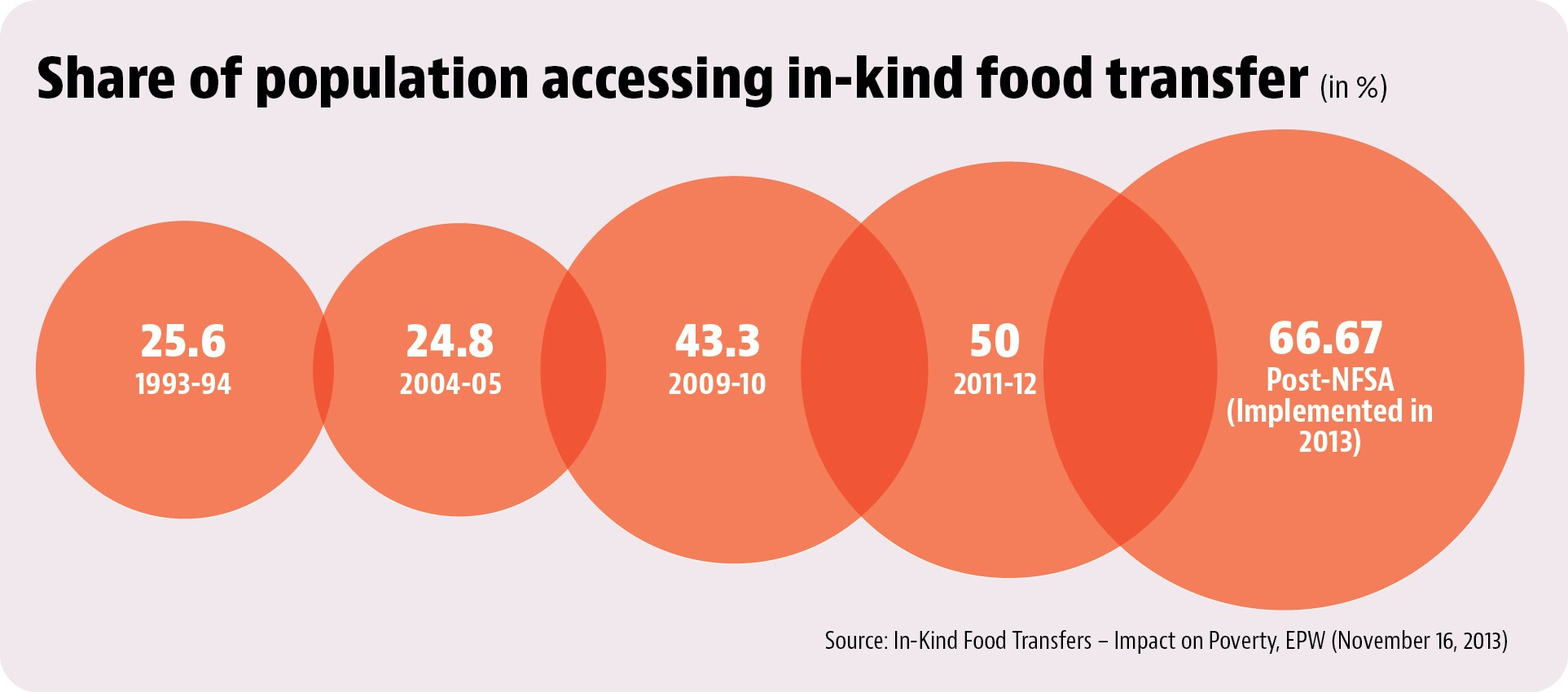
- UPA’s corrective action came too late to manage the crisisTo be sure, the UPA II did take corrective action to prevent a wage-price spiral. This came in the form of the National Food Security Act (NFSA) which sought to drastically increase the food safety net in the country by increasing the coverage of the Public Distribution System (PDS) to two-third of the total population of the country. PDS coverage, when food prices started rising around 2010 was just about 50%. The NFSA was only implemented in September 2013, by which time the die (around inflation) had been cast. It is the current government which has seen the political importance of the NFSA better than the UPA which enacted the law. Its reliance on the NFSA, first through the provision of free additional grains under the Pradhan Mantri Garib Kalyan Yojana (PMGKY) and now absolutely free provision of pre-PMGKY entitlements has played a huge role in not just alleviating distress but also preventing a wage price spiral on account of higher food prices. Of course, the government’s ability to do this requires a large enough procurement from domestic markets, which can become difficult in case the overall production is not high enough. This is exactly the concern this year.
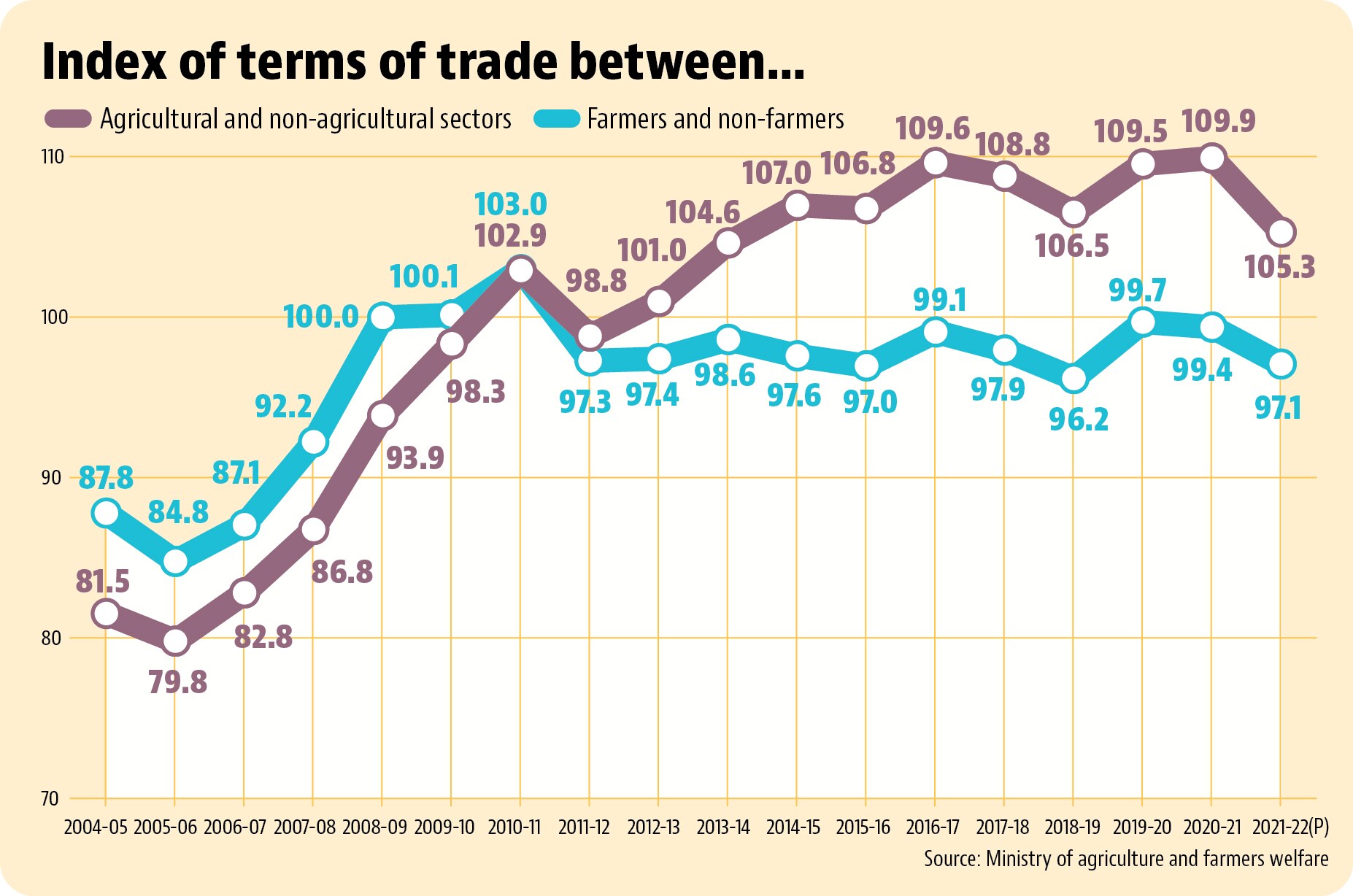
- The current government faces a different set of challengesWhile the NFSA has helped the current regime manage inflation better, at least on the wage-price spiral front, it faces a different set of challenges in the realm of political economy. The best reflection of this challenge can be seen in the difference in trajectories in terms of trade between agricultural and non-agricultural sectors and farmers and non-farmers. Data from the ministry of agriculture shows that the two used to move in tandem until 2010 but the latter has not shown an increase in the post-2010 period despite a clear improvement in the former. A plausible explanation for this can be that non-farmer players are now appropriating a bigger part of the final value of farm products, thereby leaving little for the farmer. When seen in this backdrop, it is not very difficult to see why the government could not manage farmer sentiment against the three (now-withdrawn) farm laws which were perceived as a ploy to strengthen the bargaining power of corporates vis-a-vis farmers.