
 E-Paper



On exiting Covid-19 lockdown 3.0, PM Modi asks chief ministers to come up with blueprint
PM Modi, who has described stopping the coronavirus disease from spreading to rural areas as the big challenge, said social distancing was the biggest weapon to fight the virus “till we do not find a vaccine or a solution”.

 Prefer HTon Google


Prime Minister Narendra Modi on Monday asked chief ministers to spell out how they want to deal with the lockdown regime after May 17 when the third spell of the lockdown expires. PM Modi, who has described stopping the coronavirus disease from spreading to rural areas as the big challenge, said social distancing was the biggest weapon to fight the virus “till we do not find a vaccine or a solution”.
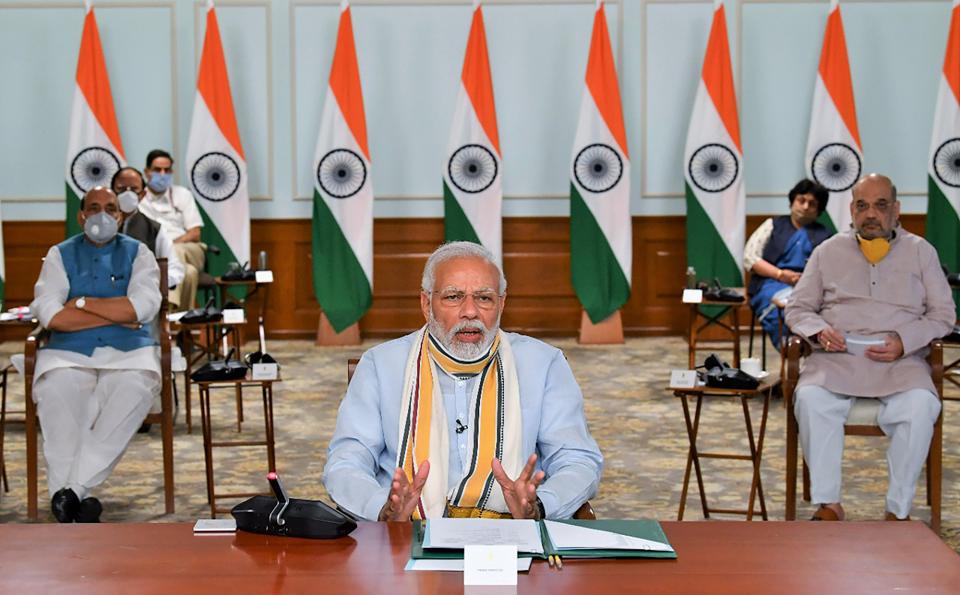
“We must all plan for the new reality,” PM Modi told a marathon meeting of chief ministers that started at 3 pm and continued well past 9 pm. PM Modi and his top cabinet ministers including Home Minister Amit Shah sat through the conference, listening to each chief minister via video conference
“We have a twofold challenge – to reduce the transmission rate of the disease, and to increase public activity gradually, while adhering to all the guidelines, and we will have to work towards achieving both these objectives”, he said.
The national lockdown that the prime minister had first announced on March 24 is due to end on May 17.
The last version of the lockdown that came into effect from 4 May had introduced considerable relaxations in districts that had not reported Covid-19 cases and eased restrictions elsewhere. The Centre’s objective all along was to gradually resume economic activity.
“Slowly but surely, economic activities have begun to pick up in several parts of the country. In the coming days, this process will further gather steam,” PM Modi told the chief ministers.
But as governments look at a gradual withdrawal of the lockdown, PM Modi said everyone must understand that the world had changed fundamentally over the last few months.
“Now the World will be pre-corona, post-corona just like the case of the World Wars. And this would entail significant changes in how we function,” PM Modi said.
The prime minister said the new way of life would be on the principle of “Jan Se lekar Jag Tak”, from an individual to the whole of humanity, a statement issued by the Prime Minister’s Office later said.
“I request you all to share with me by 15th May, a broad strategy on how each one of you would want to deal with the lockdown regime in your particular state. I want states to make a blueprint on how to deal with various nuances during and after the gradual easing of the lockdown,” PM Modi said.
Before they get down to the task, PM Modi underscored that India would “need an all-encompassing approach” to deal with various challenges. Like the many non-Covid-19 diseases that could proliferate with the onset of monsoon. “We must prepare and strengthen our medical and health systems,” he said.


