E-Paper



PM Modi meets Iran's Pezeshkian at SCO; discusses West Asia war, trade expansion
PM Modi’s post on diversifying and expanding trade with Iran comes a week after the US Treasury Department announced new sanctions targeting Iran’s economy.

 Prefer HTon Google


India is concerned about the escalation of tensions in West Asia and supports all efforts aimed at lasting peace in the region, Prime Minister Narendra Modi told Iranian President Masoud Pezeshkian on Monday, while also calling for freedom of navigation and the protection of civilians and civilian infrastructure.
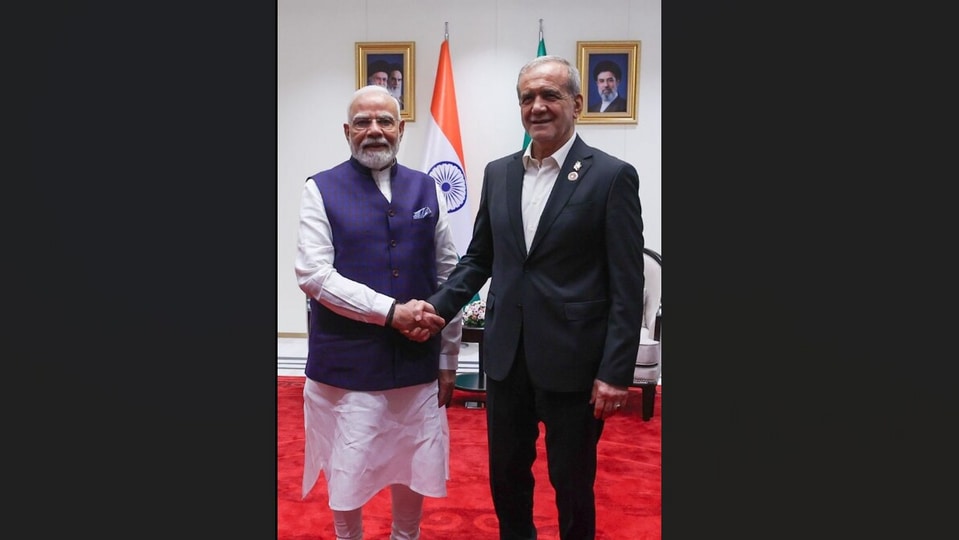
Modi and Pezeshkian met for the first time since the start of the Iran-US conflict in February on the sidelines of the Shanghai Cooperation Organisation (SCO) summit in the Kyrgyz capital, Bishkek. The two leaders also reviewed bilateral relations against the backdrop of trade ties and cooperation for the development of Iran’s Chabahar port, which is being impacted by US sanctions.
“We had a discussion on the prevailing situation in the region. India will continue to support all efforts aimed at ensuring lasting peace,” Modi said on social media after the meeting.
Track live updates of PM Modi at SCO here
According to a readout from the external affairs ministry, Modi expressed concern at the escalation of tensions in the region and reiterated India’s “consistent position that all issues must be resolved through dialogue and diplomacy”.
Modi reiterated the need for continued efforts to ensure lasting peace and stability in West Asia, which India describes as part of its extended neighbourhood and is home to more than 10 million Indian nationals.
“Calling for safeguarding the freedom of navigation and commerce, he [Modi] emphasised that civilians and civilian infrastructure, including commercial shipping and seafarers, must not be harmed under any circumstances,” the readout stated.
India has had to strike a delicate balance between maintaining its historic ties with Iran and its expressions of solidarity with Gulf Arab states, which have repeatedly been targeted by the Iranian military for housing US military bases. However, the Indian side has also been angered by Iranian attacks on merchant vessels near the Strait of Hormuz that have killed and injured Indian seafarers.
The Indian side has also had to work with Iran and the United Arab Emirates (UAE), which are on opposite sides of the West Asia conflict, to forge consensus ahead of the Brics Summit in September. Support from both the Brics member states is needed to adopt a summit declaration by consensus.
Modi says India, Iran want to ‘diversify’ trade basket
India-Iran relations also figured in the meeting and Modi said he reiterated New Delhi’s commitment to strengthen the long-standing friendship with Tehran across diverse sectors. “We want to expand and diversify our trade basket in the times to come,” he said.
Modi also pointed to India’s readiness to cooperate closely with Iran in multilateral organisations such as Brics and SCO, and said he looked forward to welcoming Pezeshkian to India for the Brics Summit in September.
Pezeshkian expressed appreciation for India’s “support and cooperation” with Iran during the war and emphasised the need to intensify diplomatic efforts to establish peace and security in West Asia, the Iranian embassy said in a statement.
He referred to India’s “important position and capacities in the region” and asked Modi to use “India’s extensive contacts with various parties to help them move away from the path of war and bloodshed and return to the path of dialogue and agreement”.
Iran’s efforts have focused on peace and security and resolving issues through dialogue, while the “Americans have chosen the path of war, insecurity and imposing their will through force”, Pezeshkian said. Iran has never “welcomed war” and is protecting its people and working for conditions necessary for peace, tranquillity and security, he said.
Referring to understandings between the parties to the conflict, Pezeshkian said Iran remains committed to “obligations it has undertaken within the framework of the agreements”, but the US has “failed to fulfill its commitments”. Iran believes the “continuation of war is in the interest neither of us, nor of the region, nor of humanity”, he added.
In the realm of bilateral ties, Pezeshkian emphasised Iran’s readiness to deepen relations with India in political, economic, scientific, cultural and other areas of mutual interest. “By strengthening bilateral cooperation and neutralising the effects of sanctions, we can further elevate the level of relations between the two countries,” he said.
The discussions covered collaboration in transportation and maritime affairs, and progress in cooperation at Chabahar port, the Iranian embassy said.
Pezeshkian referred to efforts by the US and Israel to “create restrictions and obstacles” to Iran’s cooperation with other countries, and said: “Despite the pressures and restrictions being imposed in an attempt to obstruct Iran’s relations with other countries, Tehran is ready to expand its cooperation with India across various fields.”
Iran was once among India’s top three energy suppliers, but New Delhi stopped purchasing Iranian oil in 2019 because of the threat of US sanctions. New trade-related sanctions drawn up by the US administration could hit India’s limited trade with Iran, including the sale of commodities such as rice and tea through third countries.