
 E-Paper



Race for indigenous Covid-19 vaccines: Centre says human trials to begin soon
The director general of ICMR caused a stir last week by mentioning a deadline of August 15 for the vaccine to be ready for public use; experts warned that such a short deadline could compromise on safety and efficacy data.


Human clinical trials are about to start on two indigenous Covid-19 vaccine candidates, the Union health ministry said on Thursday, as they join the race with 100-odd potential vaccines that are in various stages of development globally.
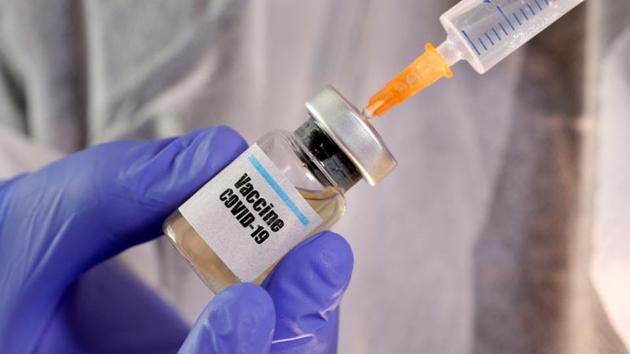
“For India, it is a proud moment that two of its entirely indigenous Covid-19 vaccine candidates are ready for human clinical trials. One of the two is from Bharat Biotech International Ltd. and the other is of Cadila Healthcare Ltd. Bharat Biotech’s vaccine candidate is being developed in partnership with the Indian Council of Medical Research [ICMR],” said Rajesh Bhushan, officer on special duty, Union health ministry.
On both these vaccine candidates, animal toxicity studies have been completed.
“Animal toxicity studies are conducted on mice, guinea pigs, and rabbits. These studies have already been concluded and the toxicity data in respect of both these vaccine candidates has been shared with the Drugs Controller General of India. The drugs controller has permitted these two vaccine candidates to go in for phase 1 and phase 2 (human) clinical trials,” said Bhushan.
The sites for clinical trials have already been finalised, and the trials are about to start.
“The results of animal trials data submitted to the department were found to be satisfactory to allow these to progress to next level of human trials. There is a subject expert committee that scrutinises the data set at every level before giving their consent. Nothing substandard can pass through. This is just one step and there are several steps before the vaccine is ready for use,” said a senior official in the Central Drug Standards Control Organisation (CDSCO).
Twelve sites have been finalised for the trials.
“When the results are out, we will put it in the public domain,” said Bhushan.
The director general of ICMR caused a stir last week by mentioning a deadline of August 15 for the vaccine to be ready for public use; experts warned that such a short deadline could compromise on safety and efficacy data. Later, the government clarified that the missive was intended to spur the process on and not meant as a hard deadline.
“Whole idea is to have indigenous candidates that our manufacturers have developed in record time for a new disease ready as fast as possible and be made available for public use. DG ICMR’s letter’s intent was to direct sites to fast track the process so that we don’t miss the bus. The vaccine is needed now, and if we go by conventional methods of manufacturing and come up with a vaccine after 2 years then it will be of no use,” said Dr Nivedita Gupta, senior scientist, epidemiology division, ICMR.
On the issue of shortage of Covid-related drugs, the drugs controller directed states to take strict action against anyone found black-marketing or selling the medicines above the registered maximum retail price.
The drugs controller wrote to companies that are manufacturing Covid-related drugs and made two specific suggestions, Bhushan said.
“One is that companies must put in place a 24x7 helpline where patients or their caregivers could contact in case the drug is not available or is being over-charged. The second suggestion was that companies must proactively put on their website the details of their distribution network and their supply lines so that all confusion and anxiety in the market subsides,” said Bhushan.


