E-Paper



Raghunath Mohapatra: Famed sculptor who dreamt big
Raghunath Mohapatra belonged to a state that has long been considered a land of sculptors as their detailed understanding of architectural science and immaculate attention to the human form gave rise to the renowned school of Hindu temple architecture

 Prefer HTon Google


Raghunath Mohapatra often said that the last spectacular work carried out by Indian sculptors was nearly 400 years ago when they built the Taj Mahal in Agra under Mughal emperor Shah Jahan’s reign. So it’s little wonder that the much-decorated sculptor from Puri – and member of the Rajya Sabha – wanted to create a spectacular work.
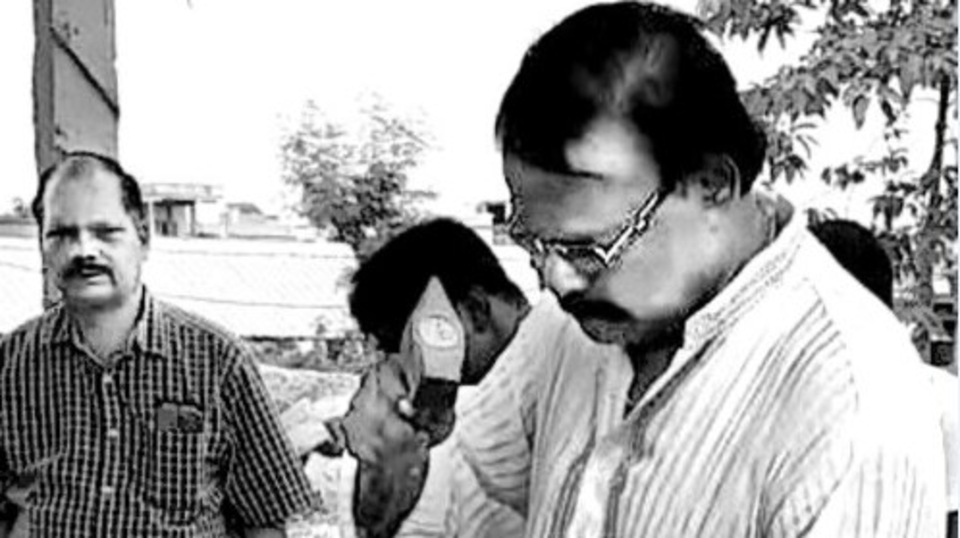
The 78-year-old belonged to a state that has long been considered a land of sculptors as their detailed understanding of architectural science and immaculate attention to the human form gave rise to the renowned school of Hindu temple architecture, exemplified by the Lingaraja temple in Bhubaneswar, the Jagannath temple in Puri, and the Sun temple in Konark built between the 11th and 13th centuries.
“His dream was to build a second Sun temple like the one at Konark. He dreamt big and had the necessary rigour to make it a reality. His power of imagination set him apart from others,” said Adwait Gadnayak, director general of National Gallery of Modern Arts.
Mohapatra died of Covid on May 9.
Born and brought up in Puri’s Pathuria Sahi, a neighbourhood of 50-odd sculptor families a few kilometres away from Jagannath temple, Mohapatra honed his sculpting and chiselling skills under the watchful eye of his maternal grandfather, eminent sculptor Aparti Mohapatra. While in primary school, the young Raghunath was once punished mercilessly by his class teacher, which prompted his grandfather to pull him out of school. The young ward took to crafting stone idols and sold them to pilgrims on the streets of Puri. At 18, Mohapatra was drafted as a master craftsman in the Handicraft Training and Designing Centre in Bhubaneswar.
In 2013 Mohapatra founded Raghunath Mohapatra Arts and Crafts Foundation at Sisupalgarh, which has trained over 2,000 students till date. He received several awards over the years, including the National Award, the Padma Shri, and later, the Padma Bhushan and the Padma Vibhushan. He was nominated to the Upper House in July 2018 for his contribution to the world of arts. Mohapatra first caught the country’s imagination when he made a statue of the warrior and stallion –Odisha’s emblem taken from the Konark temple -- outside the open-air Barabati Stadium in 1968. The then deputy minister Bhairab Mohanty put out a call for a sculptor who would be able to replicate the emblem. Mohapatra, then 25, was paid ₹68,000 for making a stallion in Khandolite stone.
His career took off in 1974 after he made a six-foot-tall grey sandstone statue of the Sun god, now displayed in the Central Hall of the Parliament in the National capital. The following year, he won a Padma Shri award. What followed was a series of remarkable works: a lotus sculpted out of a single black granite block of stone for the final resting place of former prime minister Rajiv Gandhi at Vir Bhumi, New Delhi; Mukteswar Gate, a red sandstone gate at the popular crafts complex in Surajkund; a wooden statue of Buddha at the Buddha Temple in Paris; in 1985, he made two white Dholpuri stone lamps made by the sculptor still adorn the office of the prime minister.
But Mohapatra kept returning to his muse: in 1980, he sculpted an 18-ft long and 15-ft high replica of the Konark horse, which remains a signpost in the capital city at the Master Canteen square; another 14-feet-high Konark wheel in red sandstone made the same year for the India International Trade Fair is now displayed at the Ashoka Hotel in New Delhi.
Mohapatra married Rajani in 1966 and they had three sons -- Jashobanta, Prashanta and Sushanta – and two daughters Rajalaxmi and Meenakshi. Sushanta alone followed in his father’s footsteps to become a sculptor. Four years ago, however, Sushanta who lived in Bhubaneswar, died of a heart attack. Prashant was a star batsman of the Odisha cricket team and a BCCI umpire, while Jashobant looked after the operations at the crafts village. Both the daughters are home makers.
Towards end of April, Jashobanta, Prashanta, Rajani, Mohapatra and other family members got infected with the coronavirus disease. On April 20 when Mohapatra tested positive, he was running high fever with depleting oxygen saturation. The next day, he had to be rushed to AIIMS Bhubaneswar. Rajani accompanied him to hospital. Prashant had already been admitted to AIIMS, and Jashobanta followed soon after. While Rajani survived, Mohapatra and his sons succumbed to Covid.
Mohapatra was close to his grandson Smitesh, 25, and pushed his grandson to do a post graduate degree in Business Administration, as his own lack of formal education rankled him. “He taught me chiselling stones and encouraged me to pursue higher studies telling me that he always felt the lack of school education. ‘I will pay your MBA fees. You don’t have to tell your father,’ he would tell me. He would get angry at anyone who raised hand on me,” Smitesh, Jashobanta’s son, recounted. “The pain of losing him would never go away,” he said.
His dream to re-construct the 13th century Konark sun temple only became stronger over the years.He bought around 100 acres of land in Sakshigopal area of Puri district 10 years ago and set up the Aditya Narayan trust. “He would tell me if that he passed away, then I would have to complete the Sun temple project,” said Mohapatra’s youngest brother, Ramkanta, 55, who will look after Mohapatra’s trust and the arts foundation with Smitesh’s assistance.