
 E-Paper



‘Richest’ Padmanabha temple in Kerala faces financial crunch
The priceless wealth kept in the subterranean vault of the richest shrine of the country though tagged and valued is yet to be disclosed publicly but reports have roughly pegged the wealth in vault A it at around ₹1 lakh crore .

 Prefer HTon Google


Despite being considered as one of the richest shrines in the country, Sree Padmanabha Swamy temple, in Thiruvananthapuram city, seems to be dealing with financial shortfall.
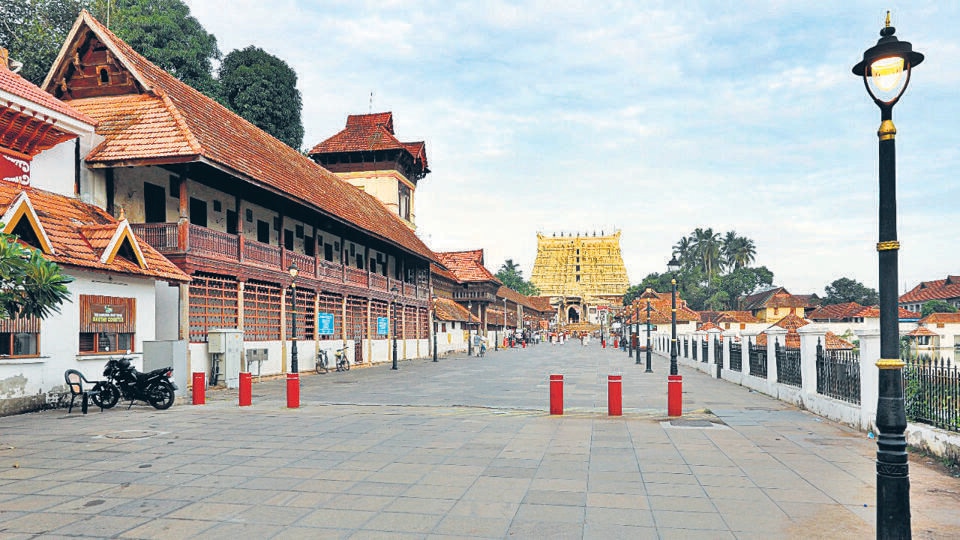
The temple was in news last year also after it turned bankrupt and the state government had to bail it out with soft loans on a number of occasions. Later, the temple was forced to introduce VIP tickets of ₹ 500 to rake up some money.
“It is ironical that the richest temple’s finance is in bad shape. There is a managing committee and advisory body but accountability is missing somewhere. The Supreme Court had ordered audit of last 25 years but it is yet to begin. Reports of former CAG Vinod Rai and amicus curie Gopal Subramaniyam are also getting dust,” said author and historian M G Sasibhushan. Temple officials say that the shrine needs ₹1.50 crore every month for upkeep besides salary of the staff and other requirements.
The priceless wealth kept in the subterranean vault of the richest shrine of the country though tagged and valued is yet to be disclosed publicly but reports have roughly pegged the wealth in vault A it at around ₹1 lakh crore . Following a strict directive of the apex court in 2011 multiple experts including epigraphists, gemologists, numismatists and legal luminaries who have inspected the wealth have also remained silent. Off the record, one of the examinees reportedly said that “ he felt like in heaven after some of the ornaments and diamonds were dusted off for measurement and tagging.”
A decade passed since the last vault (A) was opened in June 2011 and the hitherto untouched B vault adds to the anxiety.
Around 250 commandos guard the temple, including underground scanners, CCTVs and bollards which were erected around the temple to tighten security. There are 132 permanent staff and 112 daily wagers, said the temple body. Of late, the cash-strapped government has been insisting the temple to pay up its security bill. In 2018, the Union government had sanctioned ₹100 crore to develop infrastructure around the temple under Swadesh Darshan programme. In 2019, Prime Minister Narendra Modi inaugurated the work which is in progress. Well- paved and wireless surroundings, a guest house, cafeteria and well -furnished hall, results are there to see.
LEGAL TUSSLE AND ROYAL FAMILY’S CONTROL
After years of legal tussle, the royal family of the erstwhile princely state of Travancore got back its say over the temple in 2020.
A section of devotees believe that the temple wealth has remained intact because of the family’s devotion and integrity. They still remember a custom of the royal family members who come out of the temple after darshan and dust off their feet thoroughly to ensure that they are not taking home even a speck of sand belonging to the temple.
Apart from different stories and legends surrounding the temple, opinions are also divided over the staggering treasure as some want it to be showcased in a museum and take pecuniary benefit for the cash-strapped state and temple. Left wing protagonists want it to fund welfare programmes to improve living conditions of people. But others, a section of devotees and right-wing supporters, oppose it fiercely.
Historian M G Sasibhushan favoured a high- tech museum to take the temple to its glory. “Selected items can be displayed in a museum. But it needs foolproof security as many artifacts are pilfered from museums the world over. It can rake in enough revenue and can be a major tourist attraction also,” he said.
But a section of devotees and royal family oppose it vehemently. “Can you check the wealth of a mosque or church like this? Hindu shrine’s wealth is not a showpiece or tour object. If you count the wealth of Padmanabhaswamy temple, all such shrines should be accounted like this,” said Padmanabhan Nair, a retired government servant who is a regular at the temple. “It can be used for some good purpose other than being kept in vaults highly-guarded,” said another devotee Savithri Amma.
“It is God’s wealth. Let it remain with the presiding deity,” said erstwhile Travancore royal family member Aditya Varma. He said since some of the petitions are pending before the court he cannot say more. He said it is wrong to use the temple wealth to meet other expenses adding that the pandemic triggered some constraints but the temple will overcome them. Temple executive officer B Suresh Kumar is also confident that the age-old temple will withstand minor hiccups with the help of teeming devotees.
“You cannot eye temple wealth for developmental activities. Last year, the high court had asked the Left front government to return ₹10 crore it received from the Guruvayur temple for the CM’s relief fund. Usually devotees contribute for developing amenities of the shrine not for any other activities,” said BJP leader S Suresh adding the party will oppose plan to re-route temple wealth.
Royals have also opposed the opening of the B vault saying “it is against the will of the God.” But amicus curie Gopal Subramanyam had told the SC earlier that “Kallara (vault) B should be opened as it was closed on the apprehension that there is some mystical energy. A needless suspicion is being generated,” he told the court. While hearing petitions earlier the SC had pulled up the royal family on several occasions for putting astrology and customs before law and logic.
THE SIX VAULTS
There are six underground chambers near the sanctum sanctorum of the huge temple, an architectural splendour in granite. Experts have code named these vaults “A to F.” Among these, two are opened regularly for daily poojas (E and F) and two for occasional festivals (C & D), said temple officials adding A and B are considered secret and sacred. Opening of the A vault on June 27, 2011 following the SC directive catapulted the shrine to the richest list. Though there is no official confirmation on recovered valuables but it roughly estimated at one lakh crore.
The ‘B’ vault, which is believed to be opened more than a century ago during a famine, is yet to be reopened and temple observers swear it may carry more than the A vault. But like the tales of hidden treasure it is also shrouded in mystery and fear as local people are said to have spread a rumour that cobras guard the vault.
A retired IPS officer T P Sundararajan started a legal battle in 1990s to unearth and inventory temple wealth after numerous complaints that valuables were stolen and look-a-like items were replaced. A 1964-batch IPS officer, he died a couple of days after the SC ordered inventorying of the temple in 2011. “I can die in peace now. In this world, everything is accountable,” he had told this correspondent two days before his death.
After the Left front government burnt its fingers on Sabarimala temple issue, the state temple affairs minister K Radhakrishnan said, “The government will not do anything without consensus.”
The temple is believed to be built by Ay dynasty of southern Tamil Nadu but official records of the temple are available only from 15th century. After Ay dynasty collapsed, a new kingdom, Venad, emerged in south Kerala. First king Marthanda Varma (1729-1758) forfeited all riches to Lord Padmanabha’s feet after a war with Dutch colonial forces in Kolachhal (Tamil Nadu now) and ruled as ‘Lord’s dasa (servant) and renovated the shrine using 12,008 Salagrama stones from banks of Nepal’s Gandhaki river. The 18-foot idol made of these stones was strung together using unique Ayurveda mix and it reclines on the serpent Anantha.


