
 E-Paper



SC summons civic bodies of 4 cities on sewer deaths
A bench headed by justice Sudhanshu Dhulia further asked them to explain why criminal proceedings should not be initiated against the officials or contractors under whose watch the deaths occurred.

 Prefer HTon Google


The Supreme Court on Wednesday asked the municipal corporation heads of Delhi, Kolkata, Hyderabad and Bengaluru to appear before the court and explain why deaths due to manual scavenging continue to occur despite a ban on the practice.
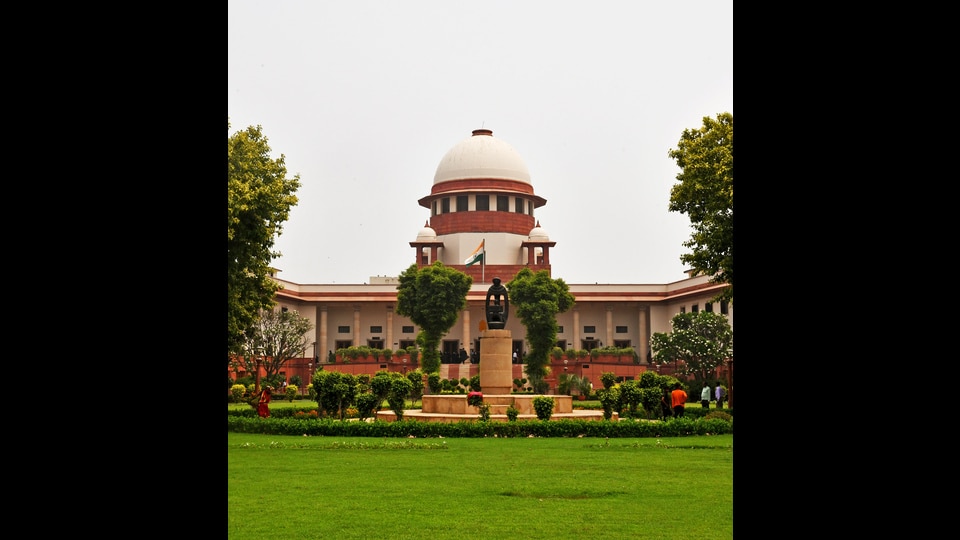
A bench headed by justice Sudhanshu Dhulia further asked them to explain why criminal proceedings should not be initiated against the officials or contractors under whose watch the deaths occurred.
The court was monitoring the implementation of its October 2023 judgment requiring all states and union territories to take immediate steps for ending manual scavenging and to compensate the kin of those who died cleaning sewers, drains and septic tanks with an ex-gratia amount of ₹30 lakh (from the earlier figure of ₹10 lakh) for their rehabilitation.
Taking up the implementation of its directions in the six metropolitan cities in Delhi, Mumbai, Chennai, Kolkata, and Hyderabad, the court went through the affidavits of the six municipal authorities and found a common response denying any manual scavenging cases. Bengaluru municipal corporation was the lone authority that failed to respond to an earlier order of January 29 when the top court directed the six city heads to report compliance.
Statistics belied their claim as senior advocate K Parmeshwar assisting the court as amicus curiae presented a chart prepared by the National Commission for Safai Karamcharis (NCSK) showing 43 manual scavenging deaths in the country between January 2024 to January 2025. This included 7 deaths in Delhi, 6 in Tamil Nadu (not specifically Chennai), 8 in Maharashtra (not specifically Mumbai), 3 in Telangana (not specifically Hyderabad), and a recent news report from February 2 of three people who suffocated to death inside a Kolkata sewer line.
Confronting the metropolitan authorities with these figures, the bench, also comprising justice Aravind Kumar said, “You are saying there are no deaths. After our judgment, clauses which are opposed to our judgment automatically go. How is it that despite our judgment, there are deaths?”
Not satisfied, the court said, “A very evasive reply has been filed whether manual scavenging is going on or not. There is no clarity whether manual cleaning of sewers has stopped.” Noting specific instances in Delhi, Kolkata, Hyderabad where deaths were reported, the court found no explanation forthcoming on these deaths.
The court summoned the concerned director of the Delhi Jal Board (DJB) and the commissioners of Hyderabad and Kolkata municipal corporation to remain present in court on the next date of hearing to provide an explanation. The commissioner of Brihat Bengaluru Mahanagar Palike was also directed to remain present for not filing an affidavit.
The court further directed, “We further need an explanation why criminal proceedings be not initiated against officials or contractors in whose watch, deaths have been caused while cleaning sewers.” The court posted the matter for March 20.
While issuing orders related to the case in Chennai, the court said that the municipal corporation in the city issued instructions pursuant to the October 2023 judgment directing that under no circumstances, any person will enter the septic tanks. The lawyer for the Chennai corporation said that machinery is being used to conduct manual scavenging and workers are provided with safety gear. For Bombay Municipal Corporation (BMC), the court noted incidents of sewer deaths in Navi Mumbai. However, BMC lawyer denied that within its jurisdiction, any deaths took place. However, the two corporations were directed to file better affidavits explaining the use of mechanised devices.
Regarding the cases in Delhi, the bench asked, “Your affidavit says there are no deaths. Maximum deaths are in Delhi only.” Advocate Asha Gopalan Nair appearing for DJB pointed out that in Delhi, there are several unsewered areas handled by private contractors. “If a man is not supposed to go inside the drain, as an officer of the court how do you justify the deaths?” the bench asked Nair.
Taking up the response of Kolkata municipal corporation, the bench noted that the civic body has a standard operating procedure (SOP) which says that only in “extreme situations” will humans enter the sewer lines. When the court enquired about the three recent deaths, KMC lawyer Kunal Chatterjee said, “These persons who died were not within our jurisdiction.” The bench said, “This is a standard excuse of pushing the file from one department to another. We are not happy with this approach.”
The court directed the chief secretary of West Bengal to clarify the position and explain under whose watch and jurisdiction the three deaths took place in Kolkata or its peripheral areas.
The top court’s October 20, 2023 ruling noted the inhuman conditions in which manual scavengers lived. The judgment said, “Ours is a battle not for wealth or for power. It is a battle for freedom. It is a battle for reclamation of human personality.” It directed the Centre and state governments to pay ₹30 lakh as compensation to the next of kin of those who die while cleaning sewers and sought “complete eradication” of manual scavenging across the country.
Its directions also required states to focus on use of mechanised devices for cleaning sewers and avoid individuals to be employed for this purpose. The judgment recorded that at least 347 people died while cleaning sewers and septic tanks in India between 2018 and 2022 with Uttar Pradesh, Tamil Nadu and Delhi accounting for 40% of these deaths, as per government data cited in the Lok Sabha in July 2022.
The order of the court came on a public interest litigation filed by one Balram Singh who sought survey of manual scavengers to be conducted along with payment of compensation in case of deaths and rehabilitation of persons engaged in this profession.


