
 E-Paper



Security forces blame local Manipur media
The forces in their letter on July 13 cited 4-5 different instances in which local media published incorrect versions of incidents, adding to the tension between communities, officials said

 Prefer HTon Google


Security forces in Manipur have complained to the Editor’s Guild of India about local media fanning tension by circulating biased or false narratives of incidents that have the potential to hamper a return to normalcy in the border state roiled by ethnic violence.
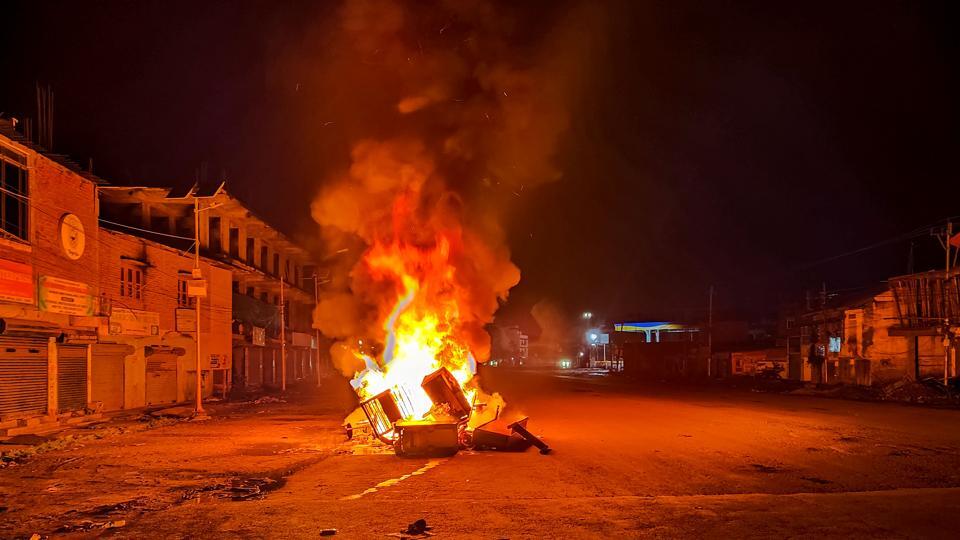
The forces in their letter on July 13 cited 4-5 different instances in which local media published incorrect versions of incidents, adding to the tension between communities, officials said, declining to be named.
Incidents of violence have not stopped more than two months after ethnic clashes first broke out between the Meitei and Kuki communities on May 3. On Saturday, a 55-year-old woman was murdered and her face disfigured in Imphal East district by at least nine people, including five women. On Sunday, a 34-year-old man in Kangpokpi district was killed by over two dozen armed persons after reports of shooting between two groups in a village.
“There are two issues here. One is the false narrative that is being set up after each violent incident. For example, last week’s attempted looting of arms at an India Reserve Battalion headquarters in Thoubal (one person was killed in police firing). The article in local media said the people who were trying to barge inside the armoury were seeking protection, which is a complete lie. Such false narratives fan tension,” an official said.
“The other pertains to the allegations of bias. There were some fake articles about Assam Rifles not responding to a particular incident because the force has some tribal or non-tribal personnel,” the official added. “This is carefully done by people with vested interests. Such fake articles do not help in bringing normalcy and instead arouse sentiments, which may be avoidable.”
The official cited another report by a local news channel about a woman, who on Sunday said she was assaulted by Assam Rifles personnel during a sit-in protest. The woman’s interview, which was widely circulated in the state, said that the security personnel had fired tear gas shells at her and other women protesters in Checkon area.
“After the woman’s viral interview, there were protests demanding removal of Assam Rifles. The interview was false because no Assam Rifles personnel were deployed in the area at that time,” the official said. “Also, Assam Rifles personnel were not equipped with tear gas shells.”
The Editor’s Guild on July 14 issued a statement on Twitter about the coverage of Manipur violence by sections of the media and regretted that there was a “noticeable bias” in the coverage, “contributing to divisiveness and violence.” The guild advised all journalists to report facts and not take sides.
Since May 3, the northeastern border state has been gripped by ethnic clashes between the tribal Kukis, who mostly reside in the hill districts, and the majority Meiteis, the dominant community in Imphal valley. The unrest has claimed at least 150 lives and displaced over 50,000 people.
The clashes first broke out in Churachandpur town after Kuki groups called for protests against a proposed tweak to the state’s reservation matrix, granting scheduled tribe status to the Meitei community. Violence quickly engulfed the state where ethnic fault lines run deep, displacing tens of thousands of people, who fled burning homes and neighbourhoods into jungles, often across state borders.
The authorities quickly clamped a curfew and suspended internet, pumping in additional security forces to force a break in the spiraling clashes. Internet is still not back in the state while columns of the Indian Army, Assam Rifles and different battalions of paramilitary forces are posted in the state to bring back normalcy.


