E-Paper



Supreme Court-mandated review flags lapses in air monitoring systems across Delhi-NCR
The expert committee, constituted by the CAQM flagged gaps in data reliability, technology use, quality audits and institutional staffing.

 Prefer HTon Google


A Supreme Court-mandated review of pollution control systems in Delhi and the National Capital Region (NCR) has revealed systemic weaknesses in air quality monitoring, enforcement capacity and institutional functioning, prompting recommendations by the expert committee for sweeping technological and structural reforms.
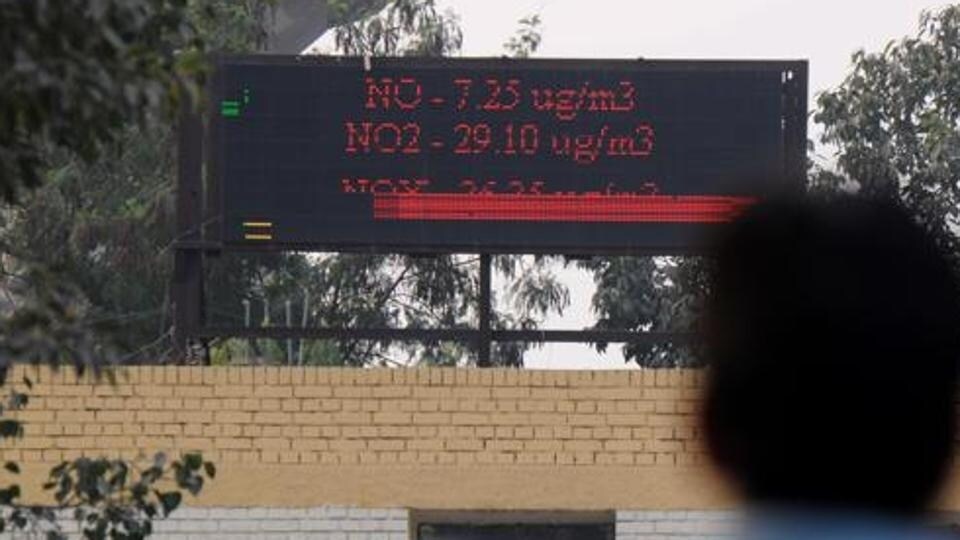
The expert committee, constituted by the Commission for Air Quality Management (CAQM) in the NCR and adjoining areas, flagged gaps in data reliability, technology use, quality audits and institutional staffing across pollution control boards and committees.
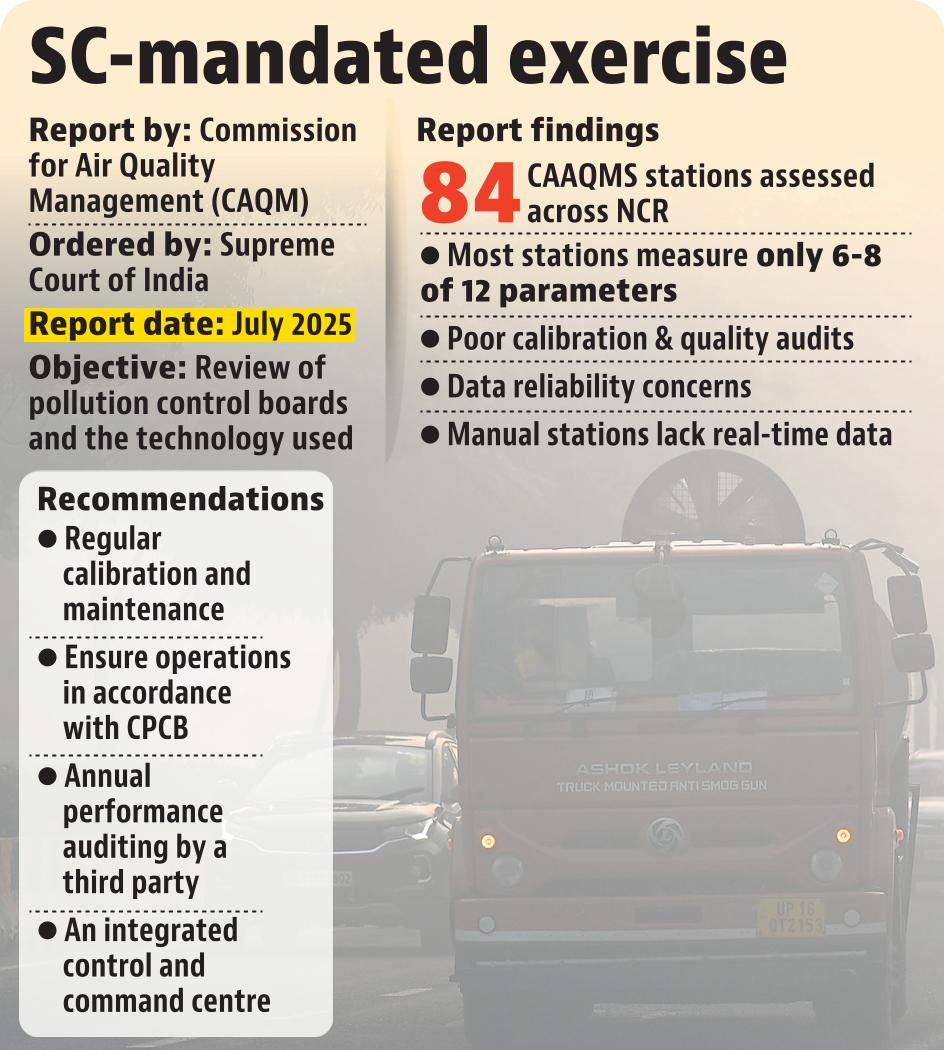
The report, dated July 2025, was recently uploaded to CAQM website and follows directions issued by the Supreme Court in May last year seeking a review of pollution control boards and the technology used by them.
“It is necessary to examine the functioning of the state pollution control boards, as well as the pollution control committees. Perhaps, the boards and committees may be using age-old technology and equipment,” the Supreme Court had observed in May, adding that unless modern techniques are adopted, these boards would not be able to discharge their statutory duties effectively.
The expert committee, headed by CAQM technical member SD Attri, assessed 84 continuous ambient air quality monitoring stations (CAAQMS) across the NCR. It found that most stations measured only six to eight of the 12 parameters specified under the National Ambient Air Quality Standards (NAAQS).
The report notes that although air quality monitoring infrastructure in the NCR has expanded in recent years, many CAAQMS face data reliability issues due to a lack of regular calibration, auditing and quality assurance.
“Data reliability in air quality monitoring is crucial for accurate calculations and assessments of ambient air quality levels. Therefore, there is a need to improve the data reliability of the CAAQMS operated by the Central Pollution Control Board (CPCB), Delhi Pollution Control Committee (DPCC), India Meteorological Department (IMD), Indian Institute of Tropical Meteorology, Haryana State Pollution Control Board, UP Pollution Control Board, Union ministry of housing and urban affairs, and Rajasthan State Pollution Control Board in the NCR. The respective agencies should ensure that CAAQMS operate in accordance with CPCB guidelines. They should also ensure regular calibration, maintenance and auditing of the CAAQMS, and maintain an online audit logbook,” the report said.
Similar shortcomings were identified in manual monitoring stations, where real-time data is not available and data is collected by ambient air samplers.
“Several gaps persist in the manual monitoring of ambient air quality in the Delhi NCR. Regular calibration and auditing of manual monitoring stations, as mandated by CPCB protocols, are not regularly conducted,” the report states. It adds that certain NAAQS pollutants, including lead (Pb), benzo(a), pyrene (BaP), arsenic (As), and nickel (Ni), which are measured manually, are not monitored at all sites.
The committee also pointed to weaknesses in training, the technology used for data analysis, and timebound complaint redressal, besides identifying institutional capacity constraints as a major concern.
To address monitoring deficiencies, the committee recommended regular calibration and third-party performance audits of monitoring stations.
“It is recommended to ensure quality assurance and quality control of the monitoring stations by regular calibration and annual performance auditing by a third party,” it said, also calling for data verification using artificial intelligence or machine learning wherever feasible.
Each board has been advised to induct mobile monitoring units to assess pollution hot spots in their jurisdictions. The report also recommends the setting up of an air quality integrated control and command centre (AQICCC).
The findings echo concerns highlighted in an HT report published on November 5, 2025.
Bhavreen Kandhari, an environmental activist, said the move marked a welcome shift from short-term fixes to building systemic resilience.
“However, the success of CAQM’s recommendations will depend less on merely procuring new technology and more on instilling institutional discipline, ensuring sustained financial commitment, enforcing transparent data governance, and strengthening human capacity across pollution control agencies. Without clear, time-bound action plans and accountability mechanisms, even the most well-designed reforms risk falling short,” she said.