E-Paper



Swami Agnivesh appeals for ban on burqa. Then calls it ‘odd and scary’
“Both burqa and ghoonghat needed to be banned. Muslim women should come forward to ban it not in India but across the world. At least a reform should start after the Sri Lanka episode,” Swami Agnivesh said.

 Prefer HTon Google


Taking his cue from Sri Lanka banning face veils in the wake of Easter bombings, social activist Swami Agnivesh on Sunday made unusual remarks about the burqa, calling it odd and scary.
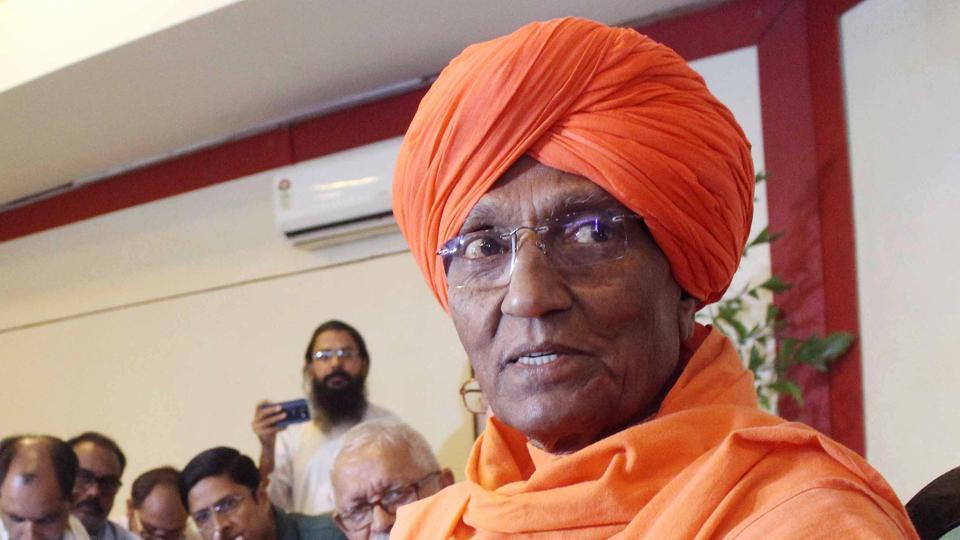
Agnivesh, who was in Bhopal to support Congress candidate and former chief minister Digvijaya Singh, said, “Both burqa and ghoonghat needed to be banned. Muslim women should come forward to ban it not in India but across the world. At least a reform should start after the Sri Lanka episode.”
He added, “Burqa mein koi koi esa lagta hai jaise koi aur jantu ho. Azeeb sa lagta hai, dekhne se dar lagta hai (Some women in Burqa look like another creature. It looks odd and scary).”
Agnivesh then narrated his field visit experiences from Rajasthan and Haryana and explained how he urged the women there to give up on veil.
“When I go to Rajasthan and Haryana, I meet sarpanchs in the veil. I ask them to shun the veil because they sit in the veil and their husbands use power,” said Agnivesh.
The activist termed BJP candidate Sadhvi Pragya Thakur contesting from Bhopal as an unfortunate thing for Indian politics.
Agnivesh said, “When Sadhvi Pragya was lodged in jail she was ill and on a wheelchair but after the declaration of her candidature from Bhopal for the Lok Sabha election, she is looking completely fit. She is not at all a sanyasi because a sanyasi learns to control the anger first.”
When asked about Agnivesh’s reamarks on burqa, State Congress spokesperson JP Dhanopia said, “It is a personal opinion of Swami Agnivesh. It has nothing to do with the Congress party. Every religion has its own culture and tradition and people shouldn’t interfere in it.”
However, the BJP used the episode to target and expose Swami’s “mean mentality”.
“Swami Agnivesh called a burqa-clad woman a creature and it showed the mean mentality of his and also of the Congress,” said BJP spokesperson Rajneesh Agrawal.
On May 3, Bollywood lyricist and screenwriter Javed Akhtar said if a law is passed to ban the burqa then it should also put a stop on the veil worn by women in Rajasthan.
The comments by Javed Akhtar, who was on a visit to Bhopal, came after the BJP’s candidate from Bhopal parliamentary constituency Sadhvi Pragya Thakur demanded a ban on burqas for what she said was for the sake of national security.
“I am not in favour of the burqa but the law should be for both the burqa and veil,” he said while interacting with the media.