
 E-Paper



‘This is Demon 2.0’: Rahul Gandhi launches searing attack on Centre
The Congress has been arguing that money be directly given to the poor. They have been saying that Rs 7,500 must be immediately given to the poor and Rs 10,000 as one time first payment to tide over the economic woes.

 Prefer HTon Google


The Centre must allow cash support to people and the small scale industries to lift the economy, underscored Congress’ Rahul Gandhi on Saturday, tagging a Hindustan Times report to make his case.
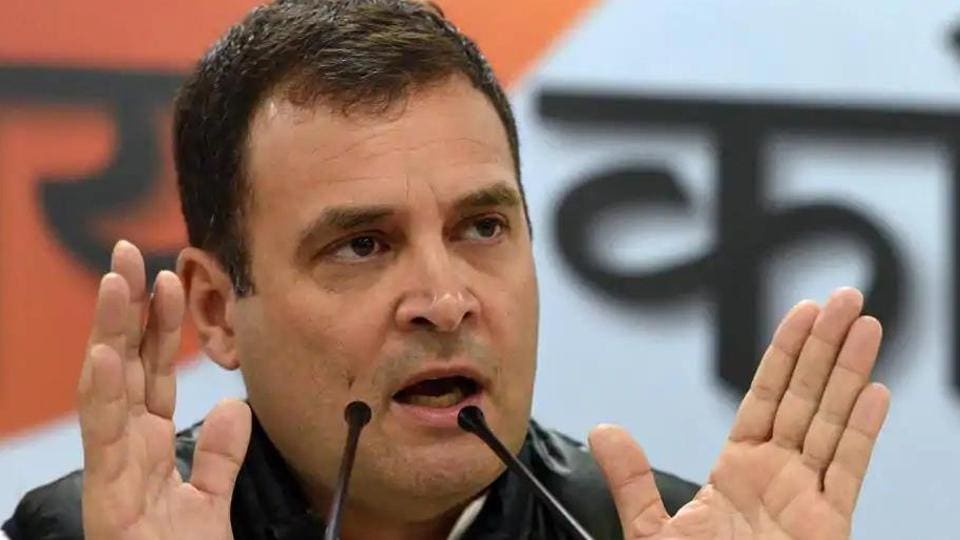
“Govt actively destroying economy by refusing to give cash support to people, MSMEs. This is ‘Demon 2.0,” tweeted the Congress leader.
Also Watch | Covid update: Trump on Covid, vaccine; Rahul Gandhi’s ‘failed lockdown’ jibe
The Reserve Bank of India (RBI) expects the Indian economy to contract in the current fiscal year. Growth in the gross domestic product (GDP) in 2019-20 hit a 11-year low of 4.2 per cent, the government announced in the last week of May. The economic growth slipped to 3.1 per cent in the January-March quarter of 2019-20 showing impact of the coronavirus.
Services sector activity, which makes up more than half of the GDP, weathered a second month of brutal contraction in May as lockdown brought the economy to a near halt and left millions of people jobless. Activity picked up a shade in May with the services Purchasing Manager’s Index (PMI) reading at 12.6, slightly better than the record 5.4 low reported in April, but still well below the 50-mark that separates contraction from expansion, according to data released by IHS Markit.
The HT report tagged by Rahul Gandhi looks at the economic situation before the pandemic and dwells on its nature and causes.
The Congress has been arguing that money be directly given to the poor. They have been saying that Rs 7,500 must be immediately given to the poor and Rs 10,000 as one time first payment to tide over the economic woes. The country and economy are presently reeling under the effect of a long-drawn nationwide lockdown necessitated by the coronavirus pandemic.
The Covid-19 pandemic did disrupt economic activity towards the end of the last quarter of 2019-20,notes the HT report. However, even earlier estimates had projected slower growth for the year than 2018-19. That India’s growth momentum slowed for three years without an external shock, raises doubts on the validity of claims of a cyclical slowdown, the report argues.
The Indian economy was likely facing a demand-driven, perhaps even structural slowdown before the pandemic, the report contends. The policy response most likely misjudged it for a cyclical supply-side problem, it says. RBI’s Monetary Policy Committee pointed to weak demand as a problem in its resolutions last year. The only policy tool, the report argues, available to the committee, interest rate cuts, can do little to boost demand.


