
 E-Paper



Three language policy: Supreme Court asks CBSE to grant current Class 6 students one-time relief
The court stepped in after parents challenged the CBSE’s 3-language rule, which requires students to study three languages, including two regional languages.

 Prefer HTon Google


The Supreme Court on Thursday asked the Central Board of Secondary Education (CBSE) to consider giving a one-time reprieve to students currently in Class 6 from the third-language requirement, so that they do not face a mandatory board examination in that language when they reach Class 10, while also protecting existing foreign-language combinations during the transition.
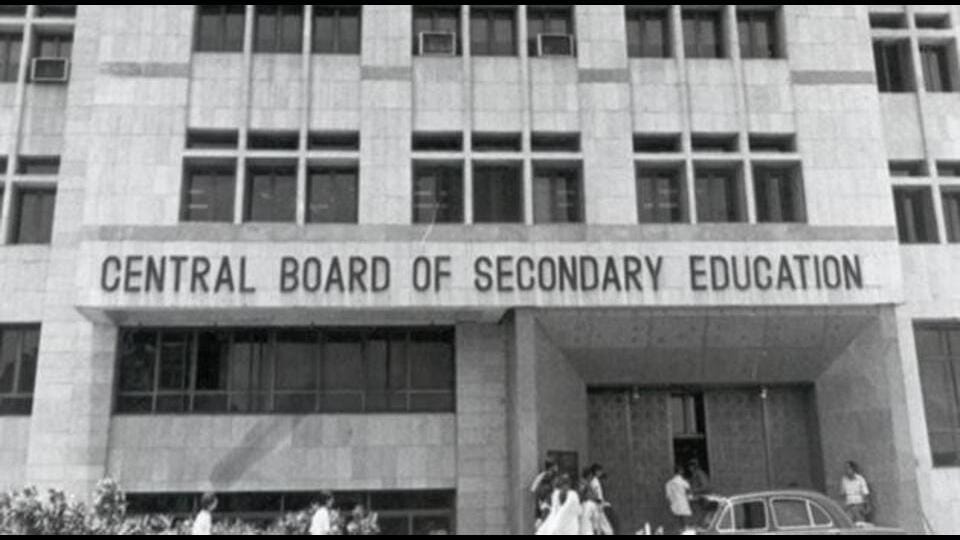
The court also asked the CBSE to examine whether the third language should in fact be introduced from Class 6 or whether implementation should begin from Class 3 or 4, while seeking a roadmap for ensuring adequate teachers, course material and other infrastructure before the policy is rolled out.
A bench comprising Chief Justice of India (CJI) Surya Kant and Justices Joymalya Bagchi and V Mohana said concerns over the sudden implementation of the policy, preparedness of schools and availability of qualified teachers and learning resources warranted a reconsideration of the transition for the current Class 6 batch.
SC seeks one-time reprieve for current Class 6 batch
The bench asked Additional Solicitor General Aishwarya Bhati, appearing for the CBSE, to return with three clarifications -- whether the current Class 6 students could be given an additional academic year to decide and prepare for the third language; how adequate human-resource infrastructure and other resources would be created; and whether the starting point for the third language should be Class 6 or Class 3 or 4.
Also Read:Delhi govt withdraws order barring Class 10 board exam on R3 paper failure
“If the standard is six for you, give them a reprieve for the current sixth standard so that the issue of retrospective operation also gets obviated and their immediate issue gets resolved too,” said the bench.
The court also made clear that while it was not questioning the rollout of the National Education Policy (NEP) 2020, its implementation could not adversely affect students’ rights.
“With regard to the NEP, the roll out can be done and it is their discretion. However, that discretion doesn’t have to impact the rights,” remarked the bench, asking the CBSE to “go back to the drawing board” on the immediate application of the policy to Class 6 students.
Court seeks roadmap on teachers, resources for rollout
The court’s intervention came amid petitions by parents challenging the CBSE’s decision to introduce a three-language formula under which students are required to study three languages, with two being Indian languages.
The CBSE’s June 29 transitional guidelines had already provided relief to students in Classes 7, 8 and 9 who were already studying two non-native languages. Such students were permitted to retain their existing combination and add an Indian language as the third language. The additional language would be assessed through internal school-based assessment and would not have a CBSE Board examination when the students reached Class 10.
However, the June 29 guidelines provided that students entering Class 6 in 2026-27 and subsequent batches would be subject to the policy in full. They would study three languages, of which at least two would be Indian languages, and would eventually take the Class 10 board examination in the third language.
It is this immediate distinction between the current Class 6 batch and Classes 7-9 that the bench asked the CBSE to reconsider.
Also Read: CBSE 3-language rule for Class 9 defies earlier decision
Senior advocate Anand Grover, appearing for one of the petitioners, argued that the issue was particularly acute for Class 6 students because the CBSE did not have statutory authority to frame the curriculum for Classes 6 to 8, which, he submitted, falls within the domain of the National Council of Educational Research and Training (NCERT).
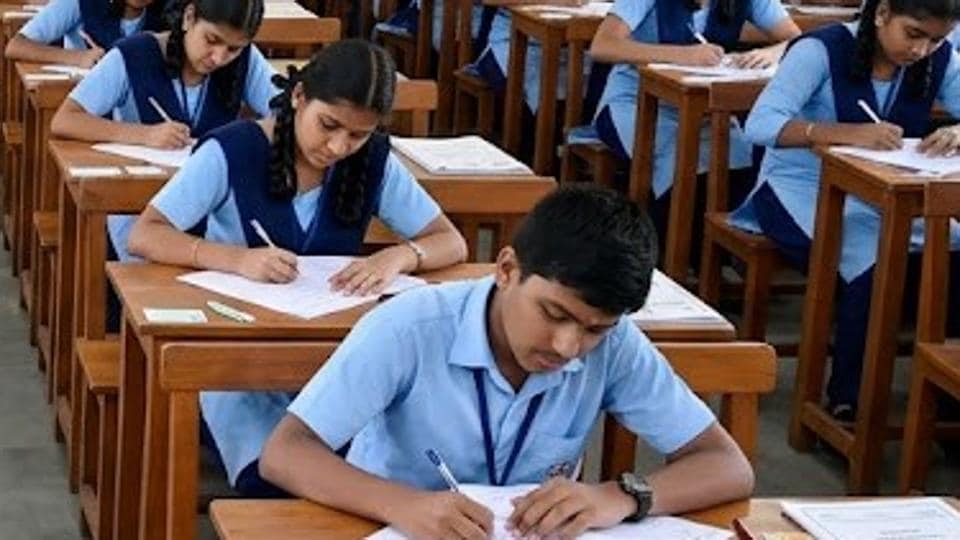
He also stressed the need for qualified teachers, pointing out that Indian languages would have to be taught from the basics while Class 6 students would already be expected to deal with more complex words and sentences.
Bench backs Indian-language learning, flags implementation concerns
The bench, however, emphasised the importance of learning Indian languages and questioned the reluctance to introduce an additional language. “Learning any new language is a big asset and invaluable. There is no compulsion for examination, why should there be a reluctance? And there is no embargo for you to continue with the foreign language,” it observed.
At another point, the bench said it was “something good for the nation that children learn different Indian languages” and asked, “What can be the harm if a person North India chooses to learn a language from South India.”
It also cautioned against treating Indian regional languages as inferior merely because they may not offer the same perceived employment opportunities as foreign languages. “Let us not treat with inferiority the regional languages. They all must get due respect,” said the bench, while indicating that implementation issues could be examined by an expert committee if necessary.
The petitioners, however, maintained that the issue was not merely one of choice. Grover argued that learning a foreign language could open employment opportunities and that schools must have qualified teachers to teach the newly introduced Indian languages.
Also Read: 3-language policy: CBSE grants one-time exemption to current Classes 7-9 students
The bench itself raised concerns over the availability of qualified teachers, including whether there were sufficient teachers possessing the required B.Ed qualifications to teach languages such as Sanskrit.
“If you see even with regard to R1 language, there are not adequate number of qualified B.Ed teachers. How many Sanskrit teachers are qualified with B.Ed? They may be well versed with Sanskrit,” said the bench, asking whether this aspect could be reconsidered.
Bhati told the court that the scheme contemplated only internal assessment for the transitional classes and that students would not be held back even if they did not qualify. She said the CBSE had permitted flexible staffing arrangements and that students would initially be taught at a foundational level.
Also read: Dharmendra Pradhan backs NCERT move to expose ‘dark chapter’ of Emergency
She also pointed out that the CBSE represents only a small portion of India’s school system -- around 33,000 of the country’s 7.5 lakh schools -- and said the overwhelming majority of CBSE schools already complied with the requirement of teaching two Indian languages. The ASG said the policy was being rolled out in phases pursuant to the NEP’s emphasis on mother tongue and Indian languages and that thousands of experts had been consulted in framing the scheme.
The bench nevertheless sought a specific roadmap on the adequacy of teachers and other school resources. “How much of it can be implemented is another question and with regard to it, we are requesting the ASG to give us a roadmap regarding adequacy of teachers and other school resources,” it said.
Supreme Court questions use of ‘native’ language classification
Upon being mentioned by senior advocate Gopal Sankaranarayan, the court also flagged a separate and potentially larger issue concerning the classification of English as a “non-native” language under the policy. Bhati said “non-native” was an expression drawn from the NEP and that English was an official language but not a native Indian language under the scheme.
The bench said it had reservations about the use of the term “native”, calling it potentially colonial in character. It said the question whether English could be considered an indigenous language might require a constitutional analysis based on historical and other relevant facts. “That is a debatable issue but a larger one that can be taken up later,” the bench said.
Also Read: What changes in CBSE’s language policy for Classes 6 to 10? | Explained
The court had first taken up challenges to the CBSE’s three-language policy in May, after parents complained about the lack of textbooks, teachers and infrastructure to teach the 22 scheduled Indian languages prescribed under the scheme.
Following the litigation and concerns from schools, the CBSE issued its June 29 circular providing transitional relief to Classes 7, 8 and 9. For Class 9 students who had already opted for two non-native languages, including combinations such as English and French, the board permitted them to retain those languages while adding an Indian language. For the current Class 10 batch, the CBSE had said there would be no change and no third language would be required.
The June 29 guidelines also said dedicated Class 6 textbooks in 22 scheduled Indian languages were being made available through NCERT and permitted schools to use flexible staffing arrangements, including functionally proficient teachers, retired teachers, school clusters and virtual or hybrid teaching.
The petitioners had argued that the original policy envisaged a phased rollout beginning with Class 6 in 2026-27 and reaching Class 10 by 2030-31, and questioned the decision to bring forward aspects of the policy without adequate preparation.



