
 E-Paper



Top court attaches conditions for brick kilns to revive operation in NCR
Balancing the interests of the environment and the competing interests of the brick manufacturers and dependent employees, the Court allowed operation of the brick kilns subject to a February 22, 2022 notification issued by the Centre.

 Prefer HTon Google


The Supreme Court has removed the stiff condition imposed by the National Green Tribunal requiring brick kilns operating only on piped natural gas (PNG) to operate in the national capital region (NCR), paving the way for the reopening of nearly 1900 brick kilns that were closed due to an interim ban imposed by NGT in November 2019.
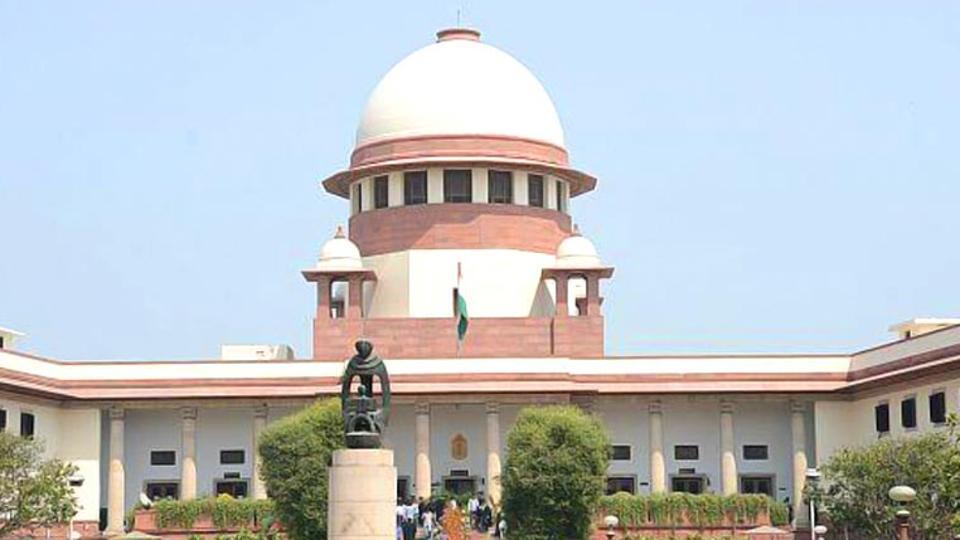
Balancing the interests of the environment and the competing interests of the brick manufacturers and dependent employees, the Court allowed operation of the brick kilns subject to a February 22, 2022 notification issued by the Centre. This notification permitted all existing brick kilns to shift to PNG within a year, thus allowing kilns fired by coal, firewood to remain in operation for the present.
The order passed on April 8 by a bench of Justices KM Joseph and Hrishikesh Roy said, “We make it clear that those out of 2164 units, which have not obtained consent to operate (under the February 22 notification) and those units which have not declared their production capacity, shall not be permitted to operate.”
The Court directed the kilns to first obtain consent under the February notification issued by the Ministry of Environment, Forest and Climate Change (MoEFCC) and disclose their production capacity. The notification also required the kilns to shift to zig-zag technology (where bricks are stacked in a zig-zag manner) within the one-year period as this method of producing bricks causes less air pollution.
The brick kiln associations situated in Haryana and Uttar Pradesh, operating on zig-zag technology, had approached the top court to appeal against the NGT judgment of February 17, 2021 as it restrained the brick-makers operating on other fuels such as coal, firewood, and permitted only 644 units (444 in Haryana and 200 in UP) to remain operational during the months of March-June every year. This is the peak period for this industry as in the winter months the air quality index (AQI) in Delhi-NCR dips to “severe” category “(AQI of 401-500), requiring these units to be shut down as per Graded Response Action Plan (GRAP).
The judges observed, “The following order is required to be passed keeping in view, undoubtedly, the interest of the environment, and factoring in both the interests of the persons who are running the brick kiln industry and the employees who would be working therein.”
The NGT order came on a petition filed by a public-spirited citizen Utkarsh Panwar who sought a ban on all brick kilns, including those operating on zig-zag technology. NGT had on November 15, 2019 issued an interim order staying the operation of all brick kilns and kept extending the ban till its final order passed in February 2021. Brick kiln owners operating on coal, firewood, etc, felt severely handicapped by the NGT’s direction to switch to PNG.
This aspect was taken care of by the MoEFCC notification which said, “All brick kilns shall use only approved fuel such as PNG, coal, fire wood and/or agricultural residues. Use of pet coke, tyres, plastic, and hazardous waste shall not be allowed in brick kilns.”
The Central Pollution Control Board (CPCB) through its lawyer Swarupama Chaturvedi had produced the February notification before the Court and stated that the board was open to allow the brick kilns as per this notification. According to her, the new order imposed stringent conditions as brick kilns were required to function with reduced particulate matter (PM) emission of 250 milligram per normal cubic meter in place of the existing permitted levels of 750 milligram per normal cubic meter.
To tighten implementation of its order, the bench posted the matter on May 6 with a direction to CPCB and state pollution control board officials to conduct surprise checks at these units. In addition, the bench directed both CPCB and SPCBs to monitor the impact of pollution generated from these units which have been permitted to operate.
Panwar, the petitioner before NGT, pointed out to the Court that out of the 2164 units which were in focus, about 115 did not have the consent to operate as per the MoEFCC notification while 221 units had not declared their production capacity. The bench made it clear that these units will not be permitted to operate leaving just over 1900 units to benefit from the present order.


