E-Paper


Trusted India-Japan partnership vital amid global uncertainty, says Jaishankar
External affairs minister S Jaishankar said on Wednesday addressed the inaugural Raisina Tokyo event in the Japanese capital

 Prefer HTon Google


An expansion of India-Japan ties will stabilise and secure the Indo-Pacific and serve as a key pillar of an increasingly multipolar Asia at a time when trusted partnerships are seen as a solution in uncertain times, external affairs minister S Jaishankar said on Wednesday.
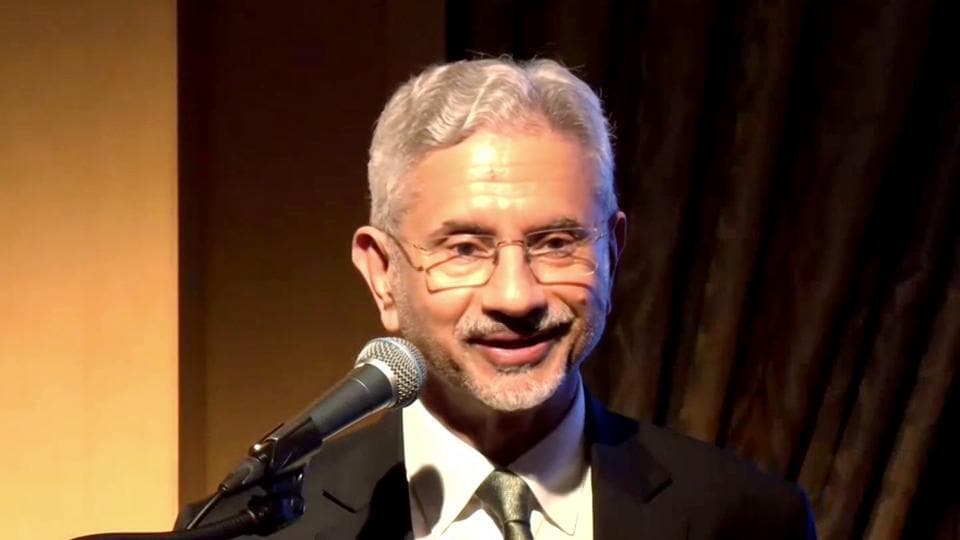
Addressing the inaugural Raisina Tokyo event in the Japanese capital, Jaishankar told an audience that included Japan’s foreign minister Toshimitsu Motegi that most countries are de-risking and diversifying in response to conflicts, trade disruptions and economic volatility.
Noting that Japan and India are members of key multilateral platforms such as the Quad, the G4 and the East Asia Summit, he said, “By expanding India-Japan ties, we will not only serve to stabilise and secure the Indo-Pacific but add an important pillar to an increasingly multipolar Asia and a multipolar world.”
Deep Dive

Jaishankar, who is in Japan with defence minister Rajnath Singh to participate in a 2+2 meeting of defence and foreign ministers, pointed out five defining features of the current global order, including shocks to the international system from the Covid pandemic, two major conflicts, trade disruptions and economic volatility.
“Whether it is resources or energy, market access or technology, or indeed even finance, every aspect of global economic activity has been more and more openly weaponised by relevant players,” he said, adding that physical and virtual chokepoints and gateways have been subjected to strategic agendas at a time when rules, norms and assumptions are rapidly eroding.
There is also greater risk-taking, reflected in a mindset of extreme competition, while major economies have begun de-risking and diversifying. “Our choices are shaped now less by cost and efficiency, and perhaps more dependent on reliability and multiplicity. New supply chains and new economic arrangements are starting to come into being,” Jaishankar said.
At the same time, trusted partnerships have emerged as solutions. “In such uncertain times, nations, as indeed enterprises, put a much greater value on trusted partners and shorter supply chains,” he said.
The Indo-Pacific offers a particular challenge because these five factors are strongly imprinted on its landscape. “As two leading nations of the region committed to maintaining a free and open Indo-Pacific, India and Japan obviously have to secure their own national interests in this regard,” Jaishankar said.
This must be done while encouraging the freedom of choice and promoting growth and stability by helping partners to build strength and deepen reliable and trusted cooperation, he added.
Japan and India perceive each other as complementary partners, and several factors can provide new momentum to bilateral cooperation, such as the larger strategic context and the political leadership of both sides, he said.
Jaishankar also outlined six issues that Japan should take into account while engaging India, including the transformation of India’s business environment in recent years and the growth of infrastructure such as highways, ports, airports, rail and power.
Improvements in infrastructure make India a platform to manufacture for global markets and undertake offshore production, alongside the natural advantages of a large domestic market. Soft infrastructure and human resource development have also improved, with results seen in sectors such as digitalisation, space, drones, health and defence.
Jaishankar proposed that the India-Japan agenda should look to the future, including closer collaboration in advanced manufacturing, semiconductors, critical minerals, ICT, clean energy and pharmaceuticals. The two sides should develop policies and frameworks that enable them to work more closely in security and defence, and all of these issues should be supported through stronger people-to-people linkages and societal activities, Jaishankar said..