
 E-Paper





Follow the latest breaking news, major developments and agenda-setting stories from India and around the world with the newsdesk at Hindustan Times. Operating round the clock, the desk brings together experienced editors, reporters and correspondents to deliver fast, accurate and contextual reporting across subjects that influence public policy, governance, business, society and international affairs. The HT News Desk covers politics, elections, government policies, the economy, business and markets, science and technology, the environment, law and order, infrastructure, education, climate issues and geopolitics, while closely tracking developments across states, institutions and global capitals. The team also leads coverage of major breaking news events, policy announcements, court proceedings, natural disasters, public emergencies and significant international developments. Reports published by the newsdesk are based on information gathered from reporters on the ground, official statements, government agencies, court records, regulatory filings, recognised institutions and other authoritative sources. Stories undergo editorial scrutiny and verification processes to ensure accuracy, fairness and relevance, and are updated as events evolve and additional information becomes available. Whether covering a key political decision in New Delhi, an economic policy shift affecting millions, a landmark court ruling or a major global event, the HT News Desk aims to provide readers with reliable, fact-based journalism that delivers not only the latest developments but also the context and analysis needed to understand their wider implications.
Unlock 1: States allow shops, markets, offices to reopen with full capacity; religious activity from June 8
The Centre’s new guidelines provide a roadmap for lifting of the lockdown and allows states to take a call on when educational institutions, public transport and other places of social gathering such as malls and cinema halls can open, 70 days after the lockdown was announced by PM Modi.


In Unlock 1, starting from June 1, religious and political activity will remain out of bounds in almost all states except West Bengal, Telangana and Karnataka, according to state government notifications issued on Sunday, which also extended the lockdown till June 30, as the Centre’s guidelines issued on Saturday had suggested.
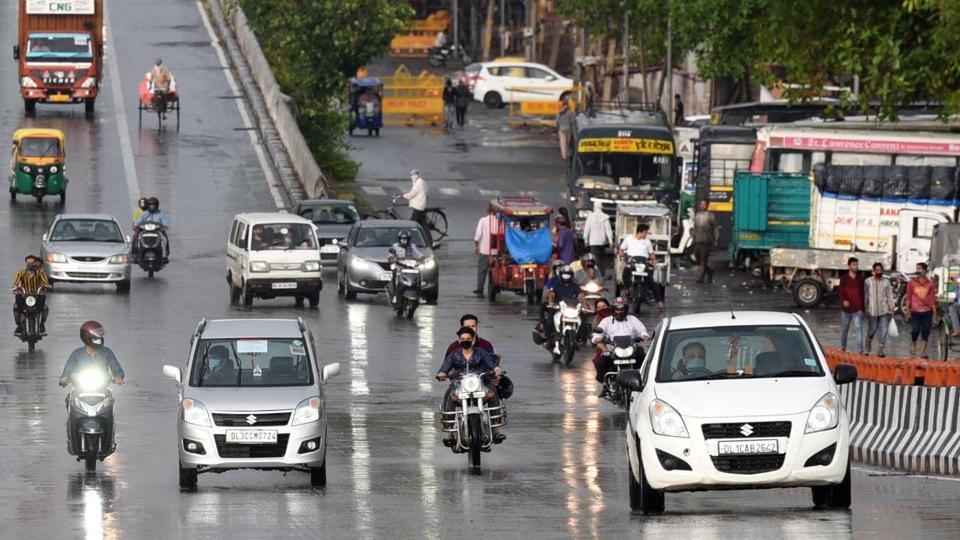
The Centre’s new guidelines provide a roadmap for lifting of the lockdown and allows states to take a call on when educational institutions, public transport and other places of social gathering such as malls and cinema halls can open and under which conditions, 70 days after the lockdown was announced by Prime Minister Narendra Modi on March 22.
The relaxations announced by the state governments would not be applicable in the containment areas, including in 13 cities that account for the country’s 70% of Covid-19 cases. The Centre has asked the states to strictly enforce hard lockdown in containment areas and on Sunday most states went by the Centre’s broad unlock guidelines.
ALSO READ | In Maharashtra’s Mission Begin Again, shops, markets allowed to open on odd-even basis
Uttar Pradesh and Haryana allowed inter-state transport except from Delhi, which has a high number of Covid-19 cases. “The DMs will take a call on when to open borders with Delhi depending on local conditions,” said an Uttar Pradesh government official.
Haryana home minister Anil Vij said that Delhi was the reason for spurt in Covid-19 cases in Gurugram and Sonepat, the two districts bordering the national capital. Maharashtra also continued with allowing no inter-district traffic between highly infected districts of Mumbai, Pune, Nagpur and Aurangabad.
Except Maharashtra, almost all states have allowed running of offices and industrial areas, outside containment zones, with full capacity from Monday. Although the resumption of metro will take some more time, most states relaxed norms for public transport for smoother transport within and outside the states. Unlike where only up to 50% passengers were allowed, the new norms allow buses to run with all seats filled and without any passengers standing. However, private buses have not been allowed in some cities such as Patna and Jaipur.
ALSO READ | Lockdown 5.0: These 13 cities will see stricter rules, more monitoring
Autos, e-rickshaws and taxis can now seat up to the permitted level of passengers in most states with proper sanitization, unlike the previous norm of maximum of two passengers.
Most states on Sunday said that they would later take a call on opening of schools and colleges from July 1. Officials in several state governments such as Uttar Pradesh, Uttarkhand and Madhya Pradesh are planning to set up expert committees to decide on how to open educational institutions.
In Rajasthan, the government may come up with special guidelines to allow running of coaching centers, especially in Kota and Sikar, hub of coaching centers in the state. “As of now, we have asked schools to continuing teaching online,” said a Punjab government official. In Himachal Pradesh, the government has decided to extend summer vacation till June 15. Normally, schools in Himachal Pradesh have a summer vacation for a week starting from June 1. Uttarkhand plans to open government schools from June 15.
With a large number of migrants having returned, Bihar, Odisha and Jharkhand governments have ordered that all quarantine centers running in government schools would be closed by June 15, as by then most of the workers, expected to come in the next few days, would have completed 14 day quarantine. This, officials said, would help the state governments to decide on reopening of schools from July as suggested by the Central government.
Bihar’s additional chief secretary (Home), Amir Subhani, said close to 1.8 million workers have returned and many of them are expected to finish quarantine by June 8. “We will abide by the Centre’s guidelines,” he said.
Andhra Pradesh government on Sunday appointed seven official committees to prepare blueprints with regard to phase-wise lifting of lockdown in the state. While two committees would look into reopening of shops and establishments and revival of commercial activities in the urban and rural areas, one committee each was appointed to suggest measures for industries, agriculture, rural development, public transport, works pertaining to public sector undertakings and revival of activities in public and private offices. Neighbouring Telangana issued an order extending lockdown till June 30.
Kerala is expected to announce it unlock norms on Monday after review of the Covid-19 situation in the state, officials said. West Bengal government on Saturday had allowed all economic activities except malls and big shopping complexes. Bengal is the only state to allow opening of religious places from Monday with a restriction of maximum of 10 people at a particular time.
Most states announced that they will take a call on opening of all religious places, metro rail, cinema hall, gymnasiums, amusement parks, pools, hotels, restaurants and other hospitality services school by June 8, as stated by the home ministry’s guidelines. Only essential activities will be allowed in the containment areas with strict curfew conditions, the state guidelines reiterated.


