E-Paper



Uttarakhand govt to allow industrial and agricultural activities from April 20
These decisions were taken in the meeting of the ministers and senior officials at the residence of the Chief Minister Trivendra Singh Rawat.

 Prefer HTon Google


The Uttarakhand government on Thursday evening decided that it will allow industrial and agricultural activities in the state from April 20 amid the coronavirus lockdown. It also made wearing of face masks compulsory in public places and banned the sale of liquor and tobacco products in the state.
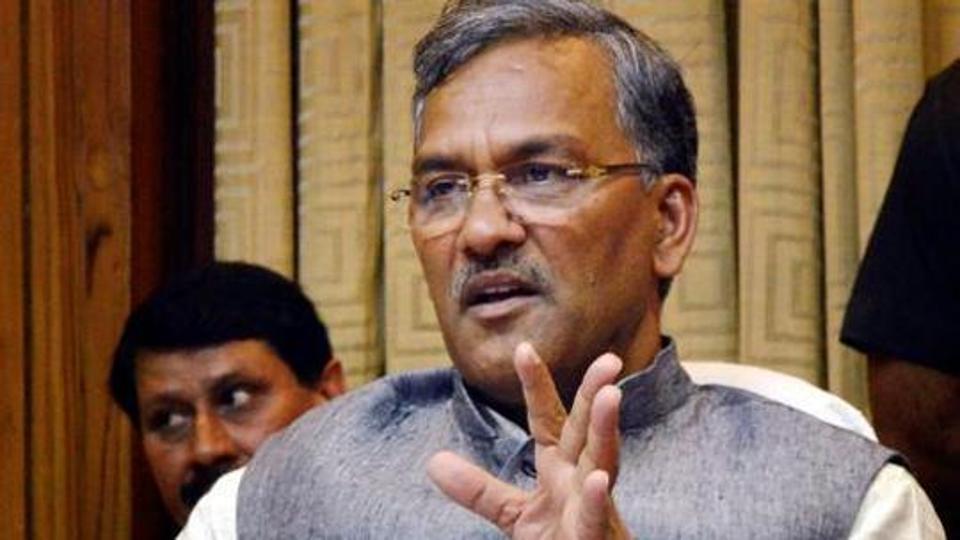
These decisions were taken in the meeting of the ministers and senior officials at the residence of the Chief Minister Trivendra Singh Rawat. The meeting went on for two and a half hours on Thursday evening.
Giving details of the decisions taken during the meeting, Madan Kaushik, cabinet minister and spokesperson of the state government said decisions were taken in line with the guidelines issued by the Centre on Monday regarding lockdown 2.0.
Kaushik said industries will be allowed to operate in the state in rural areas and industrial estates after April 20 but they will have to seek permission from the state government either online or directly and will have to abide by the guidelines issued by the Centre.
He said industrial units will have to seek permission from the respective district magistrates and also inform them from where they are getting labour.
Kaushik said agriculture activities will also be allowed in the state with farmers following social distancing norms. “We have set up 201 centres for procurement of wheat and set a target of buying 2 lakh metric tonnes for which payment will be made at the earliest”, he said.
For marriages and last rites
Kaushik said marriage ceremonies will be allowed in the state with certain conditions like the number of wedding guests should be limited to five and the ceremony has to be held inside homes. “In case of last rites, not more than 20 people will be allowed to participate. People will have to take permission for marriage ceremonies and participation in last rites from district magistrates of their respective districts”, he said
Secretariat and office of the legislative assembly
Kaushik said the state secretariat and office of legislative assembly will be opened from Friday, adding that these offices will be sanitised first. He said that ministers also can sit in their offices from Friday.
The minister said online education and e-commerce will be allowed in the state. “But all coaching institutes, educational institutions, hotels, autos, taxis, cinemas, malls, gyms, sports complexes, swimming pools, theatres, bars, will remain closed. No religious, social or political gatherings will be allowed during the lockdown period”, he said.
On hotspots
On ‘red’ zones and hotspots declared by the Centre, Kaushik said no permissions will be given in such areas. He said in hotspots, containment zones will be demarcated by the district administrations. According to the Centre’s list of 170 districts classified as hotspots, or in the ‘red’ zone, Dehradun has been listed as hotspot district with a large outbreak, while Nainital and Udham Singh Nagar have been listed as hotspot districts with clusters. Haridwar, Almora, Pauri Garhwal have been listed under non-hotspot districts reporting cases
No leniency in lockdown
Kaushik said there will be no leniency in lockdown in the districts that have not reported any positive Covid-19 case. He said Section 144 of CrPC will be in force in the entire state prohibiting assembly of more than 5 persons.
Earlier, the state government had proposed to divide 13 districts into two categories - districts that have not reported a single positive Covid-19 case prior to April 14, and those that had reported positive cases preceding April 14.
So far, Uttarakhand has reported 37 Covid-19 positive cases. Of these 37 cases, only two positive cases have been reported from hilly areas including Almora and Pauri Garhwal.
On sheltering jamaatis
Kaushik said so far 513 jamaatis have been identified who have come from other states to Uttarakhand, while those who have gone from here to attend jamaats in other states and have come back number around 910. “All these 1423 jamaatis have been identified and quarantined. After the ultimatum, 182 jamaatis have so far presented themselves before the administration for quarantine. The state government has also decided that if jamaatis who are still hiding, don’t come forward, then the state government will take action against those also sheltering them under the same charges (attempt to murder or murder)”, he said.
On stranded Kedarnath and Badrinath priests
The portals of Gangotri and Yamunotri shrines are scheduled to be opened on April 26, while the portals of Kedarnath shrine are set to open on April 29 and portals of Badrinath on April 30. The chief priest of Kedarnath shrine is stranded in Maharashtra due to the lockdown, while the priest of Badrinath shrine is stranded in Kerala.
In case of Char Dham pilgrimages, Kaushik said for Yamunotri and Gangotri there is no issue of priests stranded outside the state. “However in case of Kedarnath and Badrinath, the priests who conduct the rituals for the opening of portals are outside the state. We spoke to the home ministry that these priests be allowed to come to the state. The home ministry has agreed they will be allowed to come to Uttarakhand by car. If they come, they will be quarantined for 14 days”, he said.
Kaushik said in case of Badrinath shrine, Tehri royal family will be empowered to change the date of the opening of the portal or nominate somebody for its opening.
Road construction to be allowed
Kaushik said road construction operations will be allowed with local labourers outside civic body limits. He said permission related to the procurement of raw materials for such constructions will be sought from the Centre in coming days.