E-Paper



Victims of crime can also move court for speedy trials, says Supreme Court
The court set aside a Delhi HC order that rejected Renuka Jain’s plea and imposed ₹10,000 costs on her.

 Prefer HTon Google


The Supreme Court has ruled that victims of crime have an independent right to seek expeditious completion of criminal trials, holding that they are “definite stakeholders in the criminal justice system” and cannot be denied access to courts on the premise that only the accused or the prosecution can demand a speedy trial.
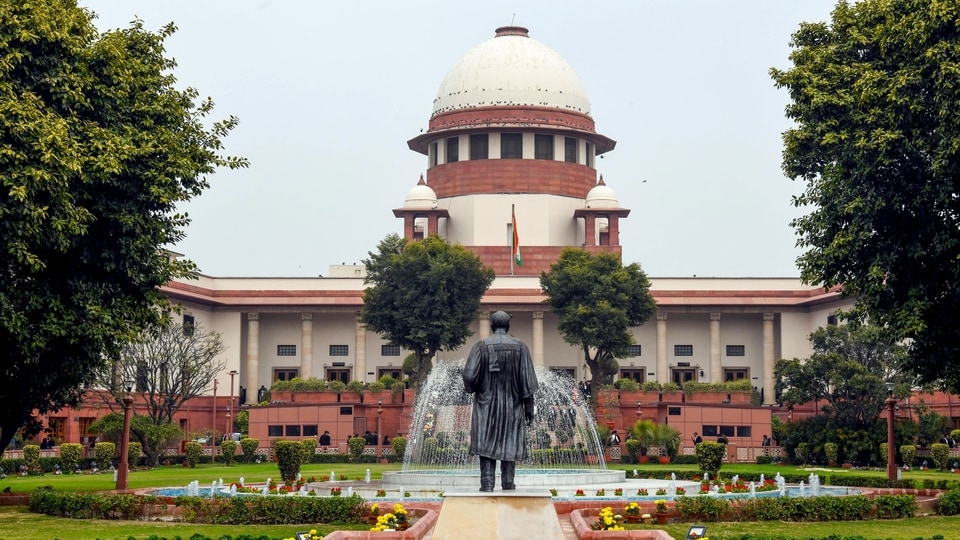
Setting aside a Delhi high court order that had dismissed a victim’s plea for expediting a criminal trial as frivolous and a drain on the judiciary’s already overflowing dockets, a bench of justices Ujjal Bhuyan and Atul S Chandurkar held that victims have a vested right to insist on both a speedy and fair trial. The bench clarified that a victim can invoke Section 528 of the Bharatiya Nagarik Suraksha Sanhita (BNSS), which preserves the high court’s inherent powers, to seek directions for expeditious proceedings before a trial court.
The ruling highlights the position that criminal justice cannot be viewed solely through the competing rights of the accused and the prosecution, with the interests of those who have suffered the alleged offence relegated to the sidelines. It also places the victim’s statutory recognition under the BNSS in the context of the constitutional guarantee of a speedy trial while clarifying that the victim’s role does not end with reporting a crime or appearing as a prosecution witness.
“Therefore, to say that the role of the victim is limited to being a witness, is not correct. A victim or the legal guardian of the victim is a definite stakeholder in the criminal justice system. Like the accused, she has also a vested right to insist on a speedy trial and also for a fair trial,” held the court in a judgment released last week.
Also read: SC settles un-relied-documents row: Accused can use them in trial
Case background and Supreme Court directions
The case arose from a complaint filed by Renuka Jain in 2017, when she lodged an FIR at Delhi’s Farsh Bazar police station accusing the persons named in it of cheating under Section 420 of the Indian Penal Code. After the investigation, a chargesheet was filed and the case was registered before a judicial magistrate at the Karkardooma district courts.
Aggrieved by the delay, Jain had approached the Delhi high court, which in February 2023 directed the trial court to conclude the proceedings within two years of framing charges. As the trial made little progress, she returned to the high court with a fresh petition under Section 528 of the BNSS, seeking an order for expeditious disposal.
This time, the prosecution challenged her locus standi. The high court accepted the objection, reasoning that in a state prosecution the complainant’s role was confined to that of a witness and that only the state or the accused could move such a petition. It also described her plea as frivolous and imposed costs of ₹10,000. Jain was represented through advocate Fauzia Shakil in the top court.
Rejecting this approach, the Supreme Court said the high court had fundamentally misread the law and the constitutional position of a victim in criminal proceedings. It set aside the January 6, 2026, order and directed the trial court to conclude the case within one year.
Also read: SC order on Delhi protest crackdown: What ‘procedure established by law’ means
Legal provisions and the victim’s role
The bench examined the corresponding provisions of the BNSS and the Code of Criminal Procedure (CrPC), including the statutory definition of a victim. Section 2(y) of the BNSS recognises as a victim a person who has suffered loss or injury because of the act or omission of the accused, and includes the victim’s guardian or legal heir. The court also referred to Section 338 of the BNSS, corresponding to Section 301 of the CrPC, and Section 339(2), corresponding to Section 302(2), which govern the conduct of prosecution and the circumstances in which a person other than the public prosecutor may conduct it.
These provisions, the court said, demonstrate that a victim is not a stranger to criminal proceedings. It is the loss or injury suffered by the victim that sets the criminal process in motion. The statutory framework cannot, therefore, be read to erase the victim’s interest once the police file a chargesheet and the state takes charge of the prosecution.
Also read: No illegal detention of protesters in Delhi; metro, internet to run normally: Supreme Court
Earlier rulings on victims’ speedy-trial rights
The court further drew support from earlier rulings, including Mangal Singh Vs Kishan Singh (2009), which recognised that delay can cause acute suffering and anguish to victims, sometimes even greater than that experienced by the accused. It also relied on Rattiram Vs State of Madhya Pradesh (2012), which stressed that speedy trial is not an exclusive right of the accused and that preventing delay is a sacrosanct obligation of those responsible for administering criminal justice.
Referring to some other rulings, the bench reiterated that a person aggrieved by an offence is not entirely excluded from the trial merely because the police have investigated the case and the public prosecutor is conducting it.
More recently, in Keshvendra Singh Vs Shankar Singh (2026), the Supreme Court had underlined the victim’s valuable right to a speedy trial, warning that prolonged delays can undermine evidence, make witnesses less forthcoming and weaken the administration of justice.
Frequently Asked Questions