
 E-Paper



Why Chief of Defence Staff Bipin Rawat cautioned Nepal about China’s footprint
In his keynote address at an online event hosted by a Nepal think tank, Gen Rawat underscored the deep and extensive ties between New Delhi and Kathmandu before pointing out that Nepal was opening to other countries including China based on its independent foreign policy.


In a remark aimed at China, Chief of Defence Staff General Bipin Rawat this week advised Nepal against signing off on loans from other countries in the region and nudged Kathmandu to learn from Sri Lanka’s experience which had signed agreements with “other countries in the region”, a pointed reference to Chinese financial institutions that have quietly extended billions of dollars in loans to developing countries that has been used to gain strategic leverage.
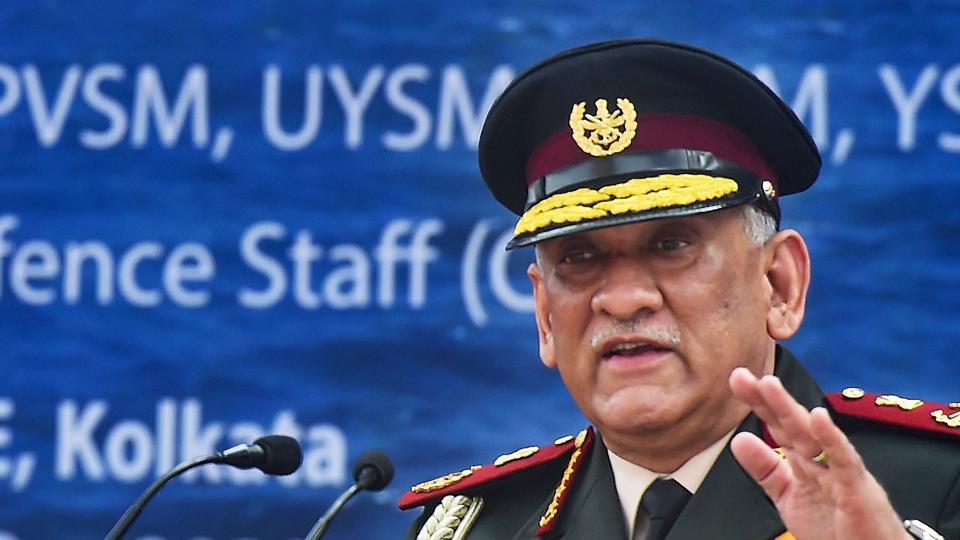
In his keynote address at an online event hosted by a Nepal think tank, Gen Rawat underscored the deep and extensive ties between New Delhi and Kathmandu before pointing out that Nepal was opening to other countries including China based on its independent foreign policy.
“Nepal is free to act independently in international affairs but must be vigilant and learn from Sri Lanka and other nations which have also signed agreements with other countries in the region,” India’s top military officer said.
Also Watch | ‘Learn from Sri Lanka’: CDS Gen Bipin Rawat cautions Nepal on ties with China
Sri Lanka is just one example. It had to hand over the port of Hambantota to China on a 99-year lease in 2017 after struggling to pay debts incurred from its construction executed by Chinese companies. The $3.3 billion debt outstanding to China is only one part of Lanka’s financial mess made worse by borrowings from international markets by successive governments.
Lanka, however, isn’t the only one. A senior Indian government official said China had extended loans to the tune of at least $31 billion to five South Asian countries; Pakistan, Maldives, Bangladesh, Sri Lanka and Nepal.
“These are the reported figures but the real figure could be much higher,” the official said.
No one really knows the real figures since Chinese lenders forbid governments from revealing the numbers. Zambia, the first African country to default on its debts since the pandemic, said, according to a report in the Guardian, asset and fund managers wanted transparency over its estimated $3 billion debt to Chinese lenders who had barred them from giving out the details unless recipients of this information sign confidentiality pacts.
Zambia has been careening toward a debt debacle for months, even years. Now it has become the first African nation to default on sovereign payments since the pandemic began.
A study published in the Harvard Business Review in February this year estimates that nearly 50 per cent of the loans extended by Chinese institutions were not reported. It concluded that the Chinese state and its subsidiaries have lent about $1.5 trillion in direct loans to more than 150 countries around the globe.
This makes China into the world’s largest official creditor surpassing traditional, official lenders such as the World Bank, the IMF, or all OECD creditor governments combined, the study said.
Add the portfolio debts and trade credits to buy goods and services, and the Chinese government’s aggregate claims to the rest of the world exceed $5 trillion. That implies countries worldwide owe more than 6% of world GDP in debt to China as of 2017, it said.
In South Asia, however, it isn’t Sri Lanka but Pakistan and Bangladesh that have taken the biggest loans from China.
Bangladesh owes $ 4.7 billion to China and has sought $18 billion in loan on a concessional and preferential basis to implement mega projects. China did promise $ 24 billion in loans a few years ago but has, by July 2019, disbursed only $981, according to the Diplomat website.
Pakistan is estimated to have already borrowed $ 22 billion for its mega projects including the China Pakistan Economic Corridor that Prime Minister Imran Khan had questioned before he was voted to power. This week, Islamabad picked up $1 billion more to pay the second instalment of a $3 billion soft loan. Next month, it expects the third instalment to repay Riyadh.
For now, the State Bank of Pakistan underplays concerns around Chinese debt, insisting that the loan for CPEC is only about $5.8 billion, which accounts for only 5.3 per cent of Pakistan’s total foreign debt of 110 $ bn.
It is Maldives that is worried that the previous Abdulla Yameen regime may have dragged the Indian Ocean island chain into a debt trap. Former president Mohamed Nasheed, now speaker of parliament, has announced that the Chinese debt bill was in the vicinity of $3.1 billion including government-to-government loans, the money given to state enterprises and private sector loans guaranteed by the Maldivian government.
Analysts said Maldives may struggle to repay the Chinese loans by 2022-23 given how the $4.9 billion economy was struggling due to drop in tourism revenue.


