
 E-Paper



Will budget 2022-23...
This year’s Budget, in keeping with its predecessors, has made yet another attempt to attract foreign capital to cater to the economy’s long-term finance requirements

 Prefer HTon Google


As economic recovery continues amid a resurging pandemic, Roshan Kishore analyses the Union Budget and its impact.
Revive growth?
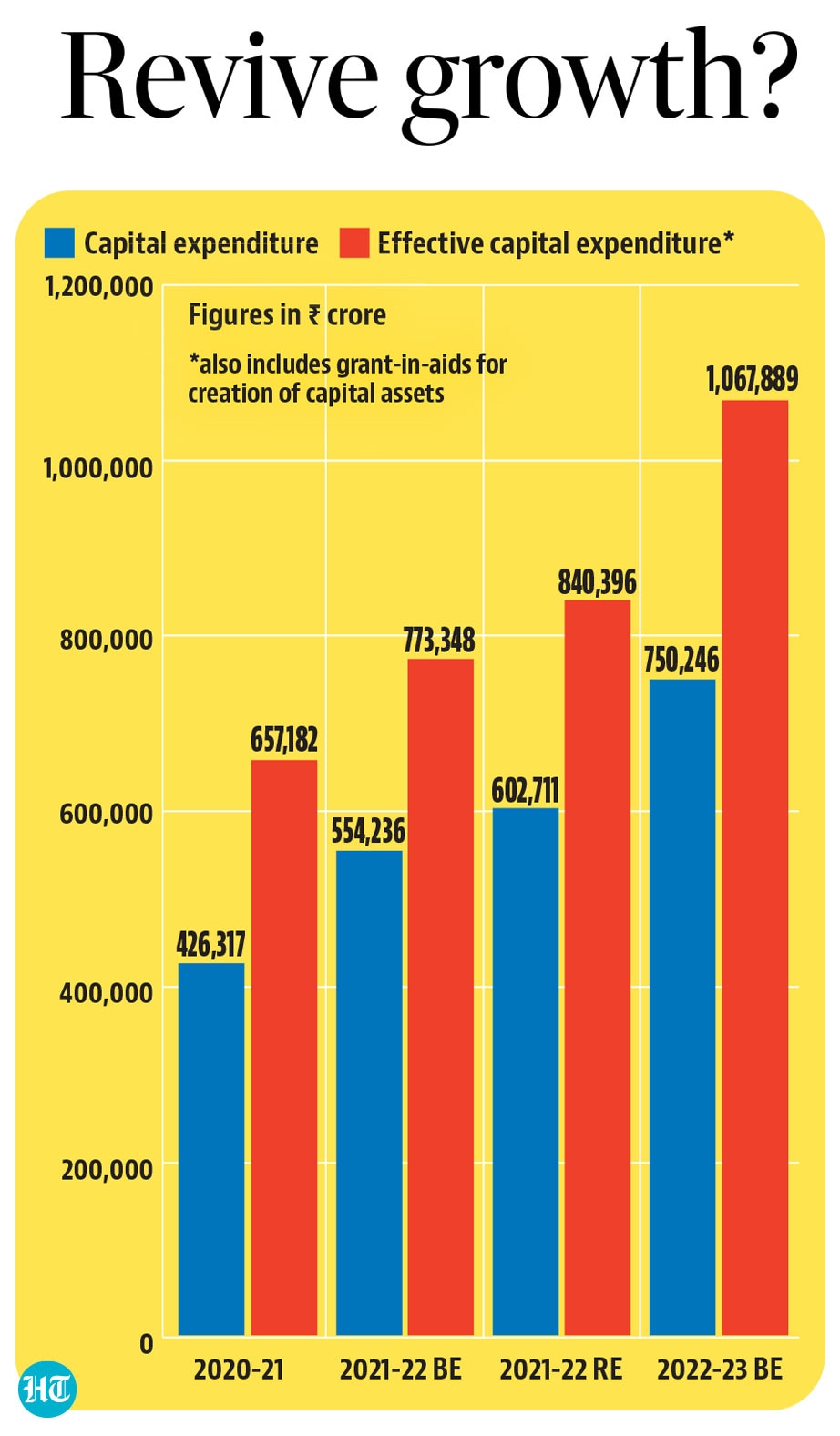
The short answer to this question is that Union Budget 2022-23 has prioritised long-term growth over short-term growth. Two key numbers can be cited in favour of this argument.
One, the Budget has perhaps taken a more conservative view of short-term growth than even the Economic Survey, which was released a day before it. The survey projects an 8%-8.5% real GDP growth rate subject to a set of assumptions such as oil prices coming down significantly from their current levels. The Budget has assumed a nominal GDP growth rate of 11.1%. Given the current levels of domestic and international inflation, it is unlikely that the GDP deflator will be under 3 percentage points. This essentially means that the Budget is factoring in a lower real GDP growth rate than what the survey has assumed, but stopped short of saying so explicitly.
The second part of this argument is best approached from the national income identity side. A country’s GDP is basically the sum of consumption, investment, government spending and net exports. Because there are no direct consumption boosters in the Budget, it can be assumed that the government has taken the public investment route to boost growth. The finance minister said this clearly in her speech when she talked about public investment crowding in private investment and boosting future incomes. The Budget decision to significantly increase financial assistance to states for capital spending is yet another move in this direction. This hike from ₹15,000 crore for 2021-22 revised estimates to ₹1 lakh crore (in the form of 50-year interest free loans over and above normal borrowing to states) is an effort to nudge states to divert greater resources towards capital spending.
While the Budget speech did not say this explicitly, there is also a big bet on the net export route to boost GDP in this year’s Budget. A host of customs duty recalibrations to give a boost to domestic manufacturing is a clear effort towards achieving this. By reducing customs duties on key inputs such as mobile phone components and raising them on a variety of capital goods, and also talking about bringing in a new Special Economic Zones (SEZ) policy the government is clearly hoping to give a fresh boost to import substitution as well as export oriented manufacturing, both of which it expects will raise the net export component of the GDP identity.
This year’s Budget, in keeping with its predecessors, has made yet another attempt to attract foreign capital to cater to the economy’s long-term finance requirements.
After having announced sovereign bonds in 2019-20 (the announcement was not followed up eventually), this year’s Budget talks about floating sovereign green bonds to finance India’s investment needs to tackle the climate crisis. This move is clearly aimed at tapping into the booming international market for climate finance.
To be sure, the Budget has not done much to give a boost to consumption spending in the economy, which accounts for more than half of India’s GDP. Does this mean that there is no strategy as far as consumption demand is concerned?
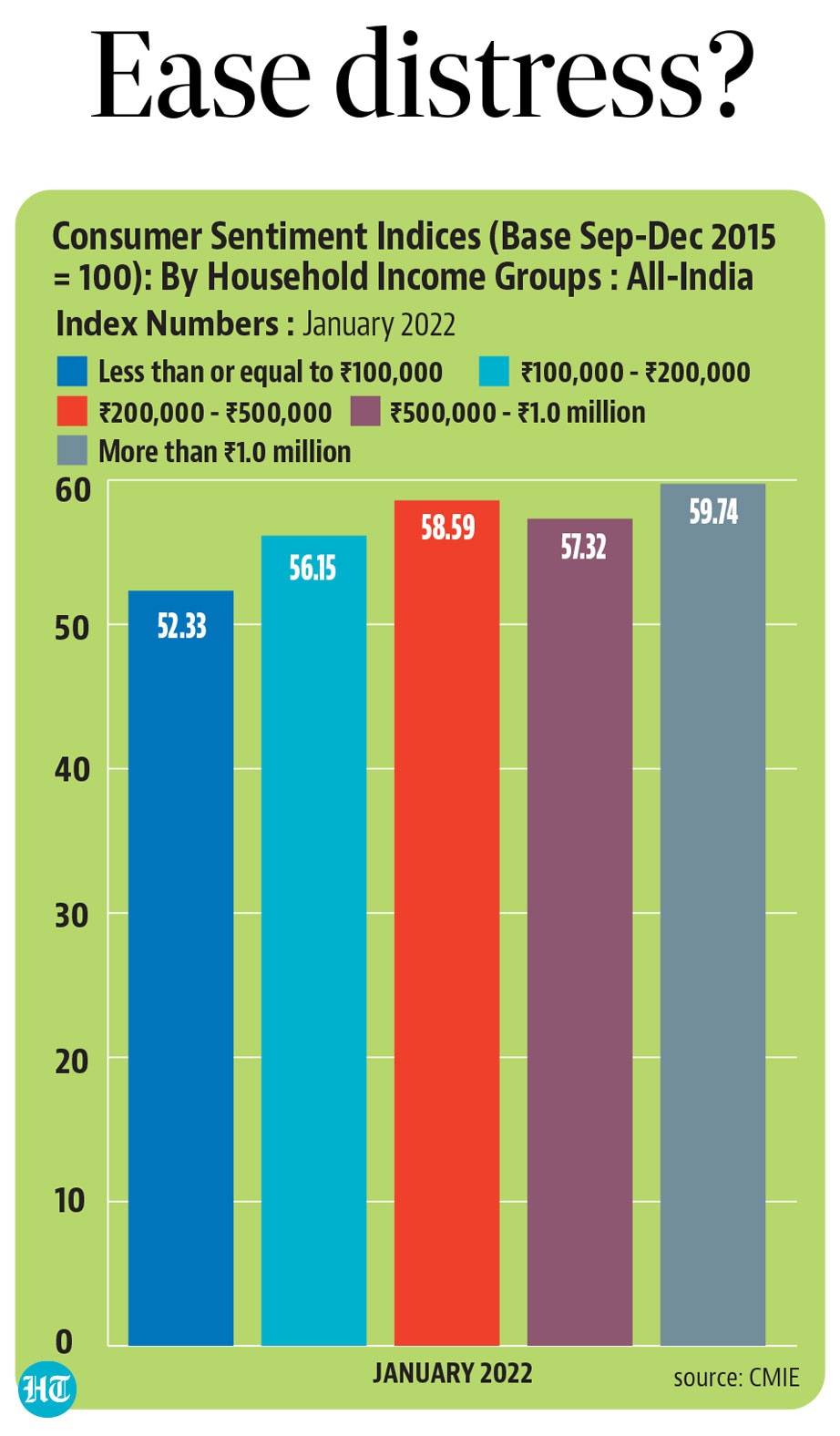
Here Union Budget 2022-23 has erred perhaps in omission rather than commission. By not raising direct taxes, which are primarily paid by the rich in the country, it is hoping that the consumption demand of the rich will continue to compensate for what seems to be tepid purchasing power of the non-rich. This seems to be in keeping with the line of argument of some independent economists that the poor do not matter as far as India’s consumption demand is concerned.
Any significant increase in support to the poor, at the given level of fiscal deficit, would have required either a reduction in capital spending or a higher tax on the rich.
Will this approach work? Two factors will matter the most here.
First is the level of inflation in the next fiscal year. If oil prices are significantly above the $70-75 per barrel level assumed in the Economic Survey, there is bound to be trouble on both the private consumption (via an inflation squeeze on purchasing power route) and net export (via higher import bill for crude oil) components of GDP. To be sure, the survey and (by extension) the Budget have been upfront in making this assumption.
The other threat to the Budget’s larger scheme is a divergence between the fortunes of the formal and informal sector, where the latter is believed to have entered a vicious circle of low income and low demand. While opinions are polarised on this issue, lack of credible data due to absence of key NSSO surveys such as the Consumption Expenditure Survey and the one on Informal Sector Enterprises could have blinded the official view to these pitfalls.
Ease distress?
This is one area where the Union Budget has not done much, no matter which way one looks at it.
It is useful to approach this issue from the vantage point of the current fiscal year.
Petrol and diesel prices reached an all-time high in the country despite the fact that crude oil prices have been higher in the past. This is largely a result of the central government taxes not being reduced enough. The government’s flagship distress alleviation programme, MGNREGS, continued to see high demand indicating that blue-collar and unskilled workers were unable to find employment in the larger economy. The trade, hotels, transport, communication and services related to broadcasting subsector of the economy – it is the most labour intensive component of services in India – is expected to face a second consecutive contraction in 2021-22.
Given these factors, it is not surprising that private final consumption expenditure is not expected to reach pre-pandemic levels in 2021-22 and consumer confidence indices, as measured in RBI’s Consumer Confidence Survey in November 2021 (latest available numbers), continued to be significantly lower compared to pre-pandemic levels.
What is the Budget’s plan to take care of these problems?
Budget estimate (BE) numbers for Union excise duty collections – these are mostly on account of petrol-diesel taxes – have been kept unchanged at last year’s BE levels. This suggests that petrol-diesel prices could increase significantly once the unofficial price freeze due to the state elections ending in March. This is bound to lead to more economic pain, especially for the poor. The fact that the petroleum subsidy burden is now almost negligible — it is just ₹5,813 crore for 2022-23 — means that there will be very little relief even at the targeted level.
The MGNREGS allocation for 2022-23 has been brought back to the 2021-22 BE level of ₹73,000 crore despite the fact that the revised estimate (RE) spending for 2021-22 is expected to be ₹98,000 crore. The 2021-22 allocation itself seems to be far from adequate. An Accountability Initiative brief on the scheme says that 9.1 million households who demanded work under the scheme until December 31, 2021 had not been given work. To be sure, the government’s logic of MGNREGS being a demand driven programme automatically entailing spending over and above the BE numbers is valid . However, it is also a fact that an aggressive boost to spending on MGNREGS-like programmes in the Budget would have generated tailwinds for unskilled wages in the larger economy as well. That wages are subdued in times of high unemployment is a first principle argument in economics.
The fact that food subsidy has been brought down sharply from ₹2.86 lakh crore (RE 2021-22) to ₹2.06 lakh crore for 2022-23 suggests that there will be at least a partial rollback of the scheme which has been providing additional five kilograms of free food grains to 800 million people. At a time when international food prices have risen sharply and even domestic food inflation is beginning to increase, this could take away the limited cushion to household budgets of the poor. On the other side, a reduction in the government’s food distribution programme will also entail a cutback in procurement from farmers, which in turn, will generate headwinds for farm incomes. This when seen with a cut in fertiliser subsidy from ₹1.4 lakh crore (2021-22 RE) to ₹1.05 lakh crore in 2022-23 will be an additional burden on farm incomes. Fertiliser prices are extremely sensitive to petroleum prices, so this reduction could be a result of the government’s assumption of crude price levels.
Does this mean that there is nothing in the Union Budget in terms of palliatives for the distress-ridden sectors? The government has once again taken the credit rather than fiscal spending route to address this problem. It has announced an additional credit guarantee cover of ₹50,000 crore for firms in the distress-ridden hospitality and allied sectors. This has clearly been done in the hope that India will not see yet another wave of the pandemic which has unleashed havoc on the tourism and dining industry. While the decision will not do much to boost incomes, it will at least prevent businesses from going bankrupt due to a liquidity crisis.
That apart, the government’s large-scale focus on infrastructural spending should also offer some support to the construction sector, which is a major employer of unskilled workers. As per the first advanced estimates of GDP released on January 7, gross value added in the construction sector in 2021-22 is expected to be ₹10.5 lakh crore, only marginally above the ₹10.4 lakh crore pre-pandemic value in 2019-20.
To sum it up, the Budget seems to have put faith in the trickle-down argument when it comes to providing relief to the poor. By hoping to boost overall growth via a capex boost, there is an expectation that some benefits will also percolate down to the poor. Theoretically there is always a possibility of weak demand by the poor dragging down future growth itself. Whether the Budget’s gamble will work or not will only be known over the course of the next fiscal.
Manage the fisc?
What is the Budget’s approach to the fiscal question? The short answer is it has given a cold shoulder to the hawks.
The revised estimate (RE) for fiscal deficit in 2021-22 is 6.9% of the GDP against the 6.8% figure given in last year’s budget estimates (BE). This probably is an underestimate of the extent of fiscal overshooting given the fact that at 17.6%, the nominal GDP growth for 2021-22 has turned out to be considerably higher than 14.4% figure which the 2021-22 Budget assumed. By budgeting for a fiscal deficit of 6.4% in 2022-23 and announcing a gross market borrowing of ₹14.95 lakh crore, the government has indicated that it will not give up on its spending plans, which it believes are crucial to boosting long-term growth prospects of the economy, for the sake of fiscal prudence. When seen in the context of both the US Federal Reserve and the Reserve Bank of India raising interest rates over the next fiscal year, this is a bold but laudable move.
To be sure, the government could end up doing better than expected on the deficit front in the next fiscal, given the fact that the Budget has a conservative nominal GDP growth estimate of just 11.1%.
The headline fiscal deficit number – it is reflective of the total borrowing requirement of government – is keenly watched by bond markets and rating agencies. But what goes into the making of this headline number is equally important for the economy. It is here that looking at the fine print of the budgetary numbers is important.
Let us take the question of the tax burden first. The government’s tax collection is an important component of its overall receipts. There are both direct and indirect taxes in the economy and the former are considered to be progressive in nature. This is because it is mostly the rich who pay direct taxes and tax rates increase with income levels. The 2022-23 BE numbers expect the share of direct taxes in gross tax revenues to increase to 51.5%. This is marginally higher than the 49.7% share in 2021-22 RE numbers and significantly higher than the 46.6% share in 2020-21, the year when the pandemic’s disruption was the worst. A fall in share of indirect taxes is good news as far as the incidence of tax burden is concerned.
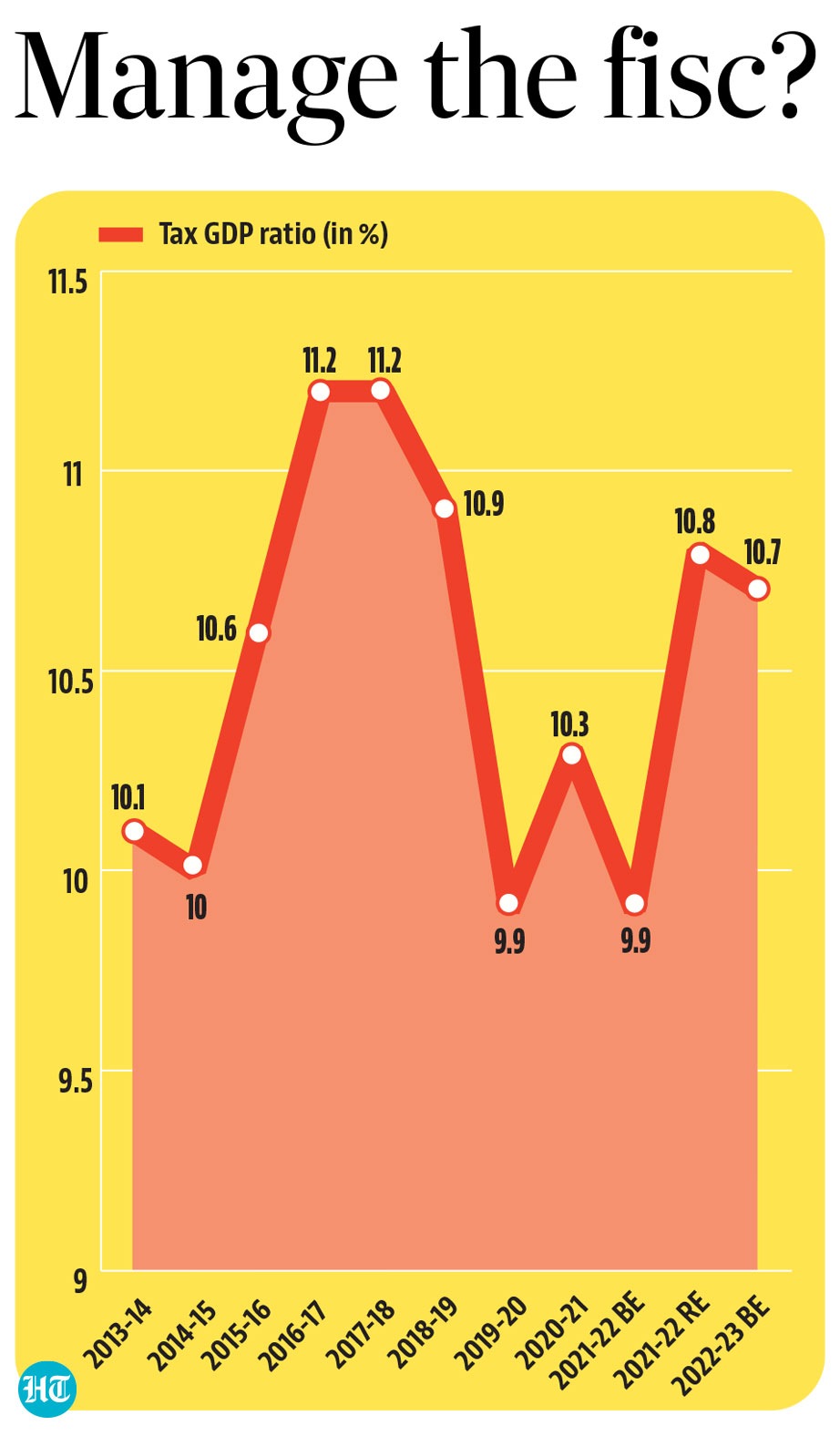
To be sure, on the larger question of improving the tax-GDP ratio, the Budget has not been able to achieve much. At 10.7%, the tax-GDP ratio in the 2022-23 BE figures is higher than the 9.9% BE number for 2021-22. But it is still lower than the 11% plus levels seen in 2016-17 and 2017-18. When read with the fact that higher taxes on petroleum products have resulted in a windfall gain on the revenue front, this statistic is a matter of even greater concern. It is also worth noting that even the direct tax to GDP ratio has fallen compared to past levels. This number is expected to be 5.5% according to 2022-23 BE numbers while it was 6% in 2018-19, a year before the government reduced corporate tax rates.
Next is the question of fiscal federalism. India’s constitution mandates a formula based transfer of taxes between the centre and the states. This formula is decided by the finance commission every five years. According to the 15th Finance Commission’s recommendations, the Centre is supposed to share 41% of revenue with the states. Here, the situation continues to be grim. The 2022-23 BE numbers put the share of states in gross tax revenue at 29.6%, largely the same as past two years.
The huge discrepancy between the Finance Commission mandated share of the actual share of states is on account of the centre classifying a large part of its taxes as special cess and duties, keeping them outside the divisible pool of revenues. When read with the fact that the Budget has also brought in other provisions to influence the spending behaviour of the states – interest-free loans to boost capex is one such example – this is not good news on the fiscal federalism front. To be sure, the issue of Centre-state resource sharing is more vexed than what the headline numbers on states’ share suggests because, driven by political considerations, the Centre has been increasingly spending more and more money on sectors which are technically in the purview of states. This issue has been repeatedly flagged by NK Singh, the chairman of the 15th Finance Commission.
There are two major factors which could change the budgetary fiscal maths over the course of the next fiscal. The first is a big spike in interest rates on government bonds due to a combination of higher market borrowings by the government and global tightening in liquidity. This could lead to a significant increase in interest payment expenditure of the government. The second could be a higher than expected inflation, resulting in lower growth. That could mean lower revenue and higher spending requirements especially on the capex front as project costs overshoot budgeted levels.
Boost infra?
If there is one sector where the Budget has surpassed even the five-year plans of the pre-2014 era in terms of long-range planning, it is infrastructure. The finance minister’s speech has set itself the task of laying out the path for a big public investment boost for modern infrastructure, readying the country for completion of hundred years of Independence in 2047.
To be sure, the Budget is not the first policy document to focus on this, as it has largely borrowed the idea from the Prime Minister GatiShakti programme announced in October 2021. The Budget speech said that the GatiShakti programme will be the centrepiece of an infrastructure push. The programme is driven by seven engines: roads, railways, airports, ports, mass transport, waterways, and logistics infrastructure.
While the GatiShakti programme lays out a 25-year-long vision, the Budget has set some concrete targets for the next fiscal such as expansion of the national highways network by 25,000 kilometers in 2022-23, awarding of contracts for four multimodal logistics parks in the public-private partnership mode, and rolling out 400 Vande Bharat trains over the next three years.
To be sure, the PM GatiShakti plan is not as much about the Centre funding these projects via budgetary allocations. It is more about the Centre bringing synergy in infrastructure development in the country going forward to unleash what are described as the economies of scale. The Budget speech makes it clear when it says that “the (GatiShakti) approach is powered by Clean Energy and Sabka Prayas – the efforts of the central government, the state governments, and the private sector together – leading to huge job and entrepreneurial opportunities for all, especially the youth”.
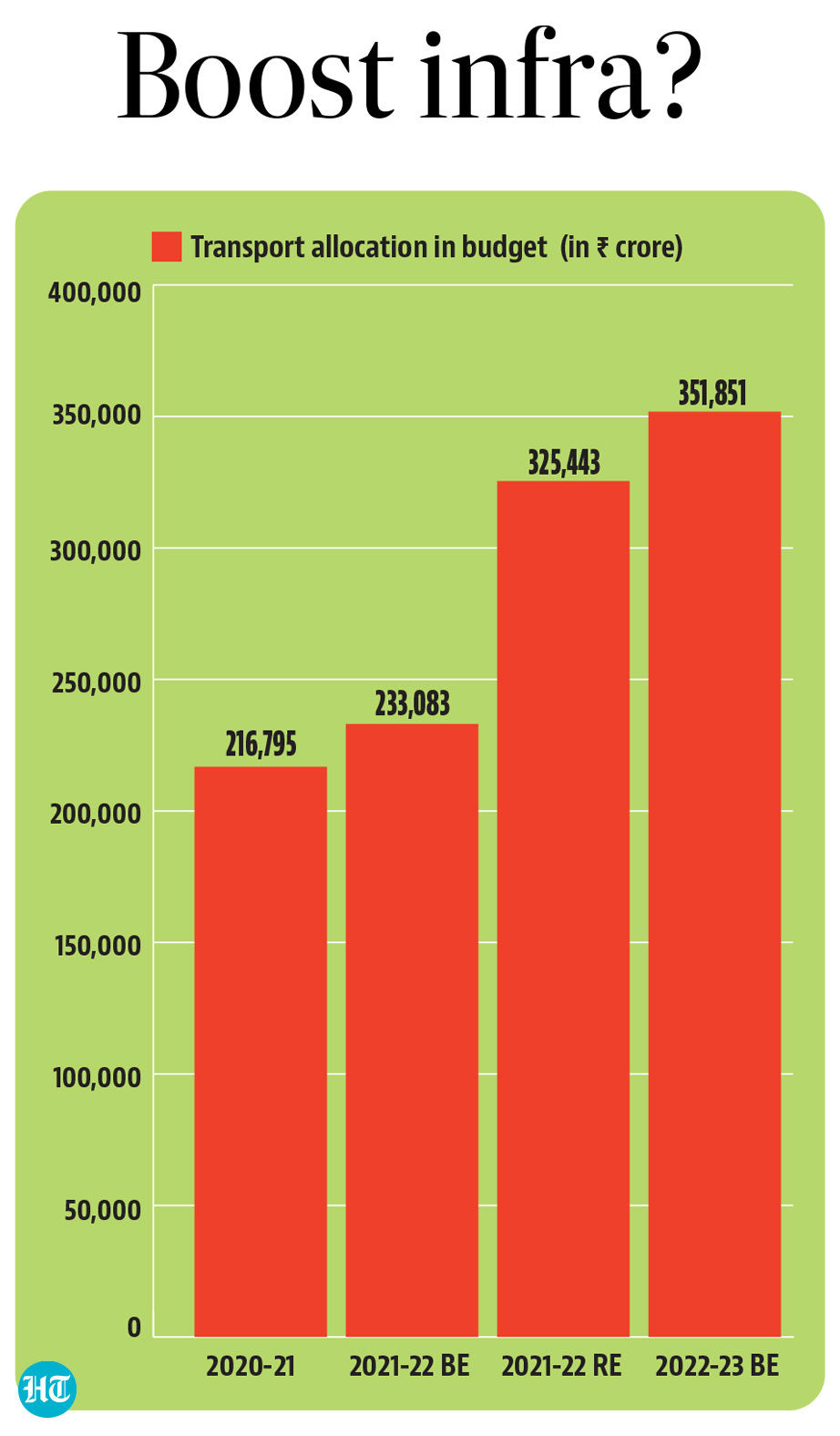
This, when read with the fact that the Budget speech talks about floating sovereign green bonds to attract foreign capital to fund projects for mitigating the climate crisis and finding “innovative ways of financing” infrastructure projects suggests that India could see major activity by both domestic and foreign capital in the infrastructure sector, even as public investments do much of the heavy lifting.
There are two key areas where the budget’s treatment of the infrastructure sector is different from the past.
One, the GatiShakti progamme takes a much broader view of the infra sector including things such as logistics parks and building an interface which focuses on interoperability of various modes of transport. This is in keeping with the government’s larger plans to monetise brownfield assets (which can be utilised to create such facilities) which was announced in the last Budget. Two, there is also an attempt to make the new infrastructure projects targeted in their approach such as the plans for using the railway network to facilitate better transportation of agricultural products under the “One Station, One Product” scheme to help local business and supply chains.
The Budget also stresses on the importance of making infrastructure projects financially viable. This is one sector which led to pile up large amount of bad loans in the banking system in the last decade. The speech strikes a note of caution on this issue. “For financing infrastructure needs, the stepping-up of public investment will need to be complemented by private capital at a significant scale. Measures will be taken to enhance financial viability of projects including PPP, with technical and knowledge assistance from multilateral agencies. Enhancing financial viability shall also be obtained by adopting global best practices, innovative ways of financing, and balanced risk allocation.”
The approach, to be sure, could have both its hits and misses. While ensuring that private investors in the infrastructure sector are asked to maintain a higher equity to debt ratio could be an insurance against future stress on the banking system, an overemphasis on making projects attractive for private players could result in higher user charges.
The Budget also talks about revamping the human resource pool which is responsible for executing large infra projects. “With technical support from the Capacity Building Commission, central ministries, state governments, and their infra agencies will have their skills upgraded. This will ramp up capacity in planning, design, financing (including innovative ways), and implementation management of the PM GatiShakti infrastructure projects.”
Expert have praised the infra focus in the Budget but also pointed out that its benefits will only accrue in the long-term horizon. “Focus on capital expenditure is indeed good for enhancing the productive capacity of the economy, which will be beneficial in terms of not only sustaining but also accelerating the country’s growth momentum. Given the long gestation period of large infrastructure projects, its benefit to the economy at large and employment opportunities in particular would be realised only in the medium to long term. However, in view of the Covid-19 pandemic and its impact on life/livelihoods/household income, it would have been better if the focus of the government capex would have been on infrastructure projects where the turnaround time is short and the projects are employment intensive”, said a note by India Ratings and Research.


