E-Paper



‘Will take a call’: SC on forming 3-judge bench to hear hijab petitions
A group of girl students from Karnataka approached the Supreme Court on Wednesday, seeking a directive to government institutions in the state to allow them to appear for examinations wearing the hijab.

 Prefer HTon Google


A group of girl students from Karnataka approached the Supreme Court on Wednesday, seeking a directive to government institutions in the state to allow them to appear for examinations wearing the hijab.
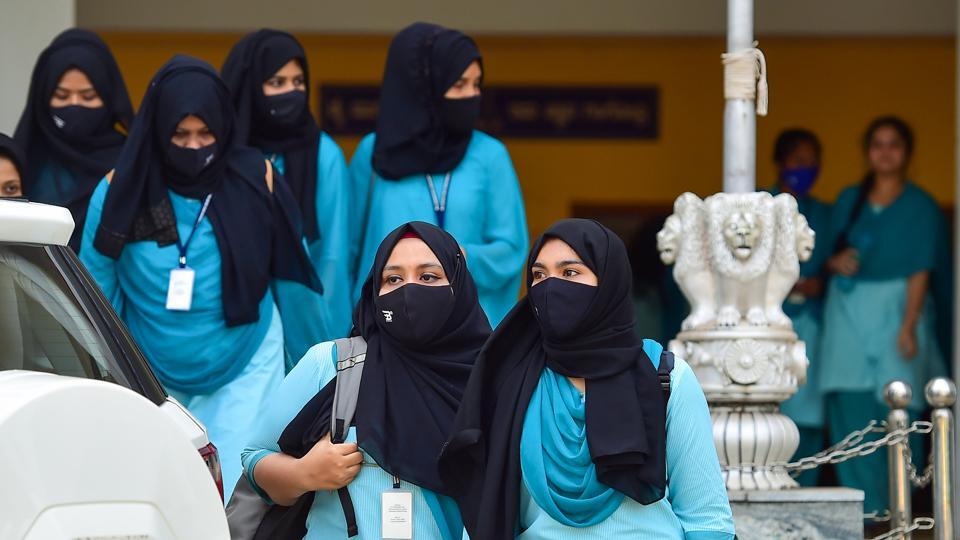
After the request was moved, Chief Justice of India (CJI) Dhananjaya Y Chandrachud said he would “take a call” soon on setting up a three-judge bench to take up the matter in view of a split verdict by the two judges of the previous bench in October 2022.
A similar plea was made by the students on January 23 too, but the three-judge bench is yet to be notified.
Also read: Karnataka students move SC for taking exams wearing hijabs
On Wednesday, the CJI was informed by advocate Shadan Farasat that the exams are commencing from March 9 and that the girls would not be allowed inside the examination centres due to the state government’s ban on the hijab in the state-run institutions.
“They have already moved to private institutions due to the ban but the exams are going to be held in the government institutions. Some of them have already lost a year due to the ban. All that we are requesting at the moment is to allow them take exams,” Farasat submitted.
The CJI responded that he will look into the matter and consider setting up an appropriate bench to take up the application.
In October 2022, the top court delivered a split verdict on the ban of wearing of the hijab in educational institutions in Karnataka – with one judge affirming that the state government is authorised to enforce a uniform in schools and the other calling the hijab a matter of choice that cannot be stifled by the state.
Justice Hemant Gupta, in his judgment, had dismissed all the appeals filed against the Karnataka high court judgment, which held in March that wearing of the hijab by Muslim women is not mandatory in Islam and that the Karnataka government was empowered to enforce the uniform mandate.
However, justice Sudhanshu Dhulia had at that time differed from the senior judge on the bench and allowed all the appeals. Reading out the operative part of his judgment, justice Dhulia said that wearing of the hijab is a matter of choice for a Muslim girl and there cannot be any restriction against it. Quashing the state government’s prohibitory notification, justice Dhulia added that concerns regarding the education of a girl child weighed the most on his mind and the ban on the hijab would certainly come in the way of making her life better.
Also read: Karnataka hijab ban: Girls move SC for permission to take exam in headscarf
In view of the dissenting views, the matter has been referred to the Chief Justice of India for constituting an appropriate bench.
The extensive hearing in the case last year witnessed almost two dozen lawyers arguing over a spectrum of issues on behalf of girl students, Islamic bodies, rights groups, lawyers and activists.
The petitioners, challenging the Karnataka high court order of affirming the ban, covered in their arguments the right to practice religion, freedom to dress as a matter of expression and identity, right to access education and alleged unreasonableness of the state’s mandate. The Karnataka government countered the petitioners, maintaining throughout the proceedings that their circular to enforce the uniform was religion-neutral and aimed only at promoting uniformity and discipline in educational institutions of the state.