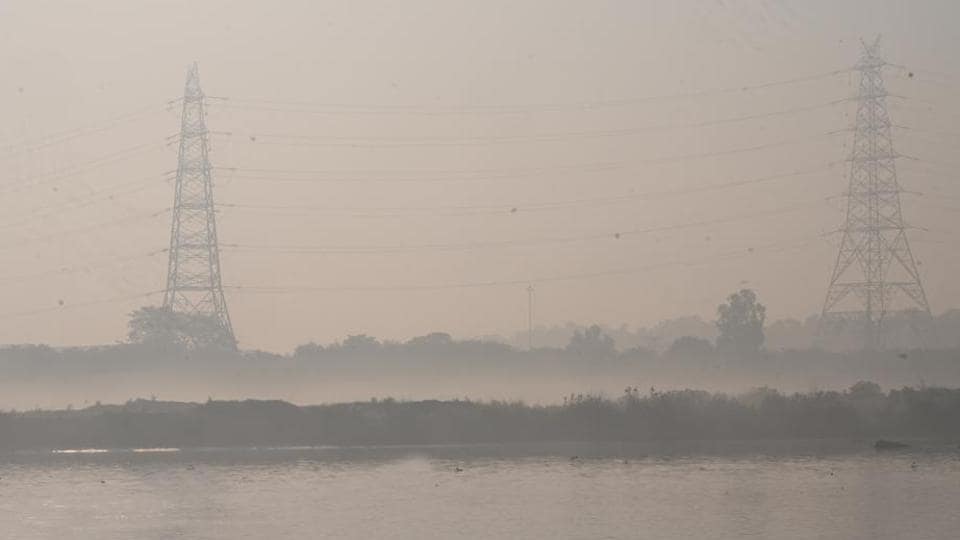
Will Yamuna get its Sabarmati makeover? Delhi plans 52-km riverfront in two phases
Delhi water minister Parvesh Verma said the government has initiated the process of signing an MoU with the Sabarmati Riverfront Development Corporation Limited
Delhi is planning to develop a Sabarmati riverfront-like project along the Yamuna in two phases, with plans to create large parks, cycle tracks, open spaces and sports facilities along the river. The 52-km stretch of the Yamuna in Delhi will be divided into two phases, with Wazirabad serving as the midpoint.
The first phase will cover the stretch from Palla to Wazirabad, while the second will extend from Wazirabad to Kalindi Kunj. (HT photo)
Delhi water minister Parvesh Verma said the government has initiated the process of signing a memorandum of understanding (MoU) with the Sabarmati Riverfront Development Corporation Limited (SRFDCL), which will provide technical guidance for the project.
“We have initiated the files for signing an MoU with the Sabarmati Riverfront Corporation. They will guide us in overcoming the hurdles encountered during the execution of the Sabarmati project and help us with the no-objection certificates (NOCs) and infrastructure development required for a similar riverfront along the Yamuna. We are moving ahead, and a consultant is being hired to execute the project,” Verma said.
The minister said the project would be implemented in two phases. The first phase will cover the stretch from Palla to Wazirabad, while the second will extend from Wazirabad to Kalindi Kunj.
“Wazirabad is the midpoint. The first phase will be carried out from Palla to Wazirabad, and the second phase will cover Wazirabad to Kalindi Kunj. If all goes according to plan, Delhiites will be able to experience the riverfront model before the next election. They will be able to spend time along the river, walk, practise yoga and participate in several other activities,” he said.
Learning from the Sabarmati Riverfront
The government’s plan follows a visit by Verma and officials from the Delhi Irrigation and Flood Control (I&FC) Department and the Delhi Jal Board (DJB) to the Sabarmati riverfront in August to study the model and understand the challenges involved in replicating it in Delhi.
“We saw that all the issues that existed in the Sabarmati riverfront 25-30 years ago are the same issues we face in the Yamuna in Delhi currently,” Verma had said during the visit.
The Sabarmati Riverfront project was initiated by the Ahmedabad Municipal Corporation (AMC), which established the SRFDCL as a special-purpose vehicle in May 1997 with seed capital of ₹1 crore from the Government of India. Environmental Planning Collaborative (EPC), led by architect Bimal Patel, prepared the project’s feasibility report in 1998.
Initially proposed over a 10.4-km stretch, the project was expanded in 2003 to cover 11.25 km, involving the reclamation of 202.79 hectares. Construction began in 2005, but the project faced delays over concerns related to water levels, flooding and the rehabilitation of displaced slum dwellers. Parts of the waterfront began opening to the public in 2012 under its first phase.
Environmental and Floodplain Concerns
While the Ahmedabad project has created public spaces along the river, environmentalists have also raised concerns about its ecological sustainability. The proposed Yamuna project will have to address similar questions around flood management, river ecology and the development of infrastructure along the floodplain.
Yamuna Pollution and Cleanup Plans
Yamuna originates from the Yamunotri glacier in the Himalayas (Uttarakhand) with its end point in confluence with the Ganga at Triveni Sangam in Prayagraj. The 22-km stretch of the Yamuna from Wazirabad to Okhla in Delhi is only 2% of the river’s length but contributes the most to its overall pollution load.
Verma said the government aimed to bridge the treatment-capacity shortfall of 250 million gallons per day (MGD) over the next two-and-a-half years. “We cannot say that Yamuna will become clean in six months, one year or 1.5 years. It will start getting relatively better in 1.5 years, and people will see drastic change in 2.5 years when all these treatment plants and projects are completed,” he said.
Paras Singh is a New Delhi-based journalist with Hindustan Times, where he serves as Deputy Metro Editor. He reports on urban governance, the Delhi government, the Delhi BJP, water management, the environment, communities and city life. He joined Hindustan Times in 2021 after beginning his journalism career at The Times of India in 2016, where he covered civic bodies, the water and power sectors, and urban infrastructure. Over the last decade, some of his reporting has led to significant public impact, with investigations into environmental violations, corruption and illegal industrial activity contributing to multiple judicial interventions by the National Green Tribunal and the Delhi High Court. A graduate of St. Stephen's College, University of Delhi, Paras studied journalism from the Indian Institute of Mass Communication (IIMC), New Delhi. Having extensively covered the capital's evolving civic and governance landscape, his recent work increasingly explores Delhi's history, built heritage, urban evolution and the relationship between people and place, alongside continuing to report on governance and public policy.Read More
Get Latest News, breaking headlines, and top India News, and today real-time updates from across the nation. Stay informed on politics, government policies, crime, Today Weather, and major developments on Hindustan Times
Home/India News/Will Yamuna Get Its Sabarmati Makeover? Delhi Plans 52-km Riverfront In Two Phases

 E-Paper