
 E-Paper



Women voters outnumber men, but fewer fielded
The Bharatiya Janata Party (BJP) has named only 13 women candidates in the list of 108 it has announced so far for the elections it is fighting in an alliance with chief minister Nitish Kumar’s Janata Dal (United), or JD (U).


Women voters’ turnout tends to exceed the men’s as a proportion of the electorate by gender in Bihar elections, but no political party is fielding women candidates to even 30% of the 243 assembly seats in the upcoming state elections, according to data analysed by HT.
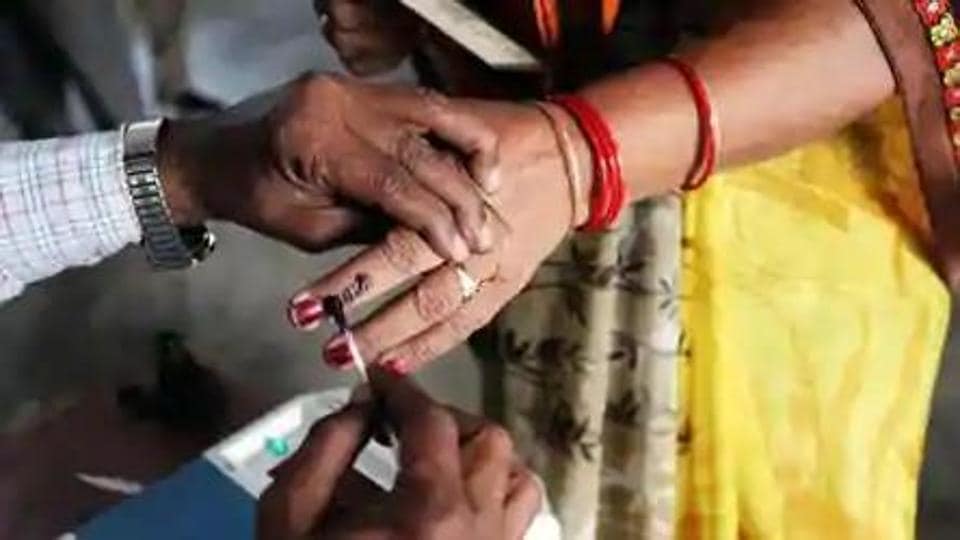
The Bharatiya Janata Party (BJP) has named only 13 women candidates in the list of 108 it has announced so far for the elections it is fighting in an alliance with chief minister Nitish Kumar’s Janata Dal (United), or JD (U).
JD (U) is fielding 22 women in the slate of 115 candidates it has announced so far for the three-phase elections, to take place on October 28, November 3 and November 7.
The Lok Janshakti Party (LJP), which is part of the National Democratic Alliance (NDA) and continues to support the BJP at the Centre but is going it alone in the state polls,has named 23 women till date. The Congress has named seven women out of 70 candidates and the Rashtriya Janata Dal (RJD) 17 women of a total of 144.
The reluctance to name more women candidates is perhaps surprising, given that their turnout in both the 2015 assembly elections and 2019 Lok Sabha polls, at 60.48% and 59.58% respectively, exceeded the men’s, and women’s issues are at the centre-stage . Comparatively, the turnout of male voters in the two elections was 53.32% and 57.33%.
The higher turnout of women voters hasn’t really made a difference to their poor representation among the contestants. Issues such as women’s safety and empowerment, education and health-care figure in the election manifestos of political parties; yet, while parties such as the BJP support the demand for 33% reservation for women in parliament and state legislatures, most do not include it in their election charters.
To be sure, Bihar has had 50% reservation in local bodies for women since 2006; in the state legislature, women continue make up for less than 20% of the total strength.
In 2015, of the 273 women who contested the elections, only 28 won. Of these, 10 belonged to the RJD, nine to the JD (U), four each to the the BJP and Congress, and one was an independent candidate. The RJD and JD (U) nominated 10 women candidates each, the Congress five and the BJP 14.
Also Read | NDA to have edge over RJD-led Mahagathbandhan in Bihar election: Lokniti-CSDS opinion poll
To challenge the underrepresentation of women in the elected space, non-government organisations such as Shakti launched a campaign ahead of the elections to push for more women contestants. It reached out elected representatives of local bodies and the legislative assembly to push for women getting 50% of the nominations.
Tara Krishnaswamy, co-founder of Shakti, said over 200,000 women have been elected to local bodies since 2006 in Bihar, but not even 1% of them are able to win a nomination to the state assembly.
“The discipline that political parties show in fulfilling caste quotas (seats reserved for scheduled caste and scheduled tribe candidates) is not shown in giving tickets to women. It is totally undemocratic, and a gross violation of the women’s right to equality,” she said.
Patna-based political commentator Ajay Kumar Jha said potential women candidates were evaluated on various parameters before being nominated.
“First condition is the winnability of the woman, in case they are given a ticket on the basis of their husband’s clout, then his winnability is assessed too. Another factor is that women do not have a major say in the party framework or the functioning of the party structure,” he said.
Krishnaswamy concurred that the absence of women in decision- making positions was a prime reason for them being overlooked for a nomination.
“Across parties, women believe that they have no control over decision making or about the selection of contestants for elections,” Krishnaswamy said.
BJP’s Sanjay Mayukh said the party sent the largest number of women MPs to Parliament in 2019 (41) and does not give field women candidates as a gesture of tokenism.
“The women that we give tickets to go on to win. We give tickets based on their capability and not just as a token,” he said.
Krishnaswamy said the number of women MPs in the Lok Sabha went up to 78, a record, because parties such as the Biju Janata Dal (BJD) and the Trinamool Congress (TMC) reserved 33% and 42% of the seats they contested for women.


