
 E-Paper



Migratory birds not found before in Bengal, Kolkata photographed; species seen earlier, disappearing
Climate change, rapid urbanisation affecting behaviour: experts


Santanu Manna, a senior birder based in Bengal, was apprehensive when a fellow birder told him in December 2013 that a single specimen of a migratory insectivorous specie found in the semi-desert regions of Pakistan, central Asia and northeast Africa had been spotted at Rajarhat, an upscale township in the eastern outskirts of Kolkata.
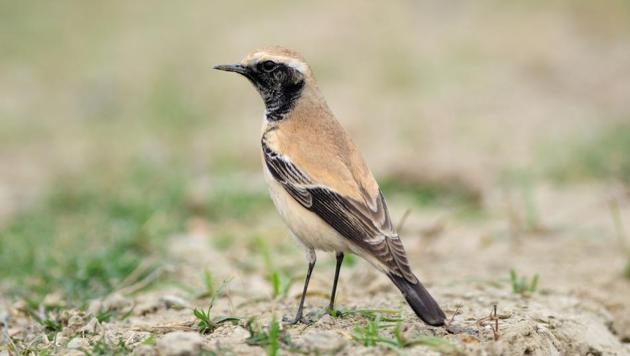
“The visitor turned out to be a Desert wheatear of the eastern variety. It was fearless and made no attempt to fly even as I clicked it from close distance,” said Manna, member of Bird Watchers’ Society and a coordinator for eBird India, the online archive of Bird Count India, a platform for organisations and groups monitoring movements and habitats of local and migratory species.
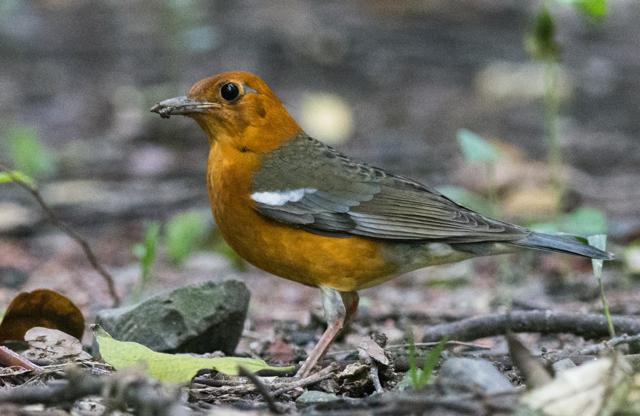
“While on a trek to Sandakphu peak in north Bengal in 2017, Biresh Basak, a birder, photographed a Red-tailed wheatear, a tiny member of the flycatcher family found in the mountains of south-west and central Asia. Also called Persian wheatear and Afghan wheatear, the bird was never spotted in Bengal earlier,” said Manna.
While the Wheatears – none of these were seen again - continue to baffle nature lovers, experts say several species not seen before in the state have been spotted in the last five years in rural Bengal as well as Kolkata and its adjoining areas. On the other hand, certain species spotted and documented earlier can no longer be seen.
Interestingly, the little Wheatears seem to have challenged the knowledge experts have gathered on their flight paths. “Birds arriving in Bengal, Odisha, Tamil Nadu and Sri Lanka during winter fly down from central Asia and follow the Eastern Flyway. Birds following the Western Flyway come from Ladakh and Karakoram Range and rest in Gujarat and Rajasthan. The birds don’t cross each other’s path,” said Dr Kaushik Deuti, a scientist with Zoological Survey of India (ZSI).
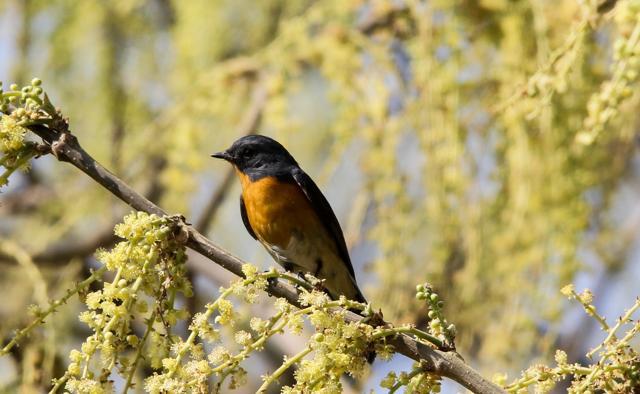
Developed by the British in the 1920s and rebuilt into a manicured garden by Bengal’s Trinamool government, Rabindra Sarobar, or the Dhakuria Lakes in the heart of the concrete jungle in south Kolkata is also witnessing new visitors and losing old ones. In and around the 192 acres of artificial lakes and greenery comprising around 7,000 trees, more than 112 species of resident and migratory birds have been sighted since 2015.
“Some of the varieties I have caught on camera at Rabindra Sarobar are White-tailed robin, Crow-billed drongo, Ferruginous flycatcher, Ultramarine flycatcher, Slaty-backed flycatcher and Firethroat. Sad part is, most birds of the Thrush family disappeared after firecrackers were used at random by revelers inside the protected area during Chhat puja in November, “ said Sudip Ghosh, who organised a group of birders in 2015 and started cataloguing every sighting. Highly active on social media, the group, Bio-diversity of Rabindra Sarobar now has close to 3000 members.
“A single reason cannot be attributed to these unexpected sightings. But climate change can be one of the factors forcing migratory birds to visit new areas. Since most of these species rest near water they will shift location if the water is polluted,” said Dr Kailash Chandra, director, Zoological Survey of India.
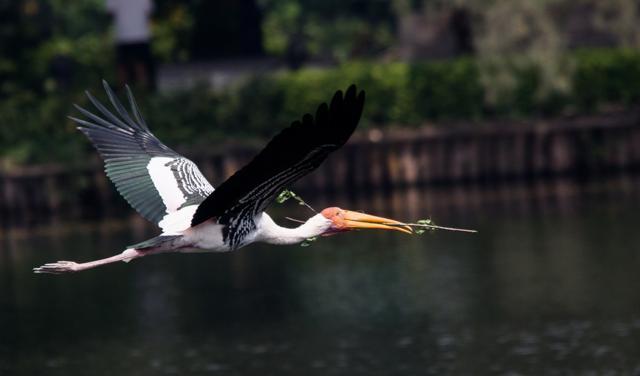
Located in Howrah district but only a 30-minute drive away from south Kolkata, Santragachhi lake used to be a haven for large migratory birds such as the Baikal teal from east Russia. “The Baikal teal were seen only once in the last five years. The reasons could be civil constructions in the vicinity and sewerage disposal in the lake,” said Manna. “However, at Piyali, a river island in South 24 Parganas district located closer to Bay of Bengal, birds never seen in the area before landed in large numbers in the last three winters.” added Manna.
Arjan Basu Roy, secretary of Nature Mates, a non-government organisation working in Santragachhi and the Sunderbans, said, “There has been a steady decline in migration to Santragachhi because of human intervention. Birds that rest here are mostly vegetarian and look for food in nearby farmlands after dusk. Around 3000 birds arrived till the second week of December but numbers do not necessarily mean it’s a healthy migration.”
“On the brighter side, Spoon-billed sandpiper, a critically endangered specie of which fewer than a thousand are believed to exist because of loss of habitat in Russia and southeast Asia, was spotted in large flocks at Frazergunj in South 24 Parganas in 2017 ,” said Basu Roy. “Also, quite a few raptors such as Spotted eagle and Red-necked falcon have been seen in and around Rajarhat township,” he added.


